Nikesh Kooverjee has been contributing to the automotive sphere for 11 years. His previous roles include Digital Editor at CAR South Africa and associate editor at CarBuzz. He has always had a strong affinity for cars from a young age, having grown up in a family of classic Mercedes-Benz collectors. He has perused through numerous automotive literature in a bid to further his knowledge and understanding of all things car-related. He eventually went to attain a degree in Media and Writing, English Literature, and Film and Television Studies at the University of Cape Town while working as a go-kart marshal in-between hours. His passions remain automotive, with an increased interest in electromobility and autonomous technologies.
With gasoline prices consistently increasing in the U.S. and the electric car gold rush all but done, hybrid cars are rapidly increasing as the new popular option for a lot of consumers currently looking for a new car. While more readily available, the new hybrid vehicle market has grown to be much pricier in recent times, primarily due to inflation and rising development costs.
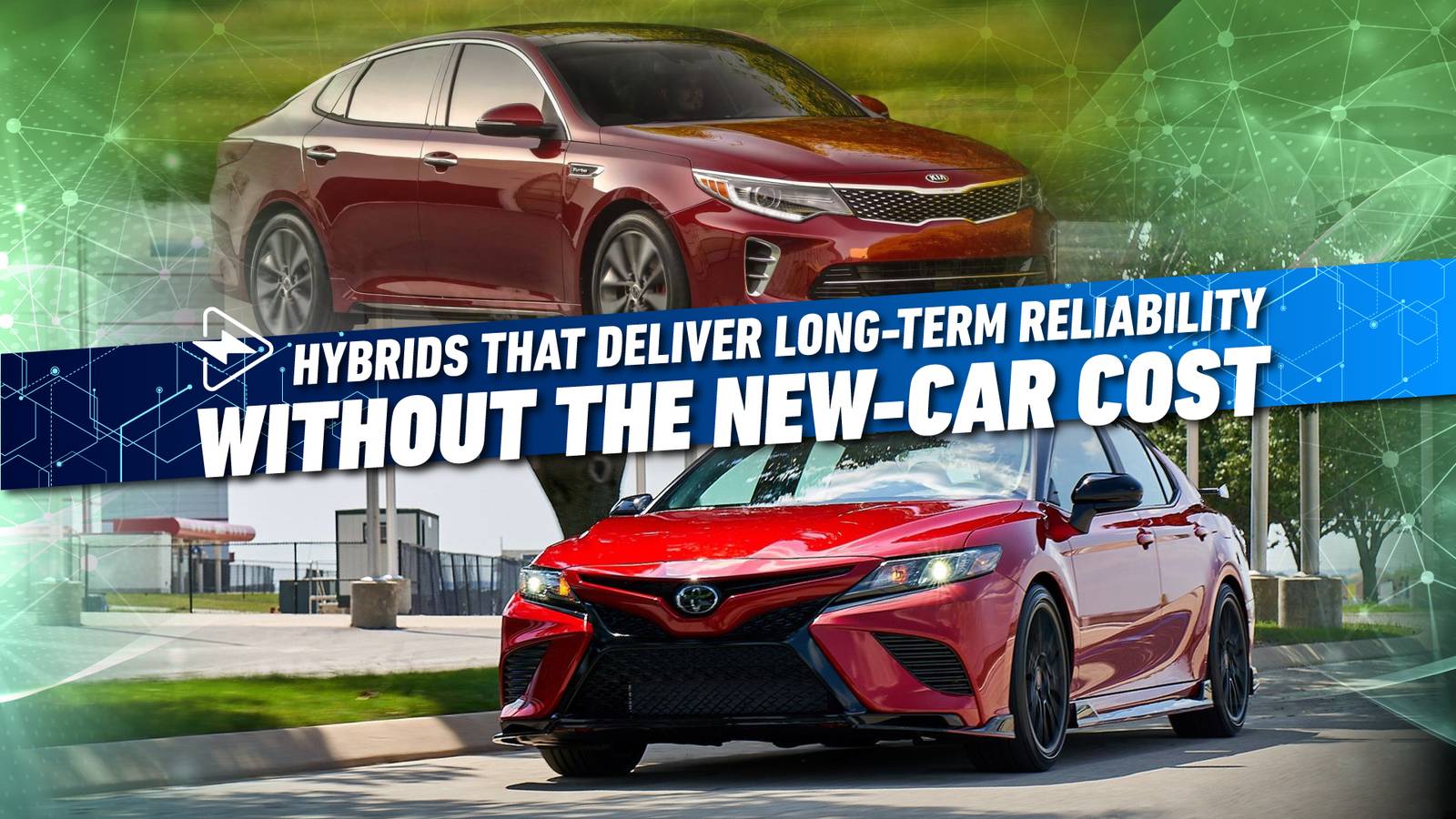
If you’re looking for a hybrid vehicle, but aren’t too happy to pay the tall asking prices that brands are applying to their current-generation products, there is a lot of value in considering the used HEV market. Along with reliability, value retention remains a key factor that may influence your decision. If that’s the case, then these are the best three-to-five-year-old options that you should be looking at.
The models in this list have been extensively researched to ensure the most accurate information possible as of the time of publishing. Models are listed in ascending order from least to most reliable.
Driving the 2020 Hyundai Sonata Hybrid is a naturally aspirated 2.0-liter four-cylinder engine and an electric motor driving the front wheels via a six-speed automatic transmission. iSeeCars indicates a nine-year or 125,598-mile average lifespan with a 4.3 percent probability of hitting 200,000 miles. J.D. Power awards this model with an 86/100 consumer-verified overall score, including 83/100 for quality and reliability, 86/100 for the driving experience, and 90/100 for resale.
The 2020 Hyundai Sonata Hybrid is typically a robust car suffering from few reliability issues. Some owners report recurring transmission problems, including shifting hesitation or total transmission control failures, which bring up the P0768 error code. This leads to sudden power loss.
The 2020 Ford Fusion Hybrid features an Atkinson-cycle naturally aspirated 2.0-liter four-cylinder engine with an electric motor that directly drives the front wheels. iSeeCars issues this model with an average lifespan estimate of 9.8 years and 136,900 miles with an 11.7 percent probability of reaching 200,000 miles. J.D. Power awards the entire 2020 Fusion range with an 83/100 consumer-verified overall score, including 83/100 for quality and reliability, 76/100 for the driving experience, and 90 for resale.
The 2020 Ford Fusion Hybrid carries a couple of reliability red flags that you need to be aware of. It shares a recall on some 2019 and 2020 hybrid models, which includes the Energi PHEV, where the Battery Energy Control Module may fail, potentially causing sudden loss of drive power. Owners also report problems like 12-volt battery drain and glitches with the infotainment and other electrical systems.
The 2020 Hyundai Ioniq Hybrid features the South Korean group’s 1/6-liter four-cylinder engine and an electric motor driving the front wheels via a six-speed dual-clutch automatic transmission. J.D. Power issues this model with a 75/100 consumer-verified overall score, which includes 76/100 for quality and reliability, 71/100 for the driving experience, 79/100 for resale, and 71/100 for the dealership experience.
Regarding the Ioniq Hybrid’s reliability, some owners have reported glitches with the infotainment system and some occasional transmission hesitation at low speeds, which is a common factor with dual-clutch transmissions.
There aren’t many hybrids that cost less than $30k, and fewer still that also get 50 mpg. But here are 10 new, nearly new and gracefully-aged examples
The 2020 Kia Optima Hybrid features the same 2.0-liter engine, electric motor, and six-speed automatic transmission that powers the aforementioned Sonata. The Korean hybrid sedan earns an average lifespan estimate of 9.6 years or 135,796 miles with a 7.2 percent probability of reaching 200,000 miles. J.D. Power awards the 2020 Optima range with an 85/100 consumer-verified overall score, which includes 85/100 for quality and reliability, 81/100 for the driving experience, and 88/100 for resale.
While the Optima benefits from good overall mechanical integrity, owners have reported serious issues such as excessive oil consumption, leading to premature engine wear. There are also some complaints involving the transmission shuddering at low miles.
The 2020 Honda Accord Hybrid features a 2.0-liter Atkinson-cycle four-cylinder gasoline engine and two electric motors. iSeeCars suggests that you can expect an average lifespan of 13.4 years and 177,378 miles, with a 34.6 percent probability of reaching 200,000 miles. J.D. Power issues the model with an 82/100 consumer-verified overall score, including 80/100 for quality and reliability, 83/100 for the driving experience, and 84/100 for resale.
The 2020 Honda Accord Hybrid draws praise for comfort and overall build quality, but there are some reliability and recurring issue reports that may surface. Owners frequently cite a persistent buzzing or humming noise at highway speeds caused by a faulty active-noise-cancellation system and note repeated problems with the climate system, some of the electronics, and occasional fuel-system or emission-related issues, for which it has been subject to recalls.
Driving the now-defunct 2020 Honda Insight is a naturally aspirated 1.5-liter four-cylinder engine and an electric motor. J.D. Power issues the model with a 77/100 consumer-verified overall score, including 74/100 for quality and reliability, 77/100 for the driving experience, and 81/100 for resale.
The 2020 Honda Insight carries a few reliability concerns that you should know about, resulting in it being subject to six recalls, the most notable of which is for a defective low-pressure fuel pump that can cause the engine to stall. Owners also report occasional electrical issues, including sensor, braking-aid, and hybrid-system glitches, sometimes triggering unexpected braking or causing warnings and loss of drive.
With escalating vehicle prices it’s more important now than ever to choose an SUV with bullet-proof reliability.
The 2020 Toyota Avalon Hybrid features the brand’s naturally aspirated 2.5-liter four-cylinder engine and one electric motor. The Avalon range gets an 81/100 consumer-verified overall score, including 87/100 for quality and reliability, 72/100 for the driving experience, and 77/100 for resale.
You’re not likely to experience any issues with the Avalon Hybrid, but it was subject to a major recall because some engines had casting defects that could cause coolant leaks and even internal engine cracking, potentially leading to overheating or fire risk. Owners also report frequent issues with the interior electronics and infotainment, including frozen screens and occasional system failures.
The 2020 Toyota Camry Hybrid also features the brand’s naturally aspirated 2.5-liter four-cylinder engine and one electric motor. iSeeCars issues the model with a 13.1-year and 171,846-mile average lifespan, with a 31.8 percent probability of reaching 200,000 miles. J.D. Power awards the model with an 81/100 consumer-verified overall score, including 82/100 for quality and reliability, 77/100 for the driving experience, and 83/100 for resale.
The 2020 Toyota Camry Hybrid carries a few reliability concerns. The model was hit by a major engine-block recall, with certain 2.5-liter engines suffering from casting porosity that could lead to coolant leaks or internal cracking. Owners also report issues with battery drain or dead 12-volt batteries, and some mention unexpected shutdowns or hybrid-system warnings, which may stem from hybrid-system or electrical failures.
The 2021 Toyota Sienna Hybrid also features the brand’s naturally aspirated 2.5-liter four-cylinder engine and one electric motor. iSeeCars publishes an 11.6-year and 166,200-mile average lifespan estimate and 31.1-percent probability of reaching 200,000 miles. It also gets a 78/100 consumer-verified overall score from J.D. Power, including 76/100 for quality and reliability, 82/100 for the driving experience, and 78/100 for resale.
The 2021 Toyota Sienna Hybrid suffers from some reliability problems reported by owners. Common complaints center on the direct-drive unit, with many citing hesitation, shaking, or rough acceleration from a stop and occasional engine stalls or sudden transmission failure. Owners also warn about malfunctioning power sliding doors due to cables fraying or jamming the mechanism, occasional steering-system failures or loss of power-assist, and a history of recalls related to fuel pump failures that could cause the engine to stall.
With escalating vehicle prices it’s more important now than ever to choose an SUV with bullet-proof reliability.
The previous-generation 2020 Toyota Prius features the brand’s older naturally aspirated 1.8-liter four-cylinder engine driving the front wheels via a direct-drive electric motor. Expect an average lifespan of 12.9 years and 176,079 miles with a 33.9-percent probability of reaching 200,000 miles. J.D. Power awards the model with a 77/100 consumer-verified overall score, including 81/100 for quality and reliability, 65/100 for the driving experience, and 81/100 for resale.
The 2020 Toyota Prius works well for many owners, but it carries a notable mix of reliability concerns and annoyances. Frequent reports concern the braking and electrical systems, with some drivers experiencing premature brake wear and warning lights tied to possible brake-assist or stability-control failures. Others cite fuel-gauge errors and occasional malfunction of the coolant-control valve, carrying the P1121 fault code, which has triggered check-engine lights.
Sources: JD Power, CarEdge, RepairPal
We want to hear from you! Share your opinions in the thread below and remember to keep it respectful.
Your comment has not been saved
This thread is open for discussion.
Be the first to post your thoughts.
Related Article