A $25,000 electric truck backed by Jeff Bezos. A pint-size version of an iconic SUV. A legendary sports car retooled for dirt roads. If 2025 was defined by turmoil in the car industry, thanks in large part to constantly shifting tariffs, the year ahead looks to be one of big swings for established brands and newcomers alike.
Who’s going to capture the attention of buyers in 2026? As our automotive correspondents Benjamin Hunting and Basem Wasef detail in their picks for the cars, trucks and SUVs they’re most excited to drive in the coming year, it’s a wide-open field, with some interesting matchups looming.
Despite being on opposite sides of the pond (and the price spectrum), BMW and Chevrolet will both be unveiling sequels to industry-leading electric cars. While the auto giants back away from fully electrified pickups, young guns Rivian and Slate, both kickstarted by big bucks from Bezos, are charging ahead with more mainstream models. Meanwhile, Bugatti and Bentley are courting the billionaire class with their own new conceptions of the ultimate driving machine.
Here, in no particular order, are the vehicles we can’t wait to pilot in the new year. You can keep the robotaxis. — Alex Lauer, Features Editor
The original BMW i3 was a carbon-fiber curiosity, a battery-powered hatchback that embodied the essence of the brand’s experimentation with electrification. Nearly a decade after its debut, the replacement for the i3 calls back to a different past as embodied by the Neue Klasse concept’s retro-futuristic design. Intended to stand alongside the gas-powered 3 Series as an electric alternative, I’m excited to see how BMW can improve on its already impressive i4 and i5 sedans with this next-generation electric.
The Chevrolet Bolt presented the best value of any EV during its relatively short time on the market, with later models (the EUV) even offering access to GM’s top-shelf Super Cruise technology. When it was retired, the world of cost-effective electrics shrank to a single model — the Nissan Leaf — which makes the Bolt’s return an important one in a world where the price of battery power needs to come down now that the luxury space has been completely saturated. The new Bolt looks very much like the old one from the outside, but underneath the skin it’s all Ultium, which should translate into an even better time behind the wheel.
Genesis has until now ceded the hulking three-row SUV space to other luxury brands, but that ends with the upcoming GV90 people-mover. Likely to be the first Genesis to nudge against a $100,000 starting price, everything I like about the Electrified GV70 will no doubt be turned up to 11 when it comes to the GV90’s interior trappings and overall performance. I’m curious to see whether Genesis is able to slingshot around brands like BMW and Cadillac and plant a fresh flag in enormous-EV territory without ever having sent an internal-combustion scout in advance.
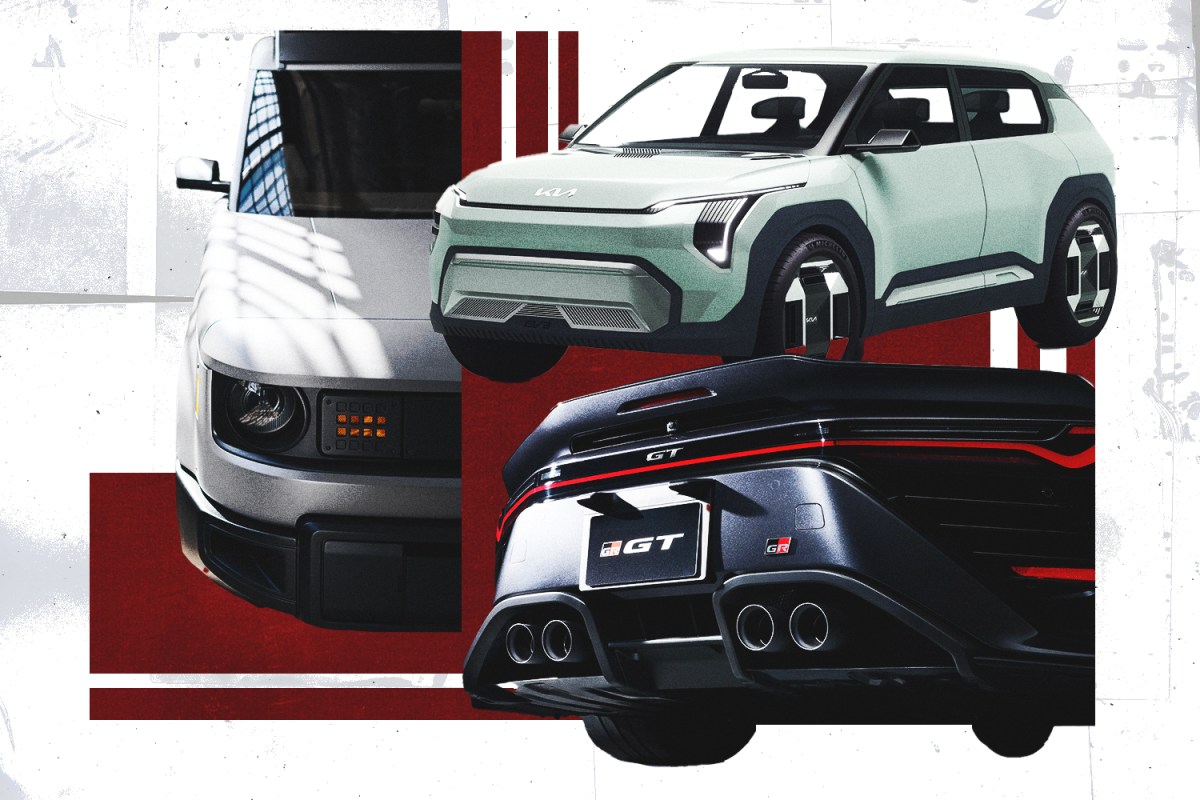
Is my list of most anticipated new vehicles entirely EVs? It certainly seems that way, because now I’m about to tell you how much I’m interested in a much more affordable electric SUV from the same Korean parent company responsible for the three-row Genesis. The Kia EV3 fills out the inexpensive side of the automaker’s showroom with a muscular-looking (but still cute) lifted hatchback that plans to push range all the way to 375 miles thanks in part to a large battery and relatively (for an electric vehicle, anyway) low curb weight. For EV fans, this is the perfect counterweight to disappointing debuts like the recent Volvo EX30.
Rivian is also aiming to build a smaller SUV, although it’s fair to say that the price tag attached won’t be quite as modest. The R2 shrinks the brand’s squared-off styling but preserves its rugged character as well as its incredible performance, with a three-second 0-60 mph time for commuters who care about that kind of thing. Rivian will eventually be facing competition from Volkswagen’s nascent Scout Motors brand playing in the same sand box, and models like the R2 are the smart offensive play to capture and keep customers before Scout can set up shop.
The Lexus IS has been wandering the wasteland of irrelevance for far too many years as Mercedes-Benz, Audi and BMW have continued to update and perfect their frontline sports sedans. What better way for the IS to stake a claim on a new set of customers than by sliding over to the EV side of the equation? Lexus is hinting at not just a four-door, but also a possible wagon/hatchback edition of the car, which would help pique the curiosity of at least a few buyers who had long written off the conservative car.
Last year I called out the Tourbillon as a car I couldn’t wait to drive in 2025, and I’m doing it again because we all know Rome wasn’t built in a day — and if anything is the automotive equivalent of the Eternal City, it’s this wildly ambitious play on the hybrid hypercar. I’m hoping against hope that 2026 is the year I slide behind the wheel of Bugatti’s mechanically instrumented, naturally aspirated V16 hybrid wundercar. I’d bet a nonessential organ it will be well worth the wait.
Toyota Gazoo Racing’s GT has been called the spiritual successor to the vaunted Lexus LFA, but anticipation has been building around this oddly proportioned sports car because it is a rolling Hail Mary for everything we love about future classic sports cars: rear-wheel drive, a bleeding-edge hybrid V8 powertrain and a concurrently developed GT3 race car that promises to improve the breed.
Dr. Frank-Steffen Walliser joined Bentley as CEO in 2024 after fathering some all-timers at Porsche, among them the RS Spyder race car and 918 Spyder. Proving that executives can influence product pipelines well beyond the bottom line, Walliser is shepherding a Continental GT spinoff that promises to break new ground for the brand. Not only will the Supersports be the brand’s first rear-drive model of the modern era, but it will trim a staggering 1,000 pounds of mass to become the most driver-focused Bentley in history. What’s not to love for all you speed-addled luxury freaks?
What if we could have everything we love about the G-Class — outrageous capability, iconic silhouette — in a smaller, nimbler and less beastly package? Perhaps even more appealing than the original is a kinder, gentler (yet still unmistakably boxy) rendition of truck that launched a thousand egos. I say, bring it on, Benz. I can’t wait to sample the subscale Geländewagen, and hope it delivers on the promise of being a pint-size match for the legendary model.
Eating the automotive equivalent of steak every day can have a way of making you crave a simple bowl of four-wheeled cereal. The antidote to excess might just be the battery-driven Slate, a back-to-basics truck that promises a minimalist, modular form, and a startling starting price of around $25,000. If this Bezos-backed project executes on a fraction of the hype that proceeds it, Slate has the opportunity to trigger a renaissance in stylish, affordably priced personal transportation.
If Porsche and Lamborghini can launch off-road capable sports cars, why can’t Ford? The rumored Mustang Raptor combines two things we love: raucous American muscle and true off-road capability. The entry will presumably pair a lifted body with the same growling V8 that has made the Mustang a mainstay in sports-car culture. Assuming this Frankenstein is indeed coming to life next year, I can’t wait to see how a pumped-up pony car tears up a rally course.
This article appeared in an InsideHook newsletter. Sign up for free to get more on travel, wellness, style, drinking, and culture.
Subscribed? Log In.
Log In.
Suggested for you
News, advice and insights for the most interesting person in the room.
Sign up for InsideHook to get our best content delivered to your inbox every weekday. It’s free. And awesome.
Copyright © 2026 InsideHook. All rights reserved.
Related Article