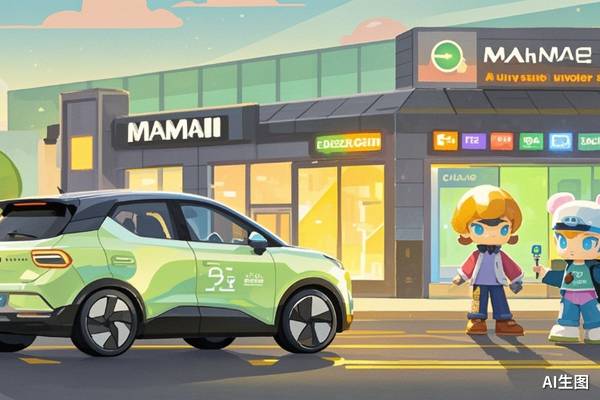
Three years ago, the first floor of Zhengda Plaza in Lujiazui, Shanghai, was occupied by Tesla and NIO stores and cars. It was common to see test – drive specialists leading customers through the mall corridors towards the parking lot. Now, the 200 – square – meter space where the exhibition cars used to be parked is divided between Pop Mart’s theme exhibition and Salomon’s limited – edition shoe wall. Young people queuing up to draw blind boxes have replaced car buyers inquiring about battery range.
Just as consumers were gradually getting used to seeing new – energy vehicle stores and products on the first floor of shopping malls, these brands were quietly pulling out.
Why are new – energy brands collectively leaving shopping malls? Which brands are replacing them?
The times have changed.
A few years ago, whether it was Tesla or the so – called “Wei Xiaoli” (NIO, XPeng, and Li Auto), they all needed a “front – face” to reach consumers. So these new stars in the automotive circle rushed to secure prime locations in the core business districts of first – and second – tier cities.
In 2013, Tesla opened its first direct – operated store in a shopping mall in China at Parkview Green FangCaoDi in Beijing. This new retail model of online ordering and offline experience prompted other brands to follow suit. In 2020, in order to secure a street – facing storefront at Xingye Taikoo Hui on Nanjing West Road, NIO spent a staggering 83.34 million yuan on rent over five years.
Today, the fierce competition among new – energy vehicle brands has driven the industry’s profit margin to rock – bottom. Many new – energy brands that couldn’t turn a profit or find new financing have become historical footnotes.
The surviving automakers have entered a stage of stock competition. On the one hand, new – energy automakers, especially new players, generally have low profitability. Cost reduction and efficiency improvement have replaced brand promotion as the new proposition for automakers in this new stage. Compared with important aspects such as R & D, closing stores in shopping malls is undoubtedly the most direct way to cut costs.
On the other hand, the battlefront has extended from first – and second – tier cities to third – and fourth – tier cities and even county – level areas. Bright glass, fashionable showrooms, and various high – tech demonstrations seem to have lost their appeal in county – level areas. Price and test – drive experience determine the survival of new – energy brands in the county – level market.
Monitoring data from Winshang Cloud Think Tank shows that since 2024, the number of new – energy vehicle stores in shopping malls across the country has decreased by 37% year – on – year. Among them, 70% are small and medium – sized brands such as Nezha and Leapmotor. Even leading brands are quietly adjusting their business formats. Data from the China Automobile Dealers Association shows that in 2024, 4,419 4S stores across the country shut down, with new – energy brands accounting for over 60%. This is the first time since 2021 that the network scale has shown negative growth.
The “shrinking strategy” of leading brands is more representative: Tesla closed 30% of its stores in core business district shopping malls and instead built “super service centers” in underground garages on the outskirts of the city, integrating car display, delivery, charging, and maintenance functions. This reduced the operating cost of each store by 40%. NIO carried out a “surgical transformation” on its NIO House at Oriental Plaza, shrinking the car – selling area by two – thirds and introducing new business formats such as used – car evaluation and camping equipment sales. Only then did it manage to increase the floor efficiency from 800 yuan per square meter to 1,600 yuan, barely holding on to the prime location.
In sharp contrast to the retreat from core business districts is the expansion in the sinking market. Leapmotor opened a “front – store, back – warehouse” model store in a community commercial complex in Jiaxing, Zhejiang. The front store displays two main models, the T03 and C11, and the back warehouse has quick – repair stations. Community residents can have their batteries tested while shopping for groceries. The average monthly order volume is stable at 15 – 20 units, and the rent here is only 40% of that in urban shopping malls. XPeng has directly set up service outlets at highway exits, with a “station – style store” every 50 kilometers. In the first half of 2024, 70% of the orders for the G6 model came from these stores along the route. Car owners said they “feel at ease seeing the signs during long – distance drives.”
Statistics from the China Automobile Dealers Association confirm this trend: In 2024, the sales of new – energy vehicles in third – and fourth – tier cities accounted for over 45%, an increase of 12 percentage points from the previous year. The growth rate in the county – level market was 2.3 times that of first – and second – tier cities.
Not all new – energy vehicle brands are in a hurry to leave shopping malls.
Huawei and Xiaomi are opening their stores to welcome electric cars.
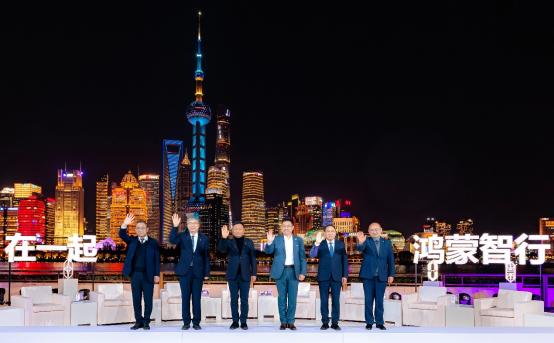
After the great success of the AITO brand, which is a cooperation between Huawei and Seres, Huawei has launched products under various brands, including Zhijie (co – developed with Chery), Xiangjie (co – developed with BAIC), Zunjie (co – developed with Jianghuai), Shangjie (co – developed with SAIC), and Avatr (co – developed with Changan and CATL). The product matrix of Hongmeng Smart Mobility comprehensively covers the price range from 150,000 to 1 million yuan. Now, in more than 5,500 Huawei experience stores, many have placed new – energy vehicles in the most prominent positions.
In November this year, the monthly sales of Hongmeng Smart Mobility exceeded 80,000 units for the first time, with 81,900 new vehicles delivered, setting a new record for two consecutive months.
In addition to direct – operated stores, a large number of traditional dealers are also flocking to Hongmeng Smart Mobility. Zhong Sheng, a leading dealer group, transformed 48 luxury – brand 4S stores into Hongmeng Smart Mobility channels. The largest Audi and Mercedes – Benz stores in Anhui also made a similar transformation in 2025.
Xiaomi has also successfully entered the top ten in terms of sales among new – energy vehicle brands with two models. According to data released by Xiaomi, its monthly delivery volume has exceeded 40,000 units for three consecutive months. As Lei Jun previously estimated, Xiaomi is expected to deliver over 400,000 vehicles in 2025.
As of July 2025, more than 80% of Xiaomi’s 352 stores across the country are still located in core shopping malls in first – and second – tier cities such as Beijing’s Hohai Center and Shanghai IFC. In fact, 18 new stores were added in July alone. This confidence comes from “ecological linkage.” In Xiaomi experience stores, beside the display of the SU7, there are mobile phones, smart TVs, and sweeping robots equipped with Pengpai OS. Consumers can directly experience the scenario of “mobile phone integration with the car and home appliance linkage” during test drives.
The counter – trend expansion of Huawei and Xiaomi in the automotive industry proves the cross – dimensional strike ability that technology companies possess in the automotive sector. Today, “building cars” is no longer difficult. The difficult part is to provide consumers with a better intelligent experience.
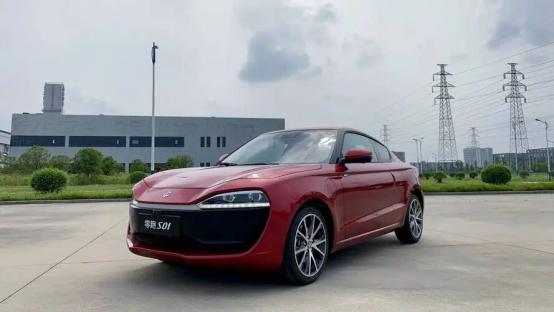
This is probably why emerging technology brands like Dreame choose to enter the already crowded new – energy vehicle market.
The departure of automotive brands reflects the drastic changes in consumer trends over the past few years.
The prime locations vacated by new – energy vehicles are being quickly filled by five categories of consumer goods. Along with new – energy vehicles, fast – fashion brands that were popular in the past few years are also leaving the first floor of shopping malls. Zara has reduced its stores in the Chinese mainland from a peak of 183 to 69, and H&M has cut its stores from 535 to more than 300. A group of new players are taking their places.
1. Trendy Toys: The “Check – in Currency” for Young People
The store expansion trajectory of Pop Mart is a textbook example: In 2018, only a handful of its more than 100 stores were on the first floor. By 2025, more than half of its more than 200 stores across the country occupy prime locations in shopping malls. Of its 53 stores in Beijing, 23 are on the first floor, and 4 out of its 6 stores in Jinan are on the first floor.
Driven by Pop Mart, IP – themed trendy toys have become the hottest category in shopping malls. According to statistics from Winshang.com, in 2024, the opening – to – closing ratio of IP – themed stores was as high as 3.36. Brands such as Card Game, TOP TOY, and X11 added more than 25 new stores net.
2. Outdoor Sports: The “Refined Necessity” of the Middle Class
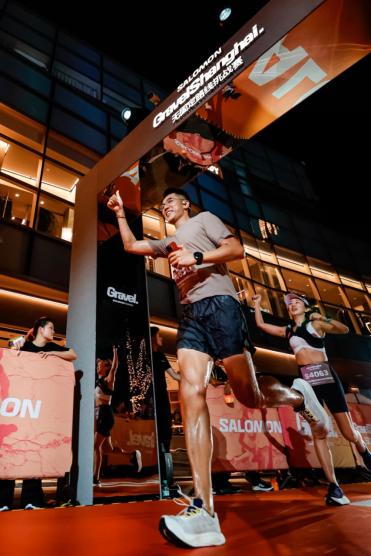
83% of Lululemon’s stores in China are located on the first floor of shopping malls, regardless of the average monthly rent of up to 450,000 yuan. The average area of Arc’teryx stores has expanded from 217 square meters to 313 square meters, and 40% of its stores have occupied prime locations on the first floor. The FILA ICONA flagship store at Fuzhou Dongbai Center occupies a prime street – facing location, and its sales exceeded one million yuan on the opening day. Behind this is the consumption shift of the new middle class: Salomon, HOKA, and On, jokingly referred to as the “three treasures of the new middle class,” precisely meet the “sports + social” needs of young people.
Data shows that the top five brands in terms of the number of net – added stores in 2024 were Salomon, Wilson, KAILAS, Golden Bear, and Anta.
3. New Tea Drinks: The Upgrade from the “Basement” to the “First Floor”
30% of Cha Ji’s stores are in shopping malls, and 80% of them are on the first floor. Even though Mixue Bingcheng mainly targets the sinking market, it has opened “Snow King Flagship Stores” on the first floor of shopping malls in first – and second – tier cities, attracting customers to take pictures with its pink – themed decoration. The ambitions of tea – drink brands have long gone beyond “selling milk tea.” HEYTEA’s “Black Gold Stores” are paired with art installations, and Nayuki’s “Tea – Coffee Laboratory” launches limited – edition drinks. Frequent co – branded pop – up events have turned these stores into “internet – famous landmarks” on social platforms.
4. Technology and Digital Products: “Scenario Experience” in the AI Era
According to statistics from Winshang.com, 14 brands added more than 70 new stores in a single year, and 6 of them are digital and technology brands. On the one hand, as mentioned above, after technology giants like Xiaomi and Huawei entered the new – energy vehicle market, they have shown great advantages in terms of traffic and software. On the other hand, with the rapid development of AI, more technology brands are competing for offline traffic entrances. iFlytek tops the list with more than 100 net – added stores, and even small – niche brands like Xiaotiancai have added more than 50 new stores.
There is no eternal monarchy, especially for the first floor of shopping malls where every inch of land is precious. New – energy vehicles splashed out money a few years ago and then left in a hurry a few years later. This reflects the changes in the market, the rise and fall of the industry, and the shift of consumer hotspots.
Over the past few years, China’s new – consumption market has undergone a magnificent transformation. In the past, whatever products were popular around the world would appear in Chinese shopping malls. Now, the hottest brands in Chinese shopping malls will sweep across the globe in a few months or a year.
This article is from the WeChat official account “Shenke New Consumption”, author: Zheng Luan. Republished by 36Kr with permission.
该文观点仅代表作者本人,36氪平台仅提供信息存储空间服务。
36kr Europe (eu.36kr.com) delivers global business and markets news, data, analysis, and video to the world, dedicated to building value and providing business service for companies’ global expansion.
© 2024 36kr.com. All rights reserved.

Related Article