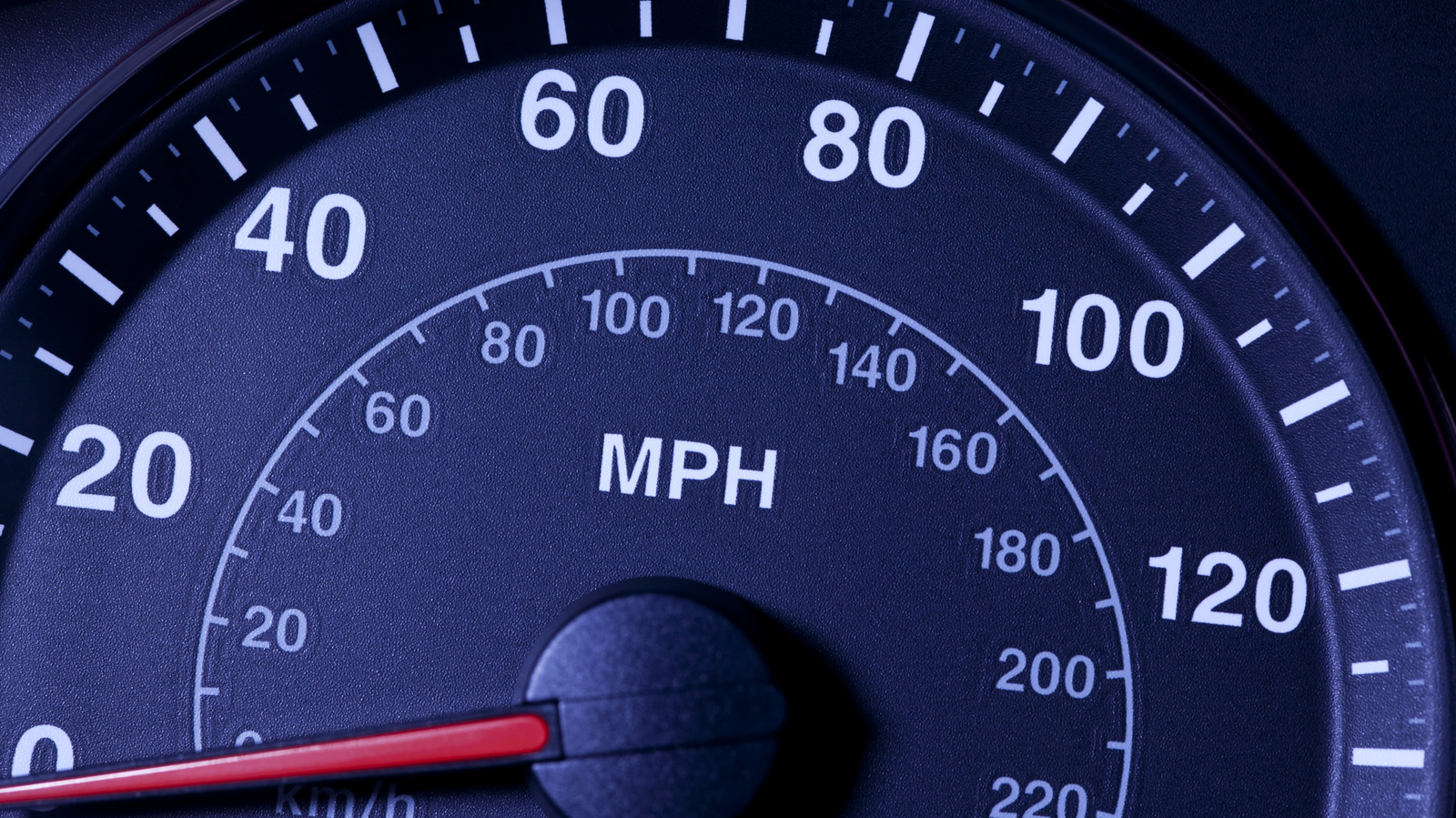
Automotive fans are united in their love for high-performance machines. Following a new sporty vehicle’s debut, enthusiasts want to know engine output, top speed, and, of course, 0-to-60-mph times. This is the quickest 0-to-60 time ever set by a production car, the Dodge Challenger SRT Demon 170, which reportedly clocked in under 2 seconds, though this does come with an asterisk.
Getting a car that accelerates this quickly to 60 mph from the factory traditionally involves looking at European exotics from the likes of Ferrari and Lamborghini, to name a few. But over the years, engine designs have continued to improve, incorporating turbocharger technology and providing more output at greater efficiency, among other advancements.
While exotics still have a hold on this sub-5-second group, some newcomers have stepped up, sporting lithium-ion batteries and electric motors and taking full advantage of the instant torque provided by electric powertrains. Though, for traditional horsepower purists, there are also some impressive combustion engines pulling off blistering acceleration times in new cars. That said, bear in mind that factory performance like this isn’t cheap, regardless of what configuration is under the hood.
The original Escalade, which debuted more than 2 decades ago, has reached an impressive milestone, achieving over 1 million vehicles sold worldwide, according to Cadillac. However, in an attempt to continue bolstering its EV lineup, Cadillac has reimagined its successful luxury SUV and created a brand-new model, the Escalade IQ. The all-electric powertrain outputs an estimated 750 horsepower and 785 pound-feet of torque (Velocity Max enabled), with its dual motor all-wheel drive configuration. Also, the Cadillac Escalade IQ drives 558 miles on a single charge. When compared to the gasoline-powered iteration, which pushes out 420 horsepower and 460 pound-feet of torque, the IQ benefits from quite a bump in performance.
However, even more impressive is the Escalade IQ’s 0-to-60 acceleration time, which the automaker estimates will fall under 5 seconds. This is possible via Cadillac’s Velocity Max technology, boosting performance with the push of a button. However, demanding more power will deplete the EV battery’s charge more quickly. An SUV this quick doesn’t come cheap, though, as the baseline trim of the Escalade IQ starts at a costly $130,090.
This EV automaker headquartered in Sweden is a relative newcomer to the field, with the brand launching in 2017. Before turning its efforts toward car production, Polestar originally focused on performance tuning, working directly under Volvo. Given its history with motorsports, it may not be a surprise that the EV maker is churning out some models quick off the line. The Polestar 4, an SUV, is perhaps the fastest the company has produced, with a 3.7-second jaunt from 0 to 60 mph.
This blistering acceleration is only possible with the long-range dual-motor configuration, as the single motor offers a fast but less impressive 6.9 seconds to 60 mph. With the dual-motor setup, the Polestar 4 generates a brawny 544 horsepower with 506 pound-feet of torque. This model can be yours starting at $52,900, but you’ll have to get used to one of its strange quirks, no rear window. That’s right, instead of a back window allowing you to see behind the vehicle, there’s a digital rearview mirror, which the automaker reportedly adopted to provide greater back seat headroom.
Cadillac isn’t the only brand enhancing its electric powertrain options. Audi’s e-tron series has been busy introducing new models, like the SQ6 e-tron. We got an up close and personal look at the line, seeing firsthand that the 2025 Audi Q6 e-tron is built better, faster, and smarter than before. This all-electric SUV boasts 509 horsepower (with launch control enabled and using the S driving mode) and estimated torque figures north of 500 pound-feet.
This output equates to an official 0-to-60-mph time just over 4 seconds. Although, this may be a conservative number, considering automotive outlets like Car and Driver have produced 3.8-second acceleration times during testing. Pricing starts at $72,900, and the car includes features like 20-inch wheels and massaging front seats, among other amenities. One of the innovative aspects of this EV is the more robust 800-volt system, significantly shortening charging times in some scenarios and taking just over 20 minutes to reach 80% from a 10% charge.
With its low-slung, aerodynamic, and eye-catching exterior, the MCPURA looks every bit the part of exotic supercar. The vertically opening side doors (what Stellantis refers to as “butterfly” doors) are a nice touch as well. New for 2025, the MCPURA is a mid-engine rear-wheel drive design that packs a 3.0-liter Nettuno V6 with twin turbochargers. This powerplant propels the Italian-made supercar and produces 621 horsepower and 538 pound-feet of torque.
Marketed as a model that harkens back to Maserati’s roots, emphasizing performance and luxury, it can manage a staggering 0-to-60-mph time of under 3 seconds. This is helped by keeping the car’s weight down to 3,600 pounds, with the use of carbon-fiber materials and carbon-ceramic brakes. Lightweight design reduces the energy required to move the MCPURA, putting its available power to better use. However, this thrilling Italian machine isn’t for everyone, as the coupe is listed for $246,000, a high bar for entry.
Okay, obviously the Ford Mustang isn’t a new model by any stretch. However, the automaker has debuted a new, never-before-seen version, the GTD, with even more muscle. In a 2024 press release, Ford claimed that this model offers more power than every production Mustang ever made. While there are track-only variants of the Mustang, the GTD is street legal and looks far more intimidating than its standard-version brethren. Furthermore, it has the chops under the hood to match its exterior, with a supercharged 5.2-liter V8 that churns out 815 horsepower and 664 pound-feet of torque. It also utilizes a dry-sump oil setup, which counteracts immense cornering forces, preventing the engine from running lean on oil in demanding scenarios.
It isn’t just pure output that sets this Mustang apart, as a project build could incorporate similar engine power using various modifications. The GTD includes many alterations, including a carbon fiber body and carbon-ceramic brakes. The back seat from previous iterations is also absent in the GTD, dropping its weight significantly in comparison to previous performance model efforts. Weight reduction and a massive torque figure equate to a 2.8-second 0-to-60-mph run. Unfortunately, not only is the GTD in limited production, but it runs nearly $330,000, making it appealing to collectors and enthusiasts with deep pockets.
Enjoyed this read? Join our newsletter for the top auto news sent straight to your inbox, and add us as a preferred source on Google!
Related Article