While most people might spend New Year’s Eve spraying champagne on themselves, setting off fireworks, or kissing their loved ones, there’s one thing many car enthusiasts may be doing instead. In the United States, cars not originally sold to U.S. markets are not allowed to be bought or imported until 25 years after the car’s original production date. While a lot of the world’s automotive creations are sold directly to the States, Americans still miss out on tons of cool cars that the rest of the world enjoys. However, the 25 year import rule means that every new year, a new crop of previously unavailable cars enters the buying circles for American auto enthusiasts.
The rule extends to cars across the globe, but the Japanese Domestic Market (JDM) may be the biggest goldmine for unique cars. JDM cars are so popular that they’ve become their own group, like Italian supercars or German sports sedans. The “Fast and Furious” franchise helped popularize these machines, making cars like the Toyota Supra and the Nissan Skyline icons of not just Japanese car culture, but global car culture. The desire for JDM cars gets stronger every new year, and in 2026, there are some very interesting additions. Here are five of the coolest JDM cars you’ll be able to import in 2026.
Speaking of Brian O’Conner’s famous Skyline, in 2026, a very special version of this car will become available to U.S. buyers. Introduced in 1998, the R34 Skyline GT-R brought this family of Nissan sports cars to the next rung of performance. The R34 was smaller and lighter than its predecessor, which, when combined with its twin-turbo RB26 straight-six engine, made for a supremely fast and fun car. The R34 came in many variants, from the V Spec, with its upgraded All Wheel Drive system, or the Series 2, with its larger brakes.
In 2001, the R34 was given another variant called the M Spec. The M Spec took what was in the V Spec II, and added some tweaks and changes to make the car a bit quicker and a bit more of a collector’s item. The V Spec II on its own was already something special. Here, the GT-R received an electronic limited-slip differential instead of its standard mechanical LSD, making it a more formidable corner warrior. It also provided exterior aero upgrades, including a carbon fiber rear apron, a new diffuser, and air ducts. The M Spec then added on leather interior details, a stiffer rear anti-roll bar, and gold stitching on the steering wheel and gear lever. The M Spec takes the best of the car’s performance and dresses it up, making it the ultimate version of the ultimate JDM gem.
Another iconic JDM car is the Mitsubishi Lancer Evolution. The Lancer Evo ruled the streets for 24 years during its 1992-2016 lifespan, and during that tenure, it won over the hearts of gearheads across the globe. The Lancer was Mitsubishi’s lightweight sports sedan which was an already solid car, but gained legend status when Mitsubishi introduced their Evolution program. The idea of Evolution was to lighten the Lancer, give it more power and performance upgrades, making each Lancer Evo something of a rally car. Over time, Mitsubishi made ten generations of the Evo and, as the 7th generation was released in 2001, it joins the roster of JDM cars Americans will finally be able to enjoy as of 2026.
The Lancer Evo VII was the first Evo built on the Lancer Cedia platform. This new chassis made for a stiffer skeleton and a larger interior. While this grew the Evo and added some weight, the VII generation was still a breakthrough in Mitsubishi’s performance abilities. The VII was powered by a turbocharged four cylinder, producing 276 horsepower. This peppy little engine was paired with an Active Yaw Control system, which improved handling keeping the car balanced in the corners, and a new differential that improved the car’s ability to put the power down on all sorts of surfaces. It was a fantastic car on asphalt, dirt, and to look at making it a desirable contender in this new crop of Japanese cars.
One of the most famous names in JDM cars is Integra, and as of 2026, a special member of the family will be available in U.S. markets. The Integra nameplate has been sold under both the Honda and the Acura, with the Acura version being the one sold in the U.S. Now, the fourth generation Honda Integra, codenamed the DC5, has reached the 25 year mark making it and its Type R version possible suitors for any spying JDM enthusiasts.
The Integra approaches the sports car angle by being particularly small and light. In the DC5 generation this two-door coupe came in a base model, the iS, and the more exciting, sportier model, the Type R. The Type R is powered by an inline-four that makes use of Honda’s i-VTEC system to produce a total of 220 horsepower. The Type R features other performance upgrades as well, such as some sticky Brembo brakes, Recaro bucket seats, and a leather MOMO steering wheel. Although the Integra is perhaps not as iconic as something like an R34, it perfectly represents what was so special about these cars. Its lively styling reflects its lively driving spirit, and though it’s not the most powerful car, its light weight and size make it more than good enough to put a smile on the driver’s face.
On the topic of iconic JDM cars, another contender for most recognized celebrity has to be the Mazda RX7. The RX7 has achieved this status for a number of reasons. One is that it uses Mazda’s iconic rotary engine, which is much loved for its small size and big power output, along with its unique noise. Along with its cameo in “The Fast and the Furious: Tokyo Drift” as Han Lue’s personal car, the RX7 has become one of the most sought-after Japanese cars. This year, a special version of the RX7 turns 25, which puts all 2001 Mazda RX7 FD Bathurst R’s up for grabs on American soil.
For anyone with some knowledge of Australian geography, they might be wondering why this RX7 shares a name with the town of Bathurst, Australia. Those who know Australian motorsport will tell you that the Mazda RX7 won the 12 hours of Bathurst race from 1992 to 1994. The Bathurst R commemorates this by giving the RX7 some impressive upgrades, including a pair of turbochargers on the legendary rotary engine. Inside, many of the interior panels, including the shift knob, come in carbon fiber, which helps to keep the RX7 light on its toes. For anyone with their eye on Bathurst R, though, they’ll have to come prepared for a high price, as Mazda only made 500 of these monsters.
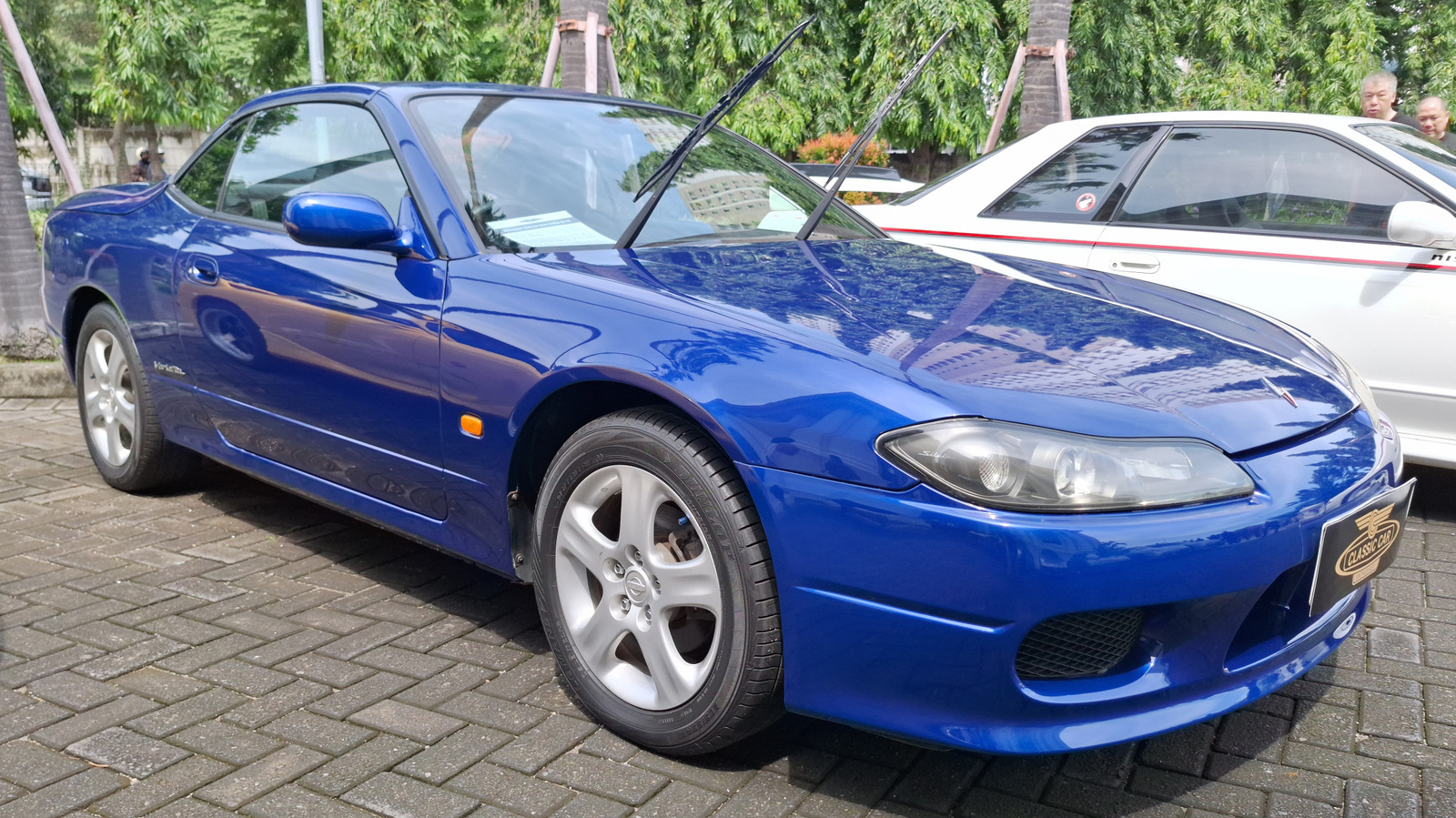
Another certified legend of the JDM scene is the Nissan Silvia. This two-door coupe was well known for its sporty driving characteristics thanks to its small size and rear wheel drive layout, and easily modifiable nature. The third and final generation of the Silvia, known as the S15, has become one of the most desirable cars to come out of the Japanese domestic market, but one version remains even more desirable.
It’s hard to make an already very cool car even cooler, but one way is to make it a convertible. That’s exactly what Nissan did with the S15 Varietta, which takes the iconic S15 silhouette and chops the top off, making for an open-top sports car experience with some JDM flavor. The Varietta was a wonderful looking car, and though it was a convertible, the roof was made with metal rather than canvas, which helped preserve the car’s sleek look. The Varietta pulled power from the S15’s straight-four that produced 162 horsepower. Though the S15 Varietta was a two-door coupe, it came in a 2+2 configuration, allowing up to four lucky passengers to feel the wind in their hair in an S15, an idea once only possible in the imagination.
Related Article