Rahul Kapoor has been chasing cars on track, on the road, and occasionally on foot since 2014. His work has appeared in autoX, Motown India, and The Financial Express, covering everything from the latest EV tech to 1960s endurance racers. He’s not just a writer; he’s a photographer, videographer, and someone who’s actually lived inside the industry’s moving parts; attending launches, test-driving on race circuits, and talking shop with engineers, designers, and team principals. That mix of access and curiosity means his readers don’t just get the news; they get the story behind the story.
The Japan Mobility Show rolled in with a chip on its shoulder and hardware to back it. Wild six-wheel vans, comeback badges that hit right in the JDM memory bank, electric muscle tuned for excitement, and a new ultra-luxury game that nobody expected. The vibe felt like the era that gave us Supras, Evos, and NSXs, only now with batteries, torque-vectoring, and quiet confidence. One brand, in particular, made a move that will shake up the luxury world when we get to it. Before that, every major Japanese nameplate brought heat. Still, an eleven-foot Chinese wildcard lurks in the corner.
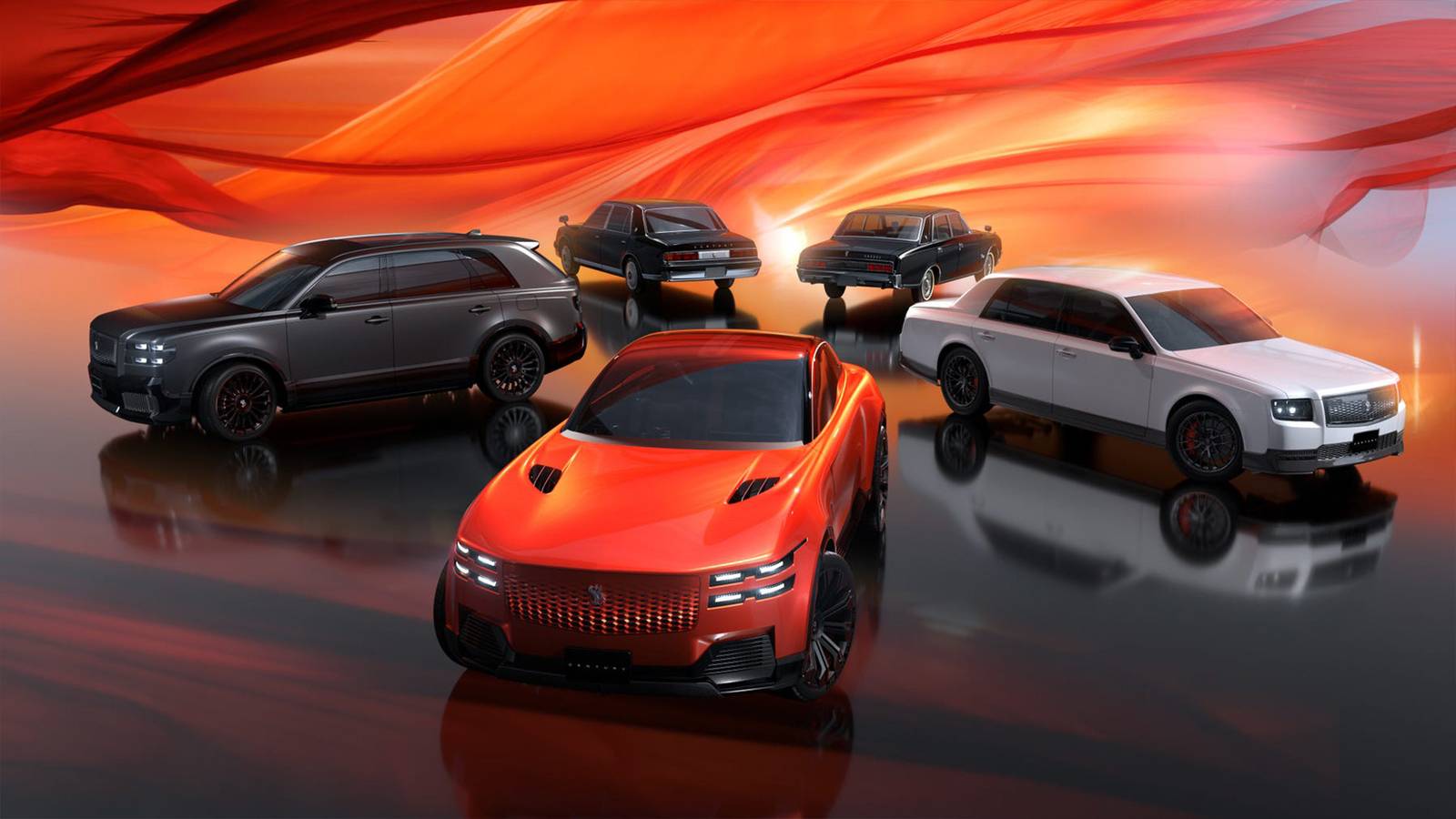
Toyota’s Century brand made the biggest statement at the Japan Mobility Show 2025. Forget the days when Century quietly ferried prime ministers around Tokyo. Toyota just positioned it in the same air as Bentley and Rolls-Royce, and the intent came through loud and clear. This is Japan entering the ultra-luxury arena with its own code of honor, not borrowing the playbook from Crewe or Goodwood.
Century now sits above Lexus, GR, Toyota, and Daihatsu within a new brand structure that gives each division space to build identity. GR remains the performance arm, Lexus evolves into a tech-driven luxury challenger, and Century becomes the flagship label for hand-built, money-no-object machines. Think chauffeur-grade refinement, zero noise, obsessive material quality, and personalization that borders on coachbuilding.
At the Japan Mobility Show, Toyota revealed two Century models. The Century SUV concept set the tone with the Tailor Made model offering a cabin with handcrafted details, and rear seats that swivel for graceful entry. A digital clock feels like art, not a screen. No gimmicks. No rush. Century will tailor each build to the owner, one-of-one style, which puts it squarely in Rolls-Royce Cullinan territory.
A GR-tuned Century sedan made things more interesting, hinting that power and tradition can coexist. Akiyo Toyoda, the CEO, uses a Century GRMN as a daily. But if it lands in production with hybrid torque and rear-drive dynamics, buyers cross-shopping a Bentley Flying Spur will look twice.
Toyota has not confirmed global sales channels yet, although executives hinted that high-net-worth buyers worldwide will get access. If someone in London or Dubai wants one, we are sure they will find a way. Century has stepped onto the global stage, and the ultra-luxury world will pay attention.
Lexus showed up with a bold mood shift. With Century moving into the ultra-luxury throne room, Lexus finally gets room to sharpen its own identity. The brand is chasing innovation and technology, not just polished cabins and quiet rides. That came through in two headline concepts, starting with the LS that no one expected.
The LS name once stood for a flagship “Luxury Sedan” that fought the Mercedes S-Class. Now, after discontinuing the sedan, Lexus wants LS to mean “Luxury Space”. The six-wheel minivan LS concept looks part executive shuttle, part sci-fi lounge. The three axles stretch the profile, not for shock value, but to free cabin space and reduce wheel intrusion. Massive doors create a graceful entry and exit. The interior mixes bamboo, warm lighting, flexible seating, and a calm Japanese design language. It feels like a private jet cabin built for real use, not a showroom gimmick. Lexus sees high-end mobility moving toward serene, curated space, and the new LS makes a Bentley Bentayga or Maybach GLS feel traditional by comparison.
Then the brand reminded everyone it still cares about driving. The Lexus Sport Concept sat nearby like a stealth statement. Long nose, low stance, blade-sharp aero, and hidden exhaust tucked beneath active wings, that silhouette screams serious intent. Lexus will not say the word ‘LFA’ here, although the connections are obvious. This concept hints at a hybrid performance flagship that targets needle-sharp feedback, not just big numbers. Lexus clearly wants a seat back in the room of performance cars.
The Toyota Corolla Concept debuting at the Japan Mobility Show proves it is ready to move beyond safe commuter formulas. The design drops the sensible-shoes look and goes sleek, low, and sharp. Think four-door fastback with cues from the Sport Crossover study, clean surfacing, and a driver-focused cockpit. Screens sit around the driver only, and each seat has its own purpose. The driver gets info and control, the passenger gets lounge vibes. That attention to personal space feels closer to a modern Lexus cockpit than the old reliability-first Corolla playbook.
Toyota will offer hybrid, plug-in hybrid, and full EV versions rather than a single electric skateboard approach. It signals confidence in multi-pathway tech and gives future buyers choice without compromise. For shoppers who want practicality but crave something with attitude, this concept hits a sweet spot.
Then Toyota used the FJ reveal to remind everyone it still does 4×4 soul. The baby Land Cruiser FJ brings real off-road thought: shorter wheelbase than the LC250, ladder frame chassis, part-time four-wheel drive, chunky cabin controls, and a manual handbrake. The bumpers come off, lights swap, snorkels and racks bolt on, and customization lives at the core. It launches with a 2.7-liter four-cylinder making 161 hp, paired with a torque-converter automatic. Toyota says the US will not get it, although it may spell trouble for the Wrangler and Bronco overseas.
Subaru arrived in Tokyo with a clear message for enthusiasts: the STI legend continues, no matter what powers the wheels. The brand rolled out two STI badged concepts, and both wear the pink badge with purpose. The Performance-B goes old-school where it counts. You see a flat-four engine layout, symmetrical AWD hardware, a manual shifter, and three pedals staring you in the face. Short overhangs, a wide stance, and a proper roof spoiler tell you this thing wants to dig into corners and pull out clean. Subaru’s engineers clearly built it around feel, rotation, and traction, not touchscreen trickery.
Right across the stand, the Performance-E pushes STI into the EV age without losing grit. The body sits low, surfaces guide airflow instead of fighting it, and the cabin looks livable enough for real daily miles. Subaru keeps the specs locked down, although the silhouette and packaging suggest dual motors with smart torque control. If it lands with the same rally-bred composure as a WRX STI and instant electric punch, it could sit in the same conversation as the Hyundai Ioniq 5 N.
Honda debuted the new Prelude to the public as a clean, modern sports coupe built to carry the “joy of driving” into a world that leans electric. The Prelude brings two doors, tight stance, and a silhouette that feels like a spiritual successor to the original compact sports car as a modern grand tourer. Honda has not shared final power numbers yet, although the company confirmed a hybrid system with tech it spent years refining. It sets the tone for a future where performance and emotion still matter.
Furthermore, the Honda 0 Series showcased three futuristic EVs built under a new Thin, Light, Wise development philosophy. The 0 Saloon takes the flagship role, with crisp lines, a low roof, and a retro-future presence that feels more anime concept than executive appliance. The 0 SUV and 0 Alpha play in the crossover space, offering taller stances and more flexibility. Honda clearly wants to rethink packaging and weight in its EV era, instead of chasing the heavy, big-battery trend.
Acura also stepped in with the RSX Prototype, running Honda’s first in-house EV platform and the brand’s new ASIMO OS. It learns driver habits and adjusts. If Acura tunes it with the same sharpness it gave the Integra Type S, premium EV rivals should pay attention.
The BYD Racco rolled into the Japan Mobility Show as the first kei model developed outside Japan, and it goes straight for one of the country’s most guarded automotive territories. Kei cars sit at the core of Japanese urban life, and brands like Suzuki, Daihatsu, Honda, and Nissan practically wrote the rulebook and protect it with dear life. But, BYD wants in, and it chose the most culturally protected lane to make the point.
The Racco keeps the familiar kei blueprint: a tall body, tiny footprint that measures 11.2 feet in length, sliding rear doors, and a closed nose hiding an electric motor capped to around 63 hp by regulation. A 20 kWh battery and an expected 112-mile range put it right in the mix with the Nissan Sakura EV, Japan’s best-selling electric car. Pricing should land close to the Sakura too. The Racco is China moving its knight before touching any of its pawns.
China wants to compete everywhere, from luxury SUVs to micro EV pods. BYD sees kei cars as a window into the market. If it earns trust here, nothing stays off limits.
We want to hear from you! Share your opinions in the thread below and remember to keep it respectful.
Your comment has not been saved
This thread is open for discussion.
Be the first to post your thoughts.