Guest User
The chair of a US Senate committee believes safety tech is behind rising new car prices, possibly signalling a loosening of regulations.
Derek Fung
Journalist
Derek Fung
Journalist
Could the US wind back mandatory safety technology or slow the roll out of autonomous emergency braking in a bid to reduce new car prices?
The US Senate Committee on Commerce, Science, and Transportation will hold a hearing on January 14, 2026 on new car affordability, claiming the average price has more than doubled in the past 25 years.
The CEOs of America’s Big Three automakers (Ford, GM and Stellantis) have been invited to attend, along with the Tesla’s head of vehicle engineering.
Committee chair Senator Ted Cruz claims new car prices have been “driven up by onerous government-mandated technologies and radical environmental regulations”.
He says the latter issue has been tackled by the current administration’s One Big Beautiful Bill Act, which effectively gutted the CAFE (Corporate Average Fuel Economy) standard by setting penalties for violating its limits to zero dollars. The act also halted the US$7500 federal tax rebate for EV purchases at the end of September 2025.
According to the committee, the average new car price in the US has jumped from US$20,356 (A$31,000) in 2000 to over US$50,000 (A$76,000) this year. Taking into account inflation, the average new car price in 2000 was US$38,395, meaning the effective increase is around 30 per cent, rather than 245 per cent.
The committee didn’t cite sources for its pricing numbers, but the latter figure seems to be taken from Kelley Blue Book’s new car average transaction price (ATP), which the publication calculates every month.
In September it sailed north of US$50,000 for the first time ever, hitting US$50,080. According to Kelley Blue Book, “buyers rushed to finalise deals” on EVs before the end of the federal tax credit. This not only pushed up both EV sales, but also the average transaction price as electric cars are more expensive than similarly sized and equipped petrol models.
Erin Keating, executive analyst for Cox Automotive, owner of Kelley Blue Book, noted: “The US$20,000 [new car] is now mostly extinct, and many price-conscious buyers are sidelined or cruising in the used-vehicle market.
“Today’s auto market is being driven by wealthier households who have access to capital, good loan rates and are propping up the higher end of the market. Tariffs have introduced new cost pressure to the business, but the pricing story in September was mostly driven by the healthy mix of EVs and higher-end vehicles pushing the new-vehicle ATP into uncharted territory.
“We’ve been expecting to break through the US$50,000 barrier. It was only a matter of time, especially when you consider the best-selling vehicle in America is a pickup truck from Ford that routinely costs north of US$65,000.”
The Senate committee hearing will take place before Congress needs to reauthorise a US$300 billion ($457 billion) bill that not only funds road and rail projects throughout the US, but also the National Highway Traffic Safety Administration (NHTSA).
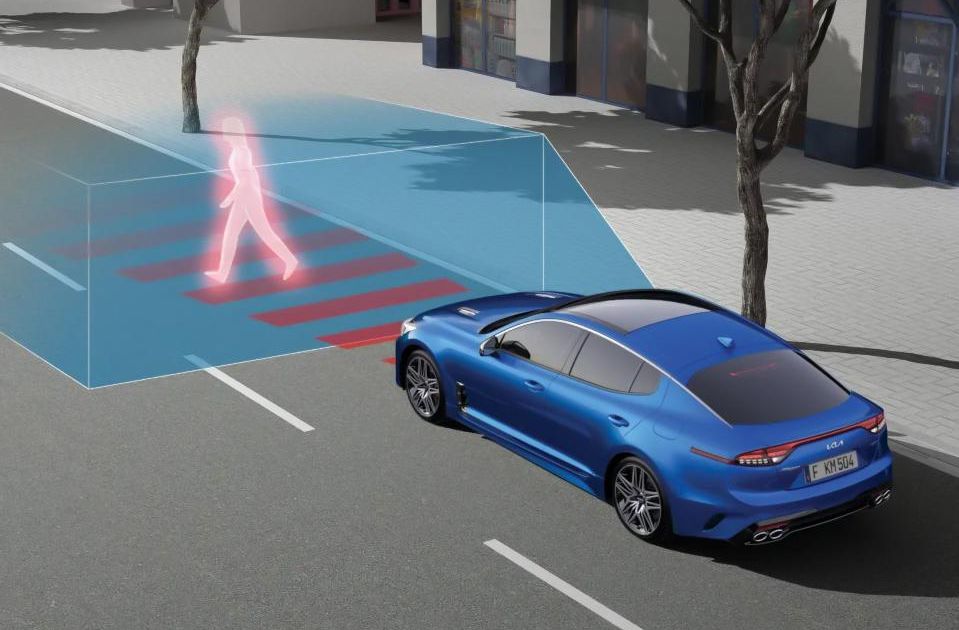
NHTSA is tasked with setting road safety regulations, and currently plans to make autonomous emergency braking (AEB) mandatory on new cars by 2029, a measure many automakers have been trying to block.
This is despite a wide-ranging study of over 98 million vehicles funded by both NHTSA and automakers showing AEB reduces front-to-rear car accidents by 49 per cent, and accidents with pedestrians, cyclists and other road users by nine per cent.
Just a shade under 40,000 people died on US roads last year, which equates to roughly 12 fatalities per 100,000 people. By comparison, 1300 people died on Australian roads in 2024, or 4.3 deaths per 100,000 people.
“Regulation is the best way to make sure everybody’s got this technology that’s highly effective,” a spokesman for the Insurance Institute for Highway Safety told The Wall Street Journal.
Derek Fung would love to tell you about his multiple degrees, but he's too busy writing up some news right now. In his spare time Derek loves chasing automotive rabbits down the hole. Based in New York, New York, Derek loves to travel and is very much a window not an aisle person.
Matt Campbell
7 Hours Ago
Ben Zachariah
12 Hours Ago
CarExpert.com.au
14 Hours Ago
Damion Smy
14 Hours Ago
Alborz Fallah
15 Hours Ago
Ben Zachariah
16 Hours Ago
Matt Campbell
7 Hours Ago
Ben Zachariah
12 Hours Ago
CarExpert.com.au
14 Hours Ago
Damion Smy
14 Hours Ago
Alborz Fallah
15 Hours Ago
Ben Zachariah
16 Hours Ago
5 Months Ago
7 Hours Ago
12 Hours Ago
14 Hours Ago
14 Hours Ago
15 Hours Ago
Related Article