Move by firm, owned by US group Avis Budget, will remove access to shared fleet across London at end of year
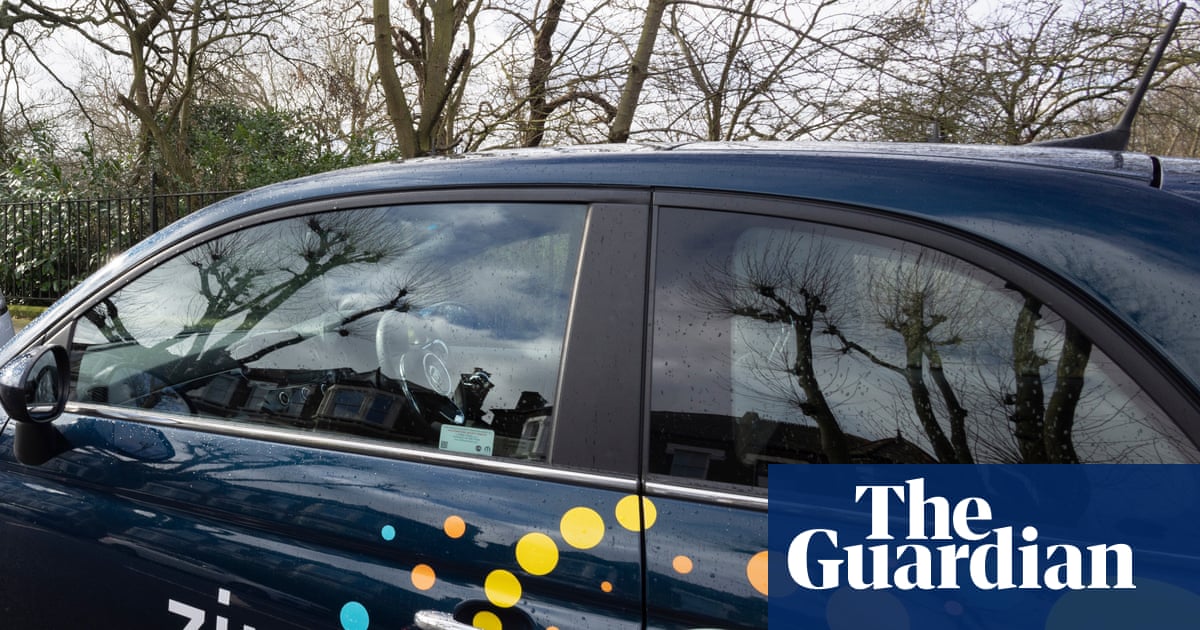
The world’s biggest car-sharing company, Zipcar, has said it will close its UK operation, removing access to its shared fleet across London at the end of this year.
The company, owned by the US car rental group Avis Budget, said it would suspend new bookings through its app after 31 December, pending the outcome of a consultation on possible redundancies. The UK operating company had 71 staff last year, according to its latest accounts.
The closure will be a blow to advocates of carsharing as a more sustainable form of personal transport, as well as to some car clubs that relied on Zipcar to share private vehicles.
James Taylor, Zipcar UK’s general manager, wrote in an email to customers: “We are proposing to cease the UK operations of Zipcar and have today started formal consultation with our UK employees.” Taylor directed customers to the website of CoMoUK, a national charity for shared transport, to find other car-sharing options.
The closure will follow a tricky period for carsharing companies. The Guardian reported in March that Avis Budget had quietly downgraded the valuation of its Zipcar subsidiary, amid declining revenues and rising costs in certain key markets.
Zipcar’s UK closure will coincide with the increase in London’s congestion charge, and its introduction to electric cars, including those driven by car club members, from January. Zipcar would have had to pay the up-to-£18 daily charge on any cars that entered the zone, except for the small number permanently based inside, and then decide how much to pass on to consumers.
The changes to the congestion charges have been estimated to add £1m annually to car club costs, most of that borne by Zipcar. Zipcar was thought to run nearly 3,000 vehicles, including cars and vans – the majority of the 5,300 shared vehicles in the UK.
A spokesperson for Sadiq Khan, the mayor of London with oversight of Transport for London, said: “The mayor’s transport strategy is clear on the important role car clubs can play to reduce the need for private car ownership. This is why the mayor recently announced that electric car clubs with a dedicated parking bay in the congestion charge zone will receive a 100% discount on the congestion charge from January.”
Richard Dilks, chief executive of CoMoUK, said the closure was a sign of a “failure to have supportive policy” towards car clubs. The UK lags behind other European countries, with only 0.7 shared cars per 10,000 people, compared with 2.2 in Germany and 4.4 in Switzerland, according to car sharing software company Invers.
“We’ve been warning for a while about the viability of car clubs in London,” said Dilks. “People rely on these things – that’s how they work. If that’s taken away it’s a significant blow.”
The charity counted 328,000 car club users in the UK in March. Dilks said many of them would be forced into private car ownership instead.
Zipcar was founded in 2000 by two entrepreneurs in Cambridge, Massachusetts, before being bought by Avis Budget in 2013 for $491m (£371m). It continues to operate in 25 US states, and in three cities in Canada, according to its website. However, the proposed UK closure would come after Zipcar (UK) reported an £11.7m loss for 2024.
The company said it would honour existing bookings, including over the Christmas period. It also said it would contact users with bookings running into the new year, while paying subscribers will receive refunds for the period after 31 December.
Sign up to Business Today
Get set for the working day – we'll point you to all the business news and analysis you need every morning
after newsletter promotion
The concept of car-sharing gained popularity during the coronavirus pandemic as Zipcar, Enterprise Car Club and Share Now offered app-based car rental by the hour, while companies such as Hiyacar, Turo and Getaround opened up the ability to rent neighbours’ cars.
However, companies running their own fleets have struggled to make a profit, with relatively high maintenance costs for vehicles scattered around cities.
Zipcar in the UK had pioneered the “flex” model of running a fleet of cars with no set parking space, allowing users in London to park in residents’ bays almost anywhere in the centre of the city. Other cars or vans were stationed in dedicated bays. All are accessed via a mobile app.
Car-sharing is generally seen as more sustainable because it avoids the extra carbon dioxide emissions needed to produce vehicles for every individual household.
Zipcar and Avis Budget did not immediately respond to questions about the reasons for the closure.
Related Article