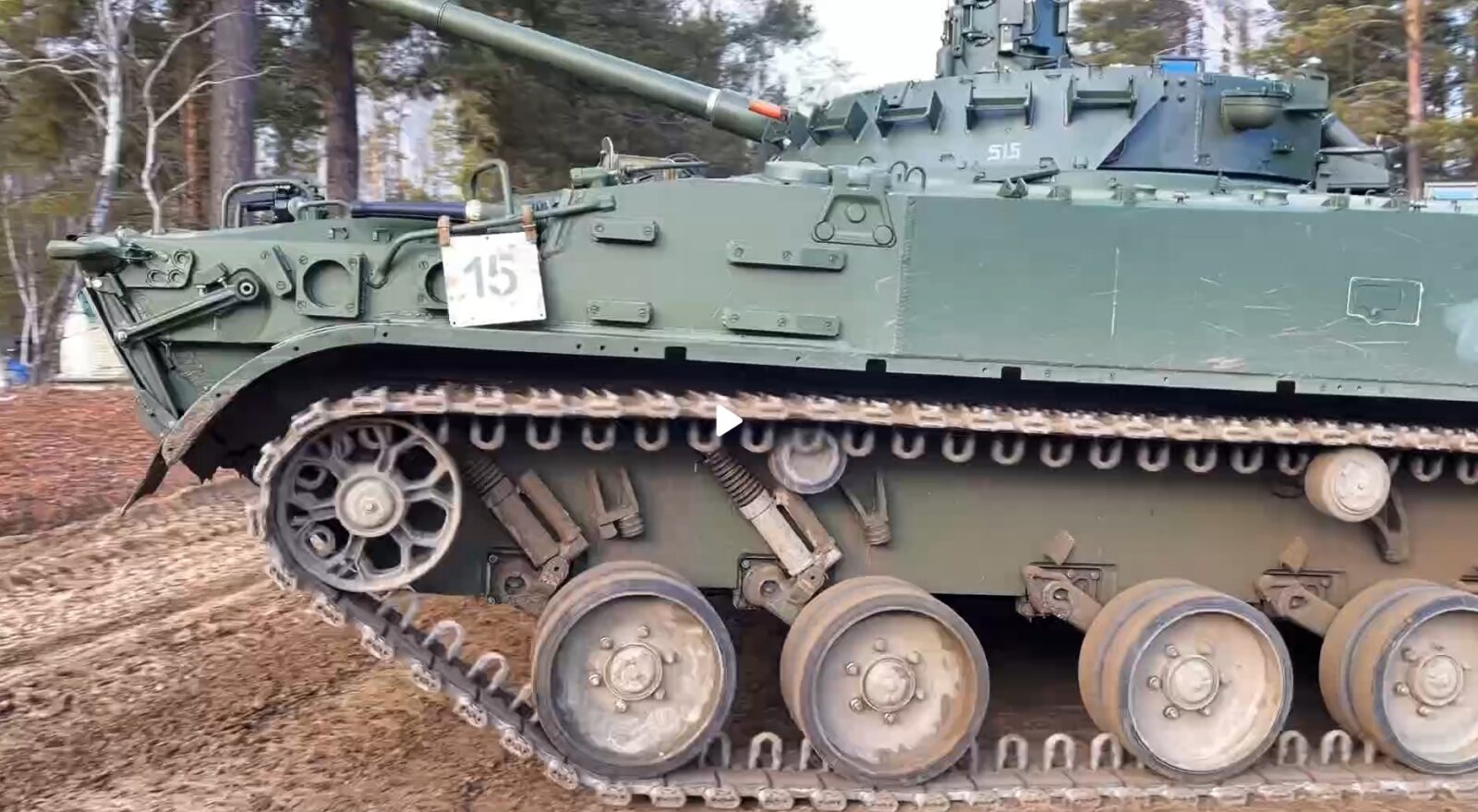
Rostec, a Russian-owned arms and technology company, says its High-Precision Systems holding has delivered a new batch of BMP-3 infantry fighting vehicles to Russian units, adding protective kits and electronic warfare systems that the company describes as upgrades shaped by battlefield use.
The announcement comes as the platform continues to draw criticism inside Russia and as independent monitoring shows heavy Russian losses of the BMP-3 in Ukraine.
According to the company, the vehicles are equipped with anti-cumulative lattice screens, armor plates, and protection kits for the upper hemisphere. Rostec states that each vehicle also received a camouflage “cape,” described as “a set of means for reducing visibility made of synthetic heat-insulating and radio-absorbing material.” The company says additional protection kits are shipped together with the vehicles and installed later by field units. Rostec adds that all BMP-3s in this batch are fitted with electronic warfare systems.
In a statement, Bekhan Ozdoyev, the industrial director of the weapons cluster at Rostec and a member of the Bureau of the Union of Machine Builders of Russia, said: “The infantry fighting vehicles of High-Precision Systems are the most widespread and demanded equipment on the line of combat contact. Russian servicemen value this equipment for its mobility, high firepower, and ease of operation even in the most difficult conditions. A coordinated system of modernization of the equipment has been worked out, as a result of which the BMPs receive options requested by the military.”
Rostec says its armored-vehicle plants are working around the clock and that specialists continue to revise the design of the BMP-3 based on operational experience from the war in Ukraine. The company highlights the addition of extra protection kits and visibility-reducing materials as part of an ongoing adaptation effort.
However, independent assessments paint a different picture of the platform’s performance and survivability. According to the monitoring group Oryx, which relies on photo and video evidence, Russia has lost at least 786 BMP-3s of various modifications during the war. The group tracks visually confirmed losses only, meaning the total may be higher. Ukrainian and Russian analysts have both noted that the vehicle remains vulnerable to modern anti-armor weapons, and discussions inside Russia have often questioned its battlefield endurance compared to Western vehicles.
The BMP-3, manufactured by Kurganmashzavod and operated by Russian ground forces, has been deployed widely across multiple sectors of the conflict. Its mixed track record has fueled debate within Russia’s defense community, particularly as comparisons with U.S. Army M2 Bradley vehicles circulate on Russian military channels. Russian commentators have pointed to weaker protection and survivability, while emphasizing mobility and firepower as the platform’s remaining advantages.
Rostec’s announcement highlights how Russia continues adjusting its fleet under wartime pressure, adding improvised and semi-standardized protection kits in response to losses from drones, anti-tank weapons, and top-attack munitions. The addition of electronic warfare systems also reflects Russia’s broader effort to counter Ukrainian drones, which remain a major threat to armored vehicles across the front.
If you’d like to show your support for what we do, this is the place to do it.
If you wish to report a grammatical or factual error in any of our news articles, please let us know by using the online form.
Subscribe to Weekly Defense Roundup
© 2025 Defence Blog media group. All Rights Reserved.