Angel Sergeev is a seasoned automotive journalist with over 15 years of experience covering the automotive industry. Born in Sofia, Bulgaria, he began his writing career in 2010 while pursuing a degree in Transportation Engineering.
His early work included contributions to the local edition of F1 Racing magazine (now GP Racing magazine) and roles at various automotive websites and magazines.
In 2013, Angel joined Motor1.com (formerly WorldCarFans), where he dedicated over a decade to delivering daily news and feature articles. His expertise spans a wide range of topics, including electric vehicles, classic cars, and industry topics. Angel’s commitment to automotive journalism is further demonstrated by his membership in the Bulgarian Car of the Year jury since 2013.
Modern new cars feel like smartphones on wheels. Extra screens, ten driving modes, lane-centering, auto-parking, over-the-air updates, the whole deal. Safety rules keep tightening, infotainment systems keep growing, and even work trucks quietly pick up radar sensors and big digital clusters. If someone test-drives a 2025 EV crossover, then hops into one of the cars below, it almost feels like jumping from PS5 back to a PlayStation 2.
Yet some long-running nameplates just refuse to die. Their bones date back to the early 2010s or even the 1990s. Automakers keep them around because the tooling is paid off, the profit is sweet, and buyers still show up. Enthusiasts know a few of these dinosaurs have real charm – big V8s, simple dashboards, honest mechanical feel. But in 2025, with rivals several generations newer, these things feel officially out of time.
This list looks only at vehicles that U.S. buyers can still order new as 2025 model-year cars, not leftover inventory or discontinued models. Each entry sits on a platform or basic design that traces back at least to the mid-2010s, often much earlier, and reviewers or owners regularly call it dated versus newer rivals. Models that already bowed out for 2025, like the Infiniti Q50 or Mitsubishi Mirage, stay off the list on purpose. The ranking runs alphabetically by model name, not by how “bad” or “good” they are.
From exotics to EVs and luxury cars, here are the best new cars coming in 2026 and all the juiciest details we already know about them.
The Chevy Express is not just old. It is prehistoric. General Motors launched this full-size van for the 1996 model year and has never given it a true second generation. The 2025 Express Passenger still rolls on the GMT610 ladder frame, still boxes out the same slab-sided body, and still stuffs you into a cabin that feels like a time capsule. Chevrolet’s own site lists the 2025 Express Passenger starting around $47,350, and it sells mostly to fleets and shuttle operators who care more about capacity than CarPlay.
To be fair, GM has not left it completely frozen. You get a 4.3-liter V6 or 6.6-liter V8, both tied to an 8-speed automatic, with up to 401 horsepower and 464 lb-ft of torque in the V8. From an enthusiast point of view, that drivetrain in a rear-drive, body-on-frame van is kind of hilarious – burnout-van, tow-rig, or camper-build potential. The problem is everything wrapped around it. The cabin plastics look fleet-spec, the safety tech is bare-bones compared with a modern Transit, and the dash stereo feels like an aftermarket head unit from a decade ago. If you just need a cheap box that hauls people, it still does the job. But as a “new” 2025 vehicle, the Express feels like GM forgot to hit the update button for about 20 years.
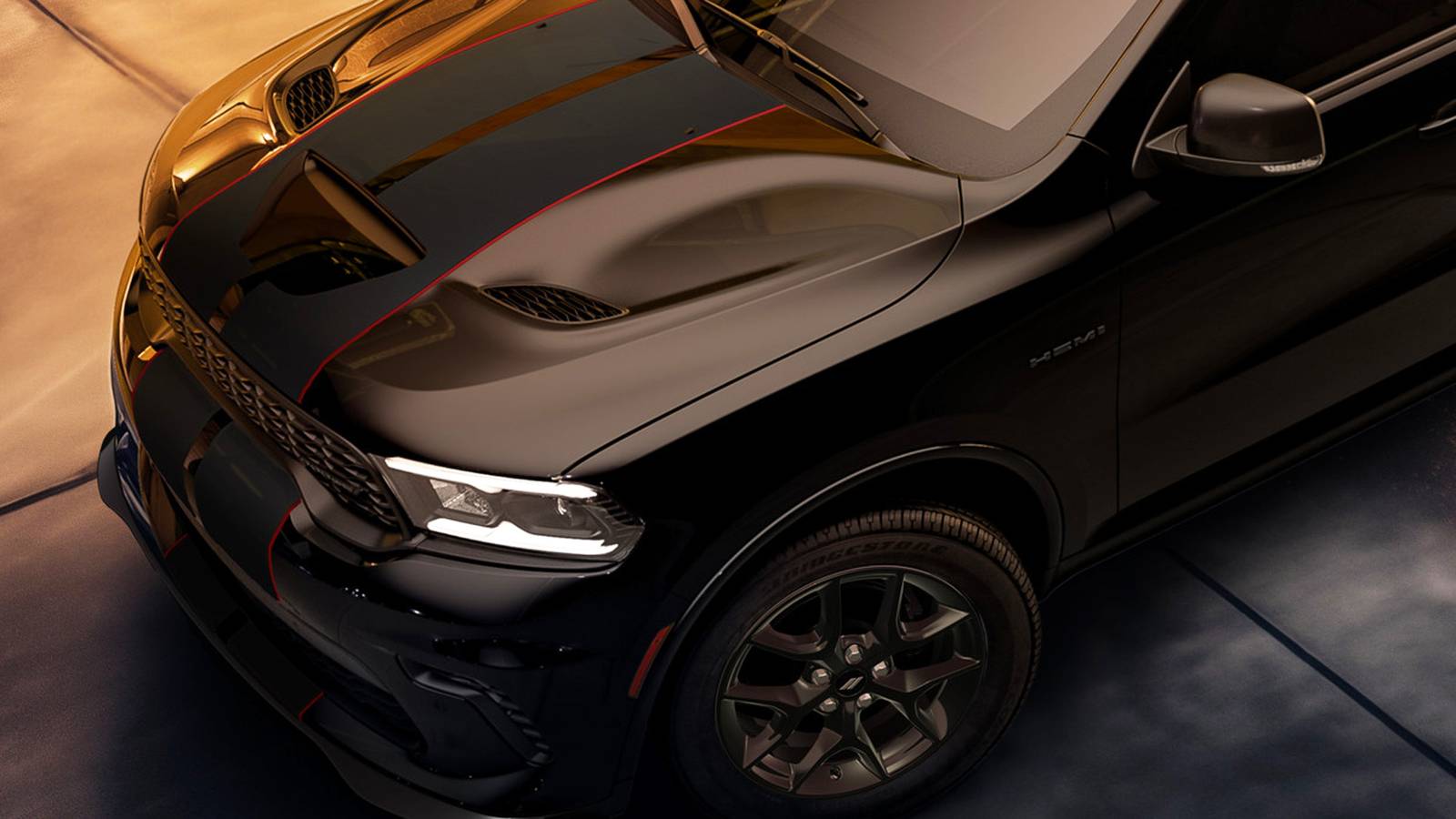
The Dodge Durango is basically a muscle car with three rows, but its age really shows in 2025. Dodge rolled out this generation for the 2011 model year on a unibody platform related to the old Jeep Grand Cherokee, and it never replaced it with a clean-sheet design. Reviews keep calling out how old it feels next to newer three-row SUVs, even when they praise its power and tow ratings. Dodge’s own pricing puts the 2025 Durango GT around $38,495 before destination, with the SRT Hellcat stretching deep into the 80s.
From an enthusiast seat, the Durango still rules in a couple lanes. You can get a proper Hemi V8, including the 710-horsepower SRT Hellcat that Dodge decided to keep alive for 2025. The thing sounds like a Charger wagon, yanks trailers with ease, and shrugs off abuse the way only a big American SUV can. But the tradeoff shows up everywhere else. The third row feels tight compared with newer platforms, the fuel economy is rough, and the ride and crash performance reflect a design that predates the latest SUV crop. Uconnect still works well, but the cabin packaging, driver-assist suite, and overall refinement give away its age. In 2025, the Durango is that friend who still lifts big but refuses to upgrade from an old flip phone.
On paper, the Jeep Compass should be a sweet spot – compact footprint, standard four-wheel drive on many trims, and Jeep badge equity. The problem is the current generation hit U.S. roads for 2017 and, despite a 2022 refresh and powertrain update, it still rides on the same basic MP/552 architecture. Meanwhile, every rival in the compact SUV class has evolved around it. Jeep’s own configurator shows the 2025 Compass Sport 4×4 starting around $26,900, with better-equipped trims climbing well into the 30s.
Jeep dropped in a 2.0-liter turbo four and eight-speed automatic, and reviewers say the 200-horsepower setup feels stronger than the old 2.4 “Tigershark,” but the Compass still drags a reputation for being heavy, not very efficient, and a bit dull to drive. Off-road-ish trims like Trailhawk bring real traction and decent approach angles, so enthusiasts who spend time on muddy fire roads can still make a case for it. The issue is value and freshness. In 2025, Stellantis has already shown a brand-new third-gen Compass abroad on the STLA Medium platform, with modern hybrid and EV powertrains, while the U.S. SUV still rides the old bones. According to the latest available information, the old Compass will bow out sometime next year when the all-new product will arrive as a 2027 model.
The Discovery Sport arrived for the 2015 model year as Land Rover’s “baby” Disco, and the 2025 version still belongs to that same first generation. Edmunds literally calls the 2025 car “part of the first Discovery Sport generation introduced for 2015,” and tags it with comments about uncompetitive fuel economy and aging underpinnings. Base P250 S models now start around $48,900 before destination, which is not cheap for something that still leans on a 10-year-old platform.
From an enthusiast angle, the Disco Sport almost feels like a gateway drug to “real” Land Rovers. The 2.0-liter turbo four makes 246 horsepower and 269 lb-ft, feeds a standard AWD system through a nine-speed auto, and the chassis works fine on light trails with Land Rover’s Terrain Response trickery. It looks right, too – squat stance, short overhangs, proper Disco face. But the age shows in the way it rides and sips fuel.
Testers keep mentioning turbo lag, road noise, and reliability headaches, plus a cabin that feels a half-step behind newer JLR products like the latest Range Rover or Defender. If someone wants that badge and a third-row “for emergencies,” the Disco Sport still works. In 2025, though, it feels like Land Rover keeps polishing a first-gen car instead of giving it a fresh chassis and driveline.
The Lexus IS is one of those cars forum people love to defend: “It’s old, but it’s sorted.” And that is true… up to a point. Lexus launched the third-generation IS (XE30) back in 2013, with the first U.S. cars hitting as 2014 models. It received a big facelift for 2021 with wider fenders, new lights, and chassis tweaks, but the platform under it stayed the same. For 2025, buyers can still order an IS 300 starting in the low $40Ks, with Edmunds listing a starting MSRP around $41,610 for the base car. It’s worth noting that the IS will be retired after the 2025 model year.
Under the hood, nothing screams “2025 tech” either, and that is both the appeal and the problem. The IS line still runs a 241-horsepower 2.0-liter turbo four in the IS 300, a naturally aspirated 3.5-liter V6 with 311 horsepower in the IS 350, and a 5.0-liter, 472-horsepower V8 in the IS 500 F Sport. Enthusiasts adore the V6 and V8 options – hydraulic-feeling steering, willing revs, and a chassis that likes a back road. The flip side is weight, dated packaging, and an interior layout that now feels cramped and button-heavy next to newer compact luxury sedans.
The infotainment updates help, but the basic dash and cabin hardpoints still scream early-2010s. In 2025, the IS still drives nicely, especially with the bigger engines, but compared with newer rivals and even Lexus’s own newer platforms, it feels like Toyota keeps doing hero mods on an aging project car instead of building a fresh one.
It has a near-faultless record for dependability.
The Outlander Sport is probably the most obvious “too old” crossover on this list. Mitsubishi launched this compact SUV (also known as the RVR) for 2011, and while it has worn several different faces, the core structure has stayed the same. For 2025, Mitsubishi still sells it in the U.S. with a base 2.0 S trim starting around $24,445, according to official and dealer spec sheets.
On paper, the spec sheet looks fine for a cheap runabout – a 2.0-liter four-cylinder making 148 horsepower, or an optional 2.4-liter with 168 horsepower in the pricier trims, both tied to a CVT and optional all-wheel drive. In reality, reviewers call the base engine “almost unbearably slow,” and the CVT never lets the car feel eager. Mitsubishi has bolted on an 8-inch screen, smartphone mirroring, and a decent pile of safety aids, but the driving position, crash structure, and overall refinement give away its age. On forums, people often treat the Outlander Sport like a cheap beater or first 4WD, something you buy because the payment works, not because the platform excites you. In 2025, with a far more modern regular Outlander sitting in the same showroom, the Outlander Sport feels like leftover old stock Mitsubishi keeps reheating with new trims and stickers.
When the Model S launched in 2012, it felt like it came from five years in the future. In 2025, it feels like it stayed there. Tesla keeps updating motors, interiors, and software, but the underlying big-sedan platform dates back to that original car, which makes it America’s oldest new sedan architecture still on sale. Car and Driver points out that “fast forward 13 years and the industry has been transformed, though the Model S has stayed relatively unchanged,” and that sums it up perfectly. After a mid-2025 price bump, Tesla lists the dual-motor all-wheel-drive Model S at around $84,990 and the Plaid at near $99,990.
Performance still hits like a sledgehammer, though. Even the base car rockets to 60 in the low-3-second range, with huge range numbers and the full Supercharger ecosystem behind it. Enthusiasts who love instant torque and minimalist cabins still see it as the OG electric spaceship. But stack it next to newer luxury EVs and its age shows. The silhouette barely changed since 2012, the chassis doesn’t benefit from the latest crash and NVH tricks, and the interior lacks some hardware that rivals now treat as standard, like a true 360-degree camera system and richer material choices. Owner feedback in 2025 also keeps mentioning build quality quirks and service headaches. The Model S is still brutally quick, but in a segment full of fresh platforms, it now feels more “legacy tech with big power” than the cutting-edge EV it once was.
The current XC90 kicked off Volvo’s modern era. The second generation arrived in 2015 on the new SPA platform and stunned people with its Scandinavian interior and big vertical touchscreen. Fast-forward to 2025, and the same basic XC90 still soldiers on. Edmunds notes that the 2025 XC90 remains “part of the second XC90 generation introduced for 2016,” which means the core design clocks in at roughly a decade old. Depending on trim, pricing starts in the high-50s, with Car and Driver quoting a base price around $58,695 before options.
Enthusiasts often give the XC90 a pass because it still drives well and looks classy. The 2.0-liter mild-hybrid fours make decent power, the T8 plug-in hybrid hauls, and the suspension tuning feels more European wagon than floaty SUV. But the age leaks through in the details. The portrait screen that once seemed huge now looks small next to the even larger OLED setups in newer rivals. Some owners complain about software glitches and slow infotainment responses, and the underlying safety and packaging no longer leapfrog the class the way they did in 2015. With Volvo’s electric EX90 finally arriving and production shifts planned later this decade, the current XC90 feels like a very well-kept, very likable, but undeniably old flagship SUV. For a 2025 buyer, it is more “last-gen Volvo, heavily polished” than anything truly new.
We want to hear from you! Share your opinions in the thread below and remember to keep it respectful.
Your comment has not been saved
This thread is open for discussion.
Be the first to post your thoughts.