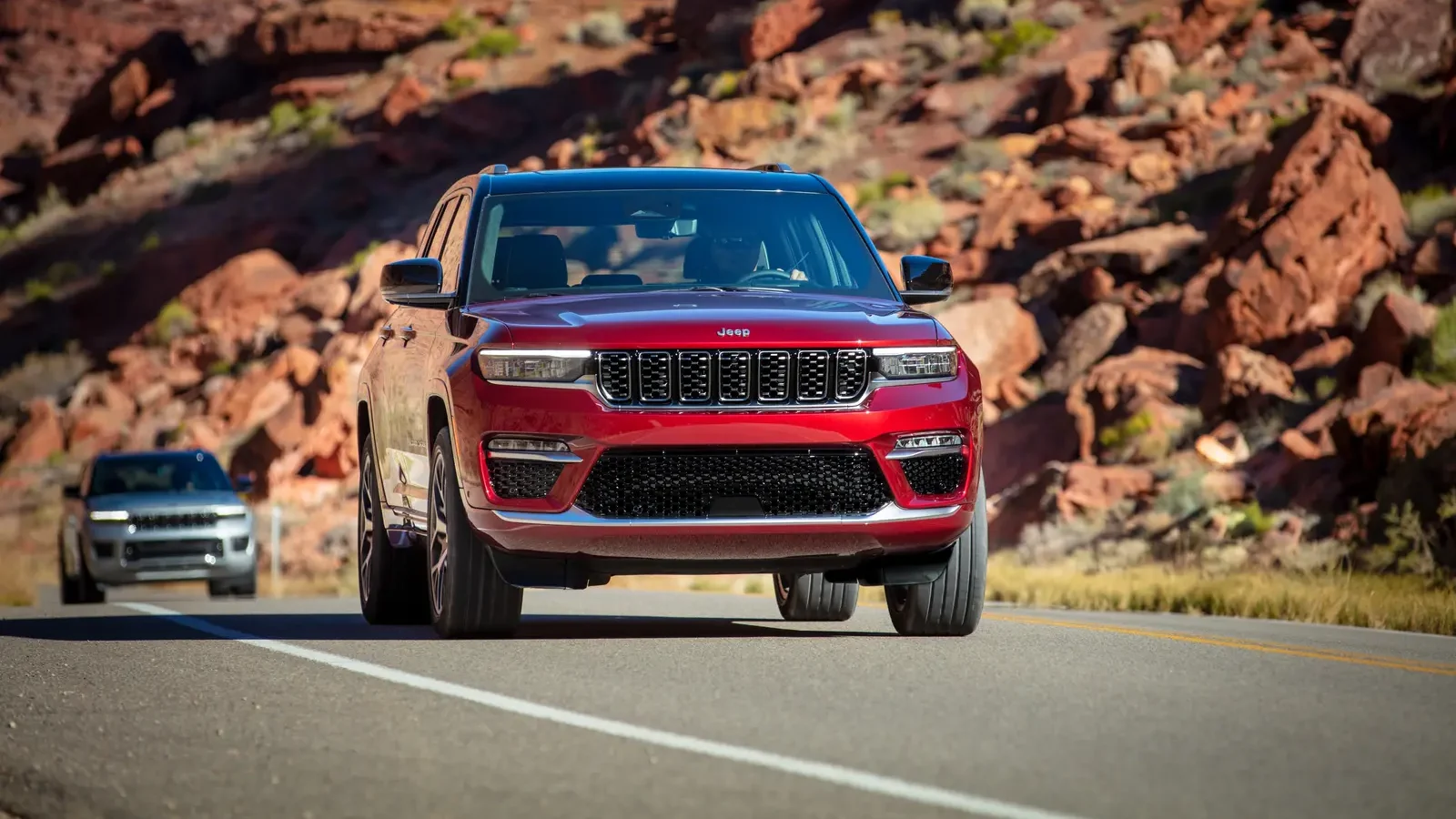
It’s not the Grand Cherokee, although that is a runner-up…
You know the drill anytime you walk onto your local dealer lot. We’re rolling up on the end of 2025, which means salespeople are motivated to move “new old stock” models from this model year out of inventory while fresh 2026 cars and trucks roll in from their respective manufacturers. Some brands have a serious problem though, according to this iSeeCars study: Too much of last year’s inventory still kicking around…far beyond the industry average.
On the whole, the study notes an average of 0.4% of 2024 models are still hanging around, say, a Toyota dealership. Incredibly popular models like the RAV4 do not hang around, with the average time any given car spends on the lot measured in days. The cars we’re talking about here, on the other hand, still have a significant portion of 2024 inventory left over…with one particular model cresting the 82% mark.
Now, automakers spend months and sometimes years analyzing potential demand and proactively adjust production to meet the anticipated demand. Sometimes they seriously miss the mark, with demand either vastly outstripping supply — leading less scrupulous dealers to tack on high markups for whatever is left — or oversupply leading to this exact issue, where vehicles sit around on lots for months on end.
iSeeCars analyzed over 2.6 million new car listings across the market to find the 2024 inventory still kicking around dealer lots. Part of the problem with the “surprising” number of new models still at dealers has to do with transaction prices: Buying a new car is practically the most expensive it’s ever been, with average transaction prices stubbornly sitting above $50,000, with little reprieve in sight.
The cars that have piled up on dealer lots could present an opportunity for some wheeling and dealing, which is increasingly rare in the current climate. You may be able to pick up a new car or truck with warranty coverage, as opposed to heading over to the used car side of the lot, where lower purchase prices are typically offset on the back end by out-of-warranty maintenance costs.
However, a quick aside: Buyers looking to save a few bucks should consider why these vehicles have been sitting around so long. Perhaps they were priced way too high in the first place, they may be a little underwhelming to live with, or reliability concerns scare people away. It could be a combination of the three, so take some time to think things over and negotiate for the best deal accordingly.
It’s not like these cars are going anywhere.
Against the 0.4% remaining 2024 inventory any given automaker might have, one company emerges as the clear front-runner with the greatest number of models on the list overall: Stellantis.
Sitting right at the top, the Dodge Hornet R/T plug-in hybrid has the unflattering honor as the most oversupplied 2024 car sitting in dealer inventories. The contrast of 82.1% of remaining 2024 allocation still sitting in inventory paints a serious problem for the slow-selling crossover. The Hornet has sold so poorly, in fact, that Stellantis suspended 2026 production in July, as the Italian-built SUV also faced steep import tariffs further inflating prices. And if you’re curious about its Alfa Romeo Tonale sibling…it’s not faring much better, with nearly half (46.8%) of models sent out to dealers for the 2024 model year still sitting in inventory.
Among the 23 models iSeeCars listed, 12 of them come from Stellantis brands. That includes the Jeep Grand Cherokee (70.8%), Jeep Wrangler 4xe (18.2%), Jeep Grand Wagoneer (12.9%) and Alfa Romeo Giulia/Stelvio (at 9.8% and 7.6% respectively).
Throughout the year, dealers have heavily discounted Grand Cherokees, signaling that Stellantis did indeed fly too close to the sun with its MSRP hikes over the past several years. The automaker’s sales dropped off by double digits earlier this year, and some dealers have taken to offering discounts as deep as $25,000 or more (in the case of the Grand Wagoneer, which carried an MSRP around $115,000 at the top end) to try and move old 2024 stock. Likewise, you’ll see a similar story with the aforementioned Dodge Hornet, like this particular R/T PHEV that’s discounted nearly $20K from MSRP…and still just sitting there.
Other notable models still kicking around in significant numbers include the Chevrolet Malibu (still 31% of 2024 inventory left over), a decent looking if slightly bland sedan that went out of production last November. The Nissan Z also has an issue with 18.8% of 2024 inventory still hanging around unsold, a sign that its reception hasn’t been as warm as rivals like the Toyota Supra and Ford Mustang. After all, when’s the last time you actually saw a Nissan Z out in the wild?
Apart from Stellantis’ exposure on this list, a lot of plug-in hybrids are also leading the way in terms of dealer leftovers. Models like the Hornet and Tonale lead the list, but others like the Hyundai Tucson PHEV (14%), as well as the Ford Escape Plug-in Hybrid (6.3%) and Lincoln Corsair (5.3%), also appear. These models don’t have as bad an oversupply issue, but consider that even 5% is still ten times the industry average. On that basis, you can still potentially find a good deal.
On a per-dealer basis, there may not be as large an issue of 2024s still hanging around the lots. Nevertheless, even a few of one particular model still sitting there a full model year after their arrival can be bad for business. Massive rebates off otherwise artificially high prices in the case of some of these vehicles doesn’t look particularly good for the dealer or the automaker. It’s even worse when you slash prices by 25-35% and said models still don’t sell.
We’re at a time when dealers are all too eager to clear out this remaining inventory so they don’t have the leftover inventory sitting on their books, tying up potential profit and taking up physical space as they try to rotate fresh cars in. They also know leftovers from 2024 (or even earlier, in some weird cases where buyers find “new” models years later) is a bad look, so that gives buyers some more leverage to combat these painfully high prices.
As those prices already take a bit out of new car sales across the board, we will have to wait and see whether some models continue to pile up with no buyers in sight, or if we could see a retreat from all-time record transaction prices (at least for some cars) as dealers are under pressure to move all this old inventory.
Related Article