These days, McLaren has become a synonym for supercars. The brand is known for razor-sharp engineering, styling that turns heads, and tech that feels like it came straight out of sci-fi. But it wasn’t always that way. For years, McLaren’s road car division was largely dormant. The McLaren-Mercedes SLR popped up briefly in the mid-2000s, but that was more Mercedes than McLaren, and it didn’t fully capture the magic the company was capable of. Ron Dennis knew that he had to change.
By the late 2000s, McLaren set out to build a proper road car from the ground up – 100% McLaren, no compromises. The result wasn’t just a car; it was a statement. A supercar that combined race-bred tech, mind-blowing performance, and a purity that made it stand out in an era of turbocharged, electronic-heavy hypercars. It put McLaren back on the map and quietly became one of the most underrated supercars of the 2010s. The best part? Today, you can find one on the used market for shockingly low money, making it one of the
You don’t have to be a multi-millionaire to be able to have these supercars!
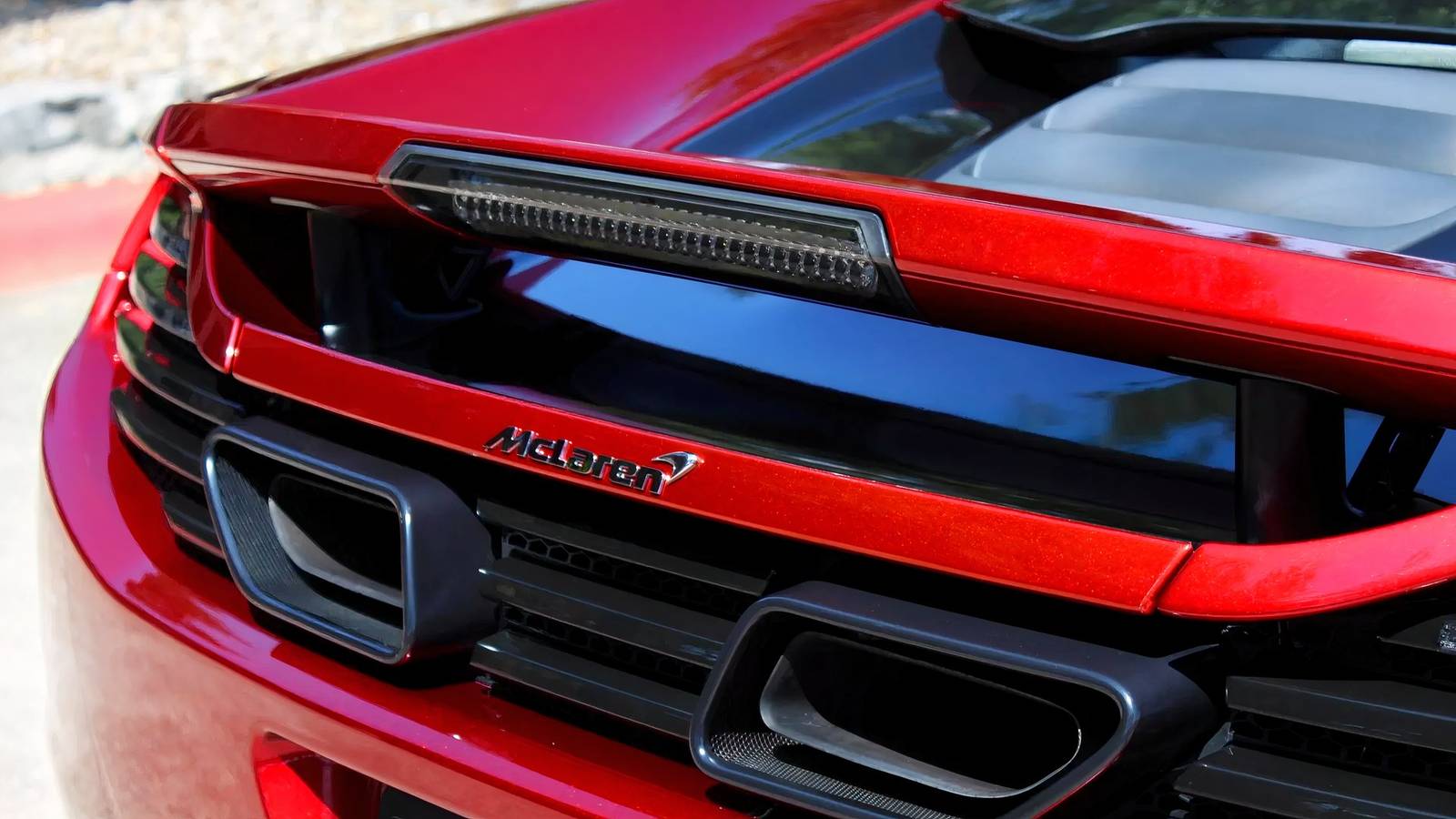
When McLaren decided to fully come back to the world of road-going supercars in 2011, the car it gave us was the MP4-12C. This was built to rival cars like the Audi R8, the Ferrari 458 Italia, and the Porsche 911 Turbo S, and McLaren took that market placement very seriously. The MP4-12C is a mid-engined, rear-wheel drive thoroughbred supercar, powered by a brand-new engine built for McLaren by Ricardo.
This was the first generation of McLaren’s twin-turbocharged V8 that has powered every single McLaren car since. The MP4-12C’s unit is 3.8 liters in size, and produces 607 hp and 440 lb-ft of torque. That power went through a 7-speed dual-clutch transmission built by Graziano. That gave the initial coupe version of the car a 0-60 mph time of just 2.9 seconds and a top speed of 207 mph.
That 3.8-liter twin-turbocharged V8 actually had a bit of an interesting development period. That was because it was tested in another mid-engined supercar from a rival brand before it was dropped into the McLaren! McLaren bought two Ferrari 360 Modenas and heavily modified them, dropping the new engines into them as part of that process. These Ferrari 360s also had extra side vents for more cooling, which mirrored the ones found in the final production version of the MP4-12C.
The MP4-12C was initially launched as a coupe. But, it wasn’t long before a convertible version showed up too. This is known as the Spider, and McLaren put a lot of effort into making sure it would have performance that was as close to the coupe’s as possible. The way McLaren managed this was by designing the MP4-12C from the outset to have a convertible version. That meant they could make the basic chassis and body as strong as possible in the coupe.
The Spider didn’t need any additional strengthening as a result and only weighed 88 lbs more than the coupe. Its top speed was also only marginally slower than the coupe’s (204 mph instead of 207), and it could drive at up to 196 mph with the roof down.
These cool supercars scratch the same itch as a Ferrari but for a fraction of the price.
The MP4-12C name might seem a bit of an odd choice at first. It looks like a bunch of unrelated letters and numbers, mashed together. McLaren did actually have a good reason for choosing that name, though. The “MP4” part of the name calls back to McLaren’s deep-rooted Formula 1 heritage. Until Ron Dennis was ousted from the company in 2017, all of McLaren’s Formula 1 cars began their names with “MP4”. This is short for “McLaren Project 4”, and comes from Ron Dennis’s original Project 4 racing team that he brought into McLaren when he joined the company. Even though Project 4 ceased to exist as it was when it was brought under the McLaren banner, the legacy of Ron Dennis’s original team lived on in the name of all of McLaren’s F1 race cars.
That “MP4” part of the MP4-12C’s name didn’t last forever, though. In 2012, around a year after the car’s production started, McLaren decided to simplify the car’s name to just the 12C. While that made it less of a mouthful to pronounce, it took a bit of that Formula 1 heritage away from McLaren’s first road car back since it collaborated with Mercedes-Benz on the SLR.
The McLaren MP4-12C was mainly about the engineering. That’s McLaren’s USP, after all. But, it also had a fantastic design, and that design was penned by one of the greats in the automotive industry. McLaren left the task of making the MP4-12C look good to none other than Frank Stephenson. Before being hired by McLaren, Stephenson had designed a whole host of acclaimed cars. This included the first generation of BMW’s re-launched Mini, several Ferraris and Maseratis (including the Ferrari F430, the Ferrari 612 Scaglietti, the Maserati MC12, and the Maserati GranTurismo), and the reborn Fiat 500. He had a reputation to live up to, and he absolutely delivered with the MP4-12C.
Stephenson’s work with McLaren didn’t stop there. He stayed there for nearly a decade, designing the legendary P1 hypercar as well as the 570S, 675LT, and 720S. It’s safe to say that McLaren wouldn’t be the supercar and hypercar juggernaut it is today without Frank Stephenson’s world-class ability to come up with great car designs that aligned with what McLaren wanted.
When it was new, the McLaren MP4-12C would have set you back just under $240,000. Considering the cars it was supposed to compete with at the time, that’s a price point that made a lot of sense. Now, though, these cars have become a lot cheaper. A used MP4-12C (or 12C if you go for a later example after the name was changed) is cheap enough to be considered an entry-level supercar. In fact, a used one of these can actually be cheaper than the more expensive end of today’s pickup trucks, such as the Ram 1500 or Chevy Silverado.
According to Classic.com, the average value for an MP4-12C coupe these days is $83,247. Go for the Spider, and it’s a bit higher at $103,872. That alone makes either variant of the MP4-12C cheaper than a brand-new Ford F-150 Raptor R ($109,000 – $113,000 starting MSRP). That isn’t the cheapest these supercars go, though. One coupe sold for $65,999 on Bring A Trailer earlier this year, and a spider sold for $86,500 this year on the same platform.
It’s a similar story on Cars & Bids, where an MP4-12C coupe sold for $81,004 last year. These were low-mileage cars as well – they had 36,000, 40,000, and 46,000 miles on the clock, respectively. This means you can get a good, low-mileage MP4-12C for less than a brand-new Ford F-150 Raptor ($83,000), GMC Sierra 1500 Denali Ultimate ($84,000), or Rivian R1T Tri-Motor ($99,900). In fact, buyers are now paying roughly the same (or less) for these McLaren supercars as they are for a new base Tesla Cybertruck with zero options, not to mention that the Cyberbeast trim is nearly $40k more expensive.
Why is the MP4-12C so cheap now? Like many other expensive cars, it’s suffered from a big hit of depreciation. Coupled with it being relatively underrated and forgotten, the 12C has slipped into bargain territory for what it is.
Sources: Bring A Trailer, Cars & Bids, Classic.com, McLaren.
We want to hear from you! Share your opinions in the thread below and remember to keep it respectful.
Your comment has not been saved
This thread is open for discussion.
Be the first to post your thoughts.