21 January Webinar: 2026 residual value outlook: Regional shifts and trends SIGN UP now
10 December 2025
09 December 2025
08 December 2025
11 December 2025
10 December 2025
01 December 2025
15 December 2025
02 December 2025
27 November 2025
16 December 2025
15 December 2025
12 December 2025
17 December 2025
16 December 2025
16 December 2025
16 December 2025
04 December 2025
26 November 2025
× Close
16 December 2025
15 December 2025
12 December 2025
11 December 2025
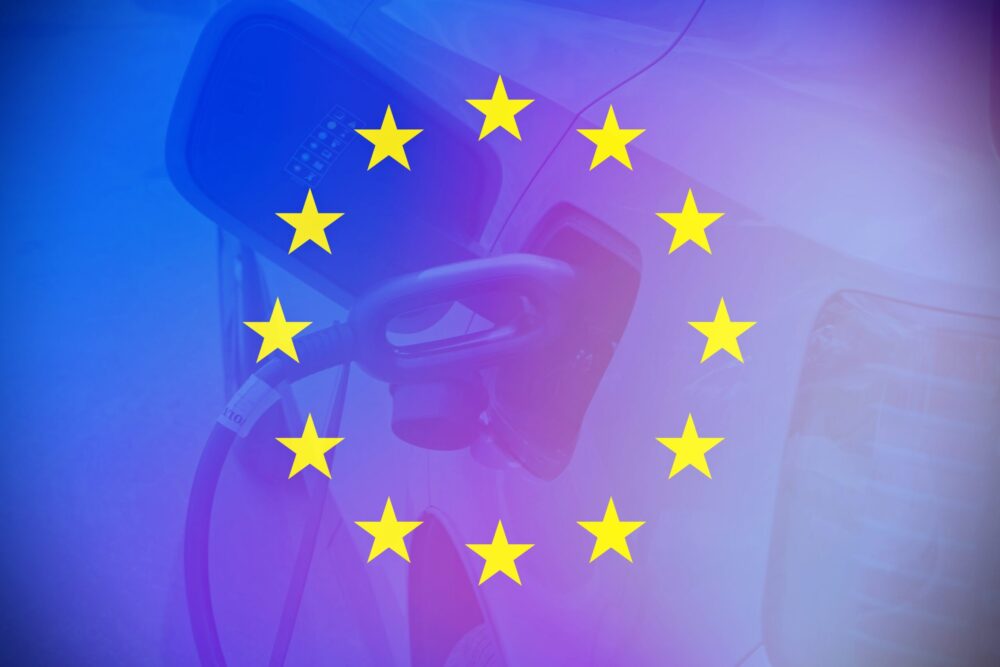
The European Commission’s automotive package proposes new internal-combustion engine (ICE) powered vehicles could be sold past 2035 in the EU. Autovista24 editor Tom Geggus unpacks the news and what it means for the region’s automotive industry.
The European Commission’s automotive package has opened the door to greater CO2 emissions flexibility for carmakers. The proposal comes following pressure from member states and big automotive players.
Under current rules, all new cars and light-commercial vehicles (LCVs) sold in the EU would need to emit zero CO2 from 2035 onwards. Instead, the automotive package published today considers the possibility of technological neutrality.
From 2035 onwards, carmakers will only need to cut vehicle CO2 tailpipe emissions by 90%, compared with 2021 figures. The companies will need to make up for the remaining 10% by using low-carbon steel made in the EU, or from e-fuels and biofuels.
ICE-powered models, plug-in hybrids (PHEVs), mild hybrids (MHEVs), and extended-range electric vehicles (EREVs) will still be available to purchase. Battery-electric vehicles (BEVs) and hydrogen vehicles will also be available.
The 2030 target could also be more flexible, with a ‘banking and borrowing’ scheme between 2030 and 2032. This means manufacturers could get three years to reduce their CO2 emissions by 55% compared with 2021.
The Commission acknowledged the slower progress of the electric LCV market. It suggested the 2030 CO2 target for LCVs will be reduced from 50% to 40%.
The automotive package also sets mandatory zero and low-emission vehicle share targets for corporate fleets. These will be set at the member state level to reflect differing levels of market maturity, according to the Commission. The total number of corporate vehicles registered by large companies will then be passed back to the Commission.
The Commission has also updated its car labelling rules, which provide CO2 and energy performance information to consumers. This will now include electric energy consumption and the range of electric vehicles (EVs). The scope of these labels will also be increased beyond new vehicles. New LCVs, used cars and used vans will also be covered.
The package also proposes the use of what the Commission is calling ‘super credits’. Carmakers will be able to earn these by selling small and affordable electric cars made within the EU. The hope is that this will incentivise the introduction of smaller EVs.
The Commission also stated a €1.8 billion battery booster could accelerate the development of a local battery value chain. Of this, €1.5 billion is earmarked to support European battery cell producers with interest-free loans.
The omnibus proposal could bring savings for businesses and national administrators to €706 million, according to the Commission. This is broken down into €655 million in compliance costs and €51 million in administrative costs.
Alongside the Commission’s other omnibus measures and simplification initiatives, administrative savings could climb to €14.3bn per year. This should help local carmakers concerned about the cost of electrification and the adoption of zero-emission vehicles.
‘Innovation. Clean mobility. Competitiveness. This year, these were top priorities in our intense dialogues with automotive sector, civil society organisations and stakeholders,’ said European Commission President von der Leyen.
‘Today, we are addressing them all together. As technology rapidly transforms mobility and geopolitics reshapes global competition, Europe remains at the forefront of the global clean transition,’ she outlined.
Apostolos Tzitzikostas, Commissioner for sustainable transport and tourism, highlighted that Europe’s automotive industry is a cornerstone for the region’s economy. He stated that it contributes 7% towards EU gross domestic product and provides nearly 14 million jobs.
‘With today’s automotive package, we are strengthening the sector’s competitiveness introducing flexibility into the CO₂ standards for cars and vans and a technology-neutral framework. We are also creating demand for cleaner corporate cars and vans, reinforcing EU manufacturing and supply chains,’ he said.
Germany’s automotive body, the ZDK, came out in full support of the automotive package. It called the proposal necessary and overdue in the step towards a more realistic European climate policy.
‘We offer highly efficient combustion engines, namely the 48-volt mild-hybrid engine, which provides a climate protection benefit when fuelled with carbon-neutral fuel. This technology is one of the options for complying with future CO2 fleet regulations,’ said ZDK president Thomas Peckruhn.
‘Specifically, emissions measurements at the exhaust must account for fuel origin. Carbon-neutral fuels should be excluded from the balance. If in the future only pure electric vehicles are demanded, these offerings will naturally disappear from the market without complicated regulations and high penalties,’ he added.
The proposal also drew criticism. Green group Transport and Environment (T&E) said reversing the phase-out of ICE sends a confusing signal to the automotive industry and consumers. It calculates the 90% CO2 target could result in 25% fewer BEV sales in 2035 than under the current target.
It welcomed the introduction of national electrification targets for large company fleets. However, it claimed that these will not be ambitious enough to drive greater uptake for the sector.
‘The EU has chosen complexity over clarity. Breeding faster horses could never have halted the ascent of the automobile,’ said William Todts, executive director at T&E.
‘Every euro diverted into PHEVs is a euro not spent on [B]EVs while China races further ahead. Clinging to combustion engines will not make European automakers great again,’ he commented.
‘While China accelerates, Europe is hesitating, and hesitation is not a strategy. Changing the rules midway through the game undermines business confidence after companies have already committed capital and built factories around a 100% trajectory,’ said Chris Heron, secretary general of E-Mobility Europe.
‘But once the dust has settled, we are confident the core of the 2035 framework will still matter more for the market than today’s exemptions. The world’s transition to EVs is irreversible, shaped by cost and efficiency,’ he added.
Share this article
11 December 2025
27 November 2025
26 November 2025
24 November 2025
Top
Autovista24 © 2025
Related Article