Jared has spent 15 years covering the auto industry, getting his first break with autoX—one of Asia’s biggest auto magazines. Since 2010, he has reviewed hundreds of cars and motorbikes around the world, worked with Top Gear, Autocar, Evo, Motoring World, and Quattroruote, served on the IMOTY jury for five years, and is a founding member of the Automotive Journalist Association of India (AJAI).
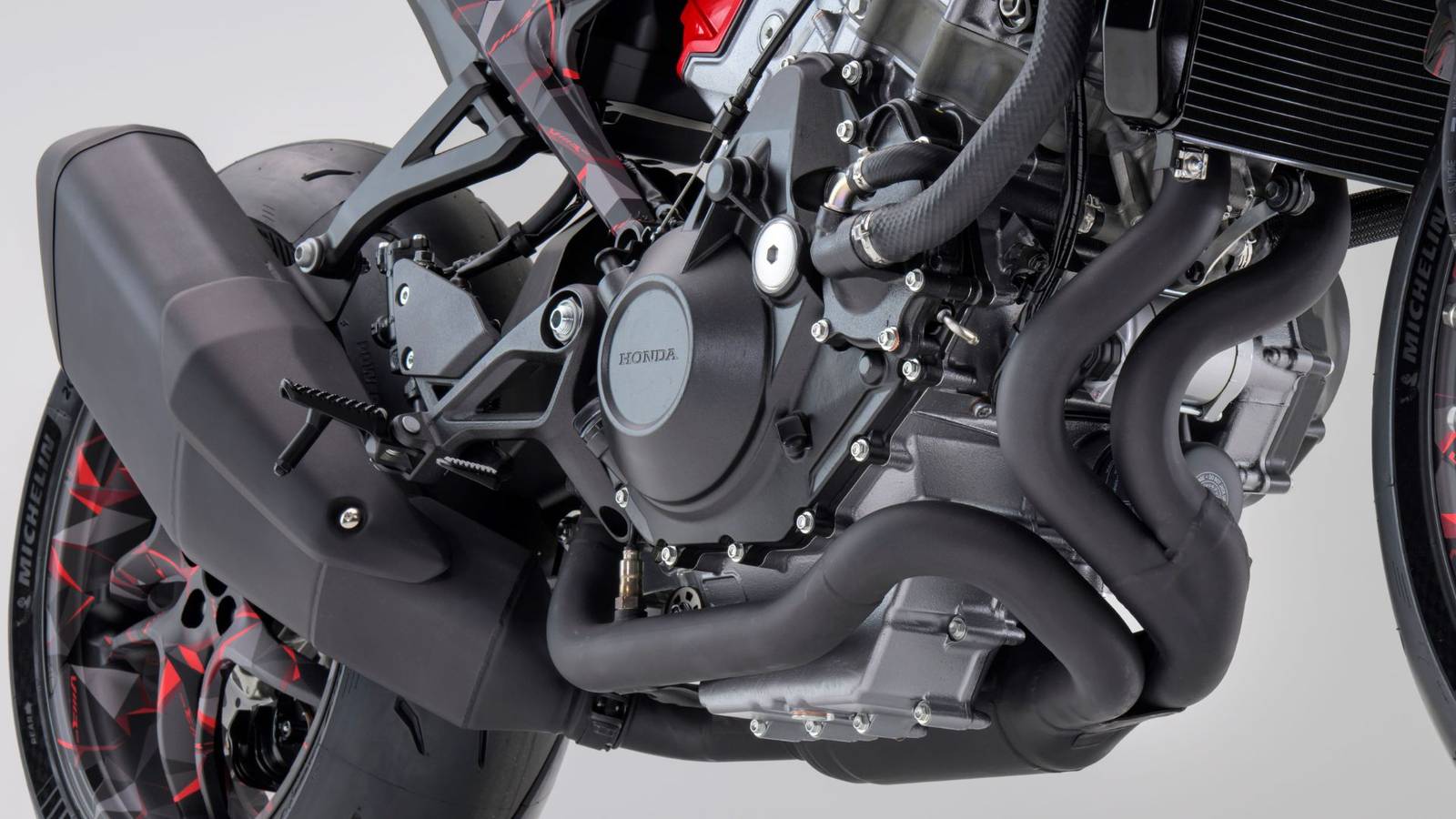
Honda is dabbling in multi-cylinder madness. We first saw it at EICMA last year, and then again this year when the legendary Japanese brand rolled out the V3R 900 prototype and showed off a water-cooled 75-degree V3 with an electric compressor.
But, behind the scenes, it seems that Honda is just getting started with its new tech. Two new patents suggest that the new technology will refine how future V-engines will breathe, cool, and stay light enough to fit into upcoming motorcycle models. Both patents were filed by Honda Motor Co., Ltd. and credited to the same trio of inventors — Hiroyuki Sugiura, Hiroyuki Kaga, and Yuichi Ohashi — the same minds behind several of Honda’s most recent high-efficiency powerplants.
Honda unveils its next-gen hybrid system led by a new V6 engine, promising stronger performance, better efficiency, and a renewed joy of driving.
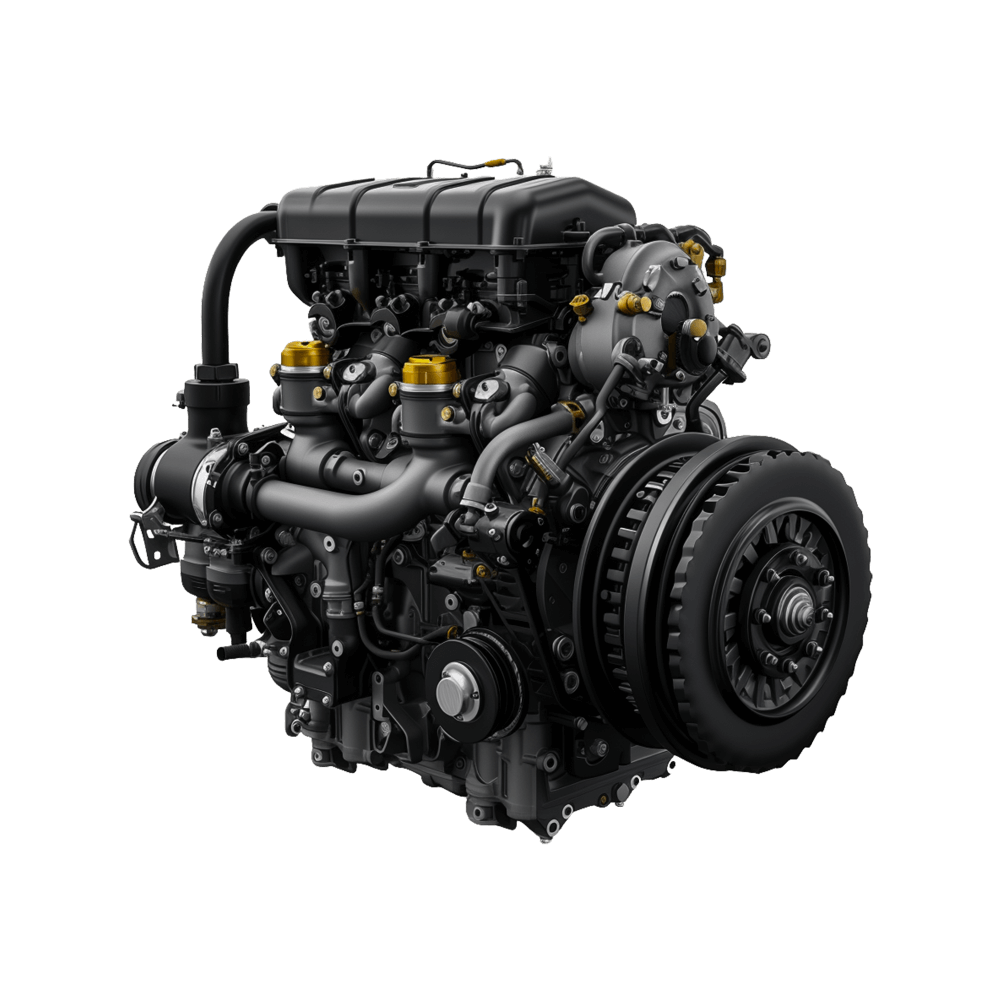
The first patent (DE 102025118963 A1) is all about reducing weight and component count. The document describes an internal oil-management system for engines that have auxiliary chambers on either side of the crankcase — the areas where mechanical ancillaries like pumps and drives sit. Instead of using separate scavenging systems, Honda’s design uses a single suction oil pump that draws oil from one chamber and, through a connecting passage, also clears the other. This clever routing means fewer parts, less weight, and more compact packaging — exactly what you need in a performance motorcycle engine that’s trying to stay narrow and efficient.
The second filing (DE 102025120142 A1) deals with coolant flow in a water-cooled V-engine. It lays out a smart sequence for how coolant circulates through the engine: first through the front cylinder block, then the rear block, followed by both heads. The goal seems to be faster, and more even warm-up times — crucial for meeting emissions targets and ensuring consistent power delivery. This kind of system could make high-output V-engines run cleaner and smoother right from startup.
Together, these filings read like the building blocks of Honda’s next-generation V platform — lighter, better-cooled, and smarter than ever.
This Triumph cruiser with a huge parallel twin was a bold rival to the heritage-rich American V-Twins from Harley-Davidson and Indian Motorcycle.
Honda’s lineup today is dominated by parallel-twins and V-engines, each serving a distinct role. The recent appearance of the V3R 900 prototype signals a new family brewing — possibly a 900cc to 1200cc forced-induction V platform of new sports bikes. Although, we do know that Honda does share engines between different bike segments as well. So there is really no telling where this technology will be used first.
We also don’t know if these new technologies will be applied to existing engine platforms as well. Weight saving and cooling efficiency are equally important for all engine types — whether parallel twin or V-twin. We could see these technologies debut on a future V3 or V4 sport-tourers, maybe even a next-generation Africa Twin variant with a new power layout. Whatever the case, the message is clear that Honda is still coming up with ways to make internal combustion engines even better.
We want to hear from you! Share your opinions in the thread below and remember to keep it respectful.
Your comment has not been saved
This thread is open for discussion.
Be the first to post your thoughts.
Related Article