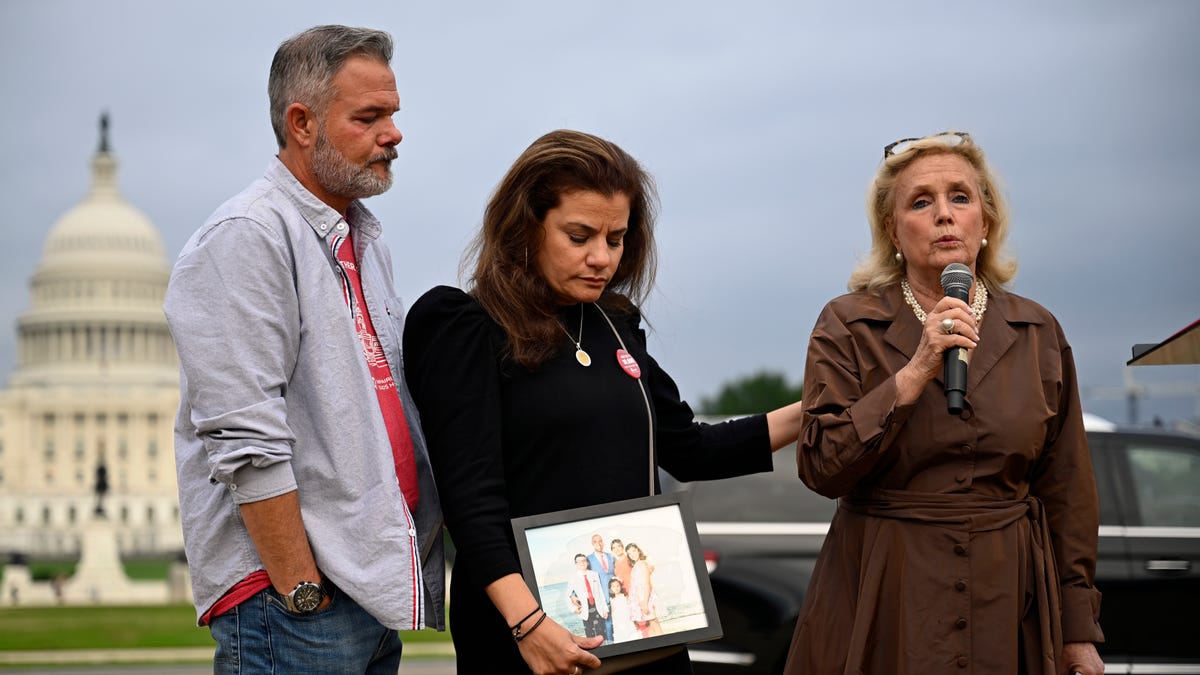
Washington — Michigan U.S. Rep. Debbie Dingell wants to jump-start overdue requirements on automakers and federal regulators to install lifesaving, anti-drunken driving technology into new vehicles.
“They’re not moving fast enough,” the Ann Arbor Democrat said in an interview. “This should have been done during the Biden administration.”
Dingell will introduce a bill Thursday that would quickly order car and truck makers to add alcohol detection and driver behavior monitoring systems in thousands of vehicles while talks over a long-term regulatory solution continue.
A sweeping 2021 transportation and infrastructure law directed the National Highway Traffic Safety Administration to mandate anti-drunken driving technology in future cars and trucks. The law set a Nov. 15, 2024, goal to finalize standards, but two deadlines have come and gone without consequences.
The deadlines trigger mandatory status updates to Congress but are otherwise toothless. NHTSA did not respond to a request for comment on when its latest annual status update will arrive.
In light of regulatory inaction, Dingell’s bill would require automakers that manufacture at least 250,000 motor vehicles annually to produce 10,000 with cutting-edge alcohol detection technology from the Driver Alcohol Detection System for Safety project and another 10,000 with driver behavior and attention monitoring systems, which are becoming more common across the industry.
If the bill becomes law, the requirements would go into effect within 180 days and remain in place until NHTSA’s congressionally-mandated rule takes effect. The bill would also give the regulatory agency the power to fine companies that do not comply with the temporary edict.
Dingell, a longtime voice for the auto industry in Washington, said she is frequently in touch with Michigan automakers on this and other issues.
“They know I’m pushing. They know that this is very personal to me,” she said.
The sixth-term lawmaker has been a leader on anti-drunken driving efforts in Washington since 2019, when a Michigan family was killed by a drunken driver in a wrong-way collision on I-75 in Kentucky while returning from a family vacation. The driver also died in the crash.
Dingell has led a bipartisan charge in Washington to help prevent such incidents from happening in the future with a bill commonly referred to as the HALT Act. The acronym is short for Honoring Abbas Family Legacy to Terminate Drunk Driving Act, named for the Northville family of five who tragically lost their lives.
Look back: Out of Michigan family’s tragic death, new policy emerges to end drunken driving (2021)
A modified version of the HALT Act was included in a $1.2 trillion bipartisan infrastructure package passed by Congress and signed by then-President Joe Biden in 2021. The law purposefully did not require a specific type of technology to give automakers and regulators flexibility on the best way to approach curbing a deadly practice on U.S. roads.
Dingell’s new bill is titled the “Deployment of Required Impairment Prevention Vehicle Equipment to Honor the Abbas Family Legacy to Terminate Drunk Driving Act of 2025,” shortened as the DRIVE to HALT Drunk Driving Act. There are currently no co-sponsors of the bill and no companion version in the U.S. Senate, but Dingell said she remains in close contact with colleagues in both chambers on the matter.
The United States averages more than 11,000 roadway fatalities and 300,000 injuries each year due to drunken driving, per data from the federal government and the advocacy group Mothers Against Drunk Driving. Drunken driving accounts for about one-third of all U.S. traffic crash fatalities.
Advocates on the topic — including a bipartisan group of lawmakers and MADD — have expressed optimism in recent months that federal regulators were getting closer to proposing rules directed by the HALT Act.
More: Anti-drunken driving advocates hail private-sector progress, new ‘energy’ under Trump
That hope came from more than 200 sitdowns with lawmakers and their staff during a September MADD visit to Capitol Hill, an hour-long meeting between Trump’s secretary of transportation and MADD adovcates, and a new commitment from the Insurance Institute for Highway Safety to add impairment detection to the criteria for its influential TOP SAFETY PICK+ award in the coming years.
“I’ve been engaged in the fight for six years. I did not choose this battle. It chose me,” MADD advocate Rana Abbas Taylor of Northville said in an interview during her visit to Washington. Her sister Rima was killed in the 2019 crash that also killed Rima’s husband Issam and their children, Ali, Isabella and Giselle.
“This is the first time that I’ve been to D.C., and I have felt a type of momentum, or electricity, energy in the air around this law.”
Top transportation officials in the Trump administration have also signaled that they are serious about the HALT Act and combating drunken driving.
NHTSA Administrator Jonathan Morrison and Chief Counsel Peter Simshauser attended a MADD vigil on the National Mall in September, and Simshauser delivered a keynote address the night prior at a reception hosted by the organization. He said NHTSA still needs to learn more about the latest safety technology so it can “work cooperatively” with auto companies, advocates and government officials on appropriate regulations.
There is opposition to the HALT Act on Capitol Hill, though.
U.S. Sen. Bernie Moreno, R-Ohio, has been an adamant opponent of any required anti-drunken driving tech in new vehicles since he arrived in Washington earlier this year. He has cited affordability concerns and skepticism over the quality of new impairment detection technology.
“I don’t think most Americans drive drunk, but now we’ve made every American a drunk driver,” the freshman senator said of the HALT Act during remarks at a December automotive policy conference. “I wouldn’t take (the technology) for free, let alone the thousands of dollars of cost.”
“If you’re concerned about drunk driving — which I am, all of us are — raise the penalties, hold people accountable,” he added. “We want to drive affordability on our side. Have sensible regulations that aren’t insane, have litigation reform in a big way. Those are the two things that we can do that will help car companies drive down the cost of automobiles.”
Learn more: Ten years after prototype, anti-drunken driving tech ready for rollout
Stephanie Manning, MADD’s head of government affairs, pushed back on that sentiment in an interview: “Can we really afford to lose 12,000-plus people to drunk driving every year?” she said.
Manning praised the bill being introduced on Thursday. “We are really encouraged and excited that Rep. Dingell continues to move the HALT drunk driving law forward. This new legislation will encourage the deployment of anti-drunk driving technology for the larger manufacturers.”
Rana Abbas Taylor also shared an email statement supporting Dingell’s latest effort: “Congresswoman Dingell is a warrior for taking the lead to end the violent and deadly crime of drunk driving.
“She is once again leading the way to ensure that every car in America is equipped with lifesaving anti-drunk driving technology. I’m beyond grateful for her tenacity and commitment to end this preventable crime in honor of my family.”
gschwab@detroitnews.com
@GrantSchwab
Related Article