New research shows touchscreen use dramatically degrades driving performance, confirming what drivers already feel
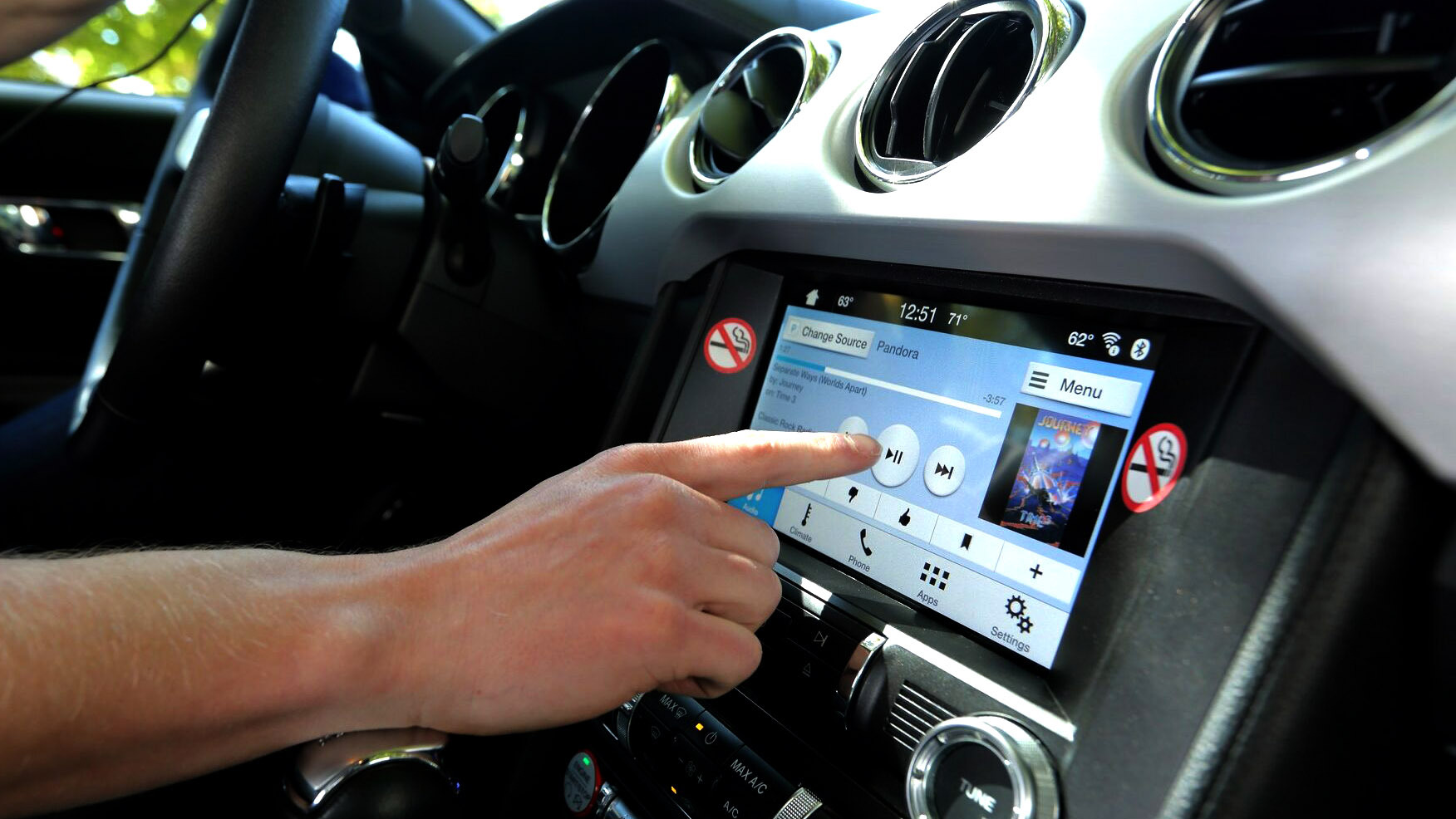
In news that will hardly shock anyone who’s tried to change playlists or even adjust the climate controls mid-commute, a new study confirms that, yeah, hunting through touchscreen infotainment systems while driving isn’t just annoying, it’s genuinely risky.
Over the past two decades, large, tablet-like screens have quietly pushed traditional buttons and knobs to the margins, if not completely eliminated them entirely in many cases, as with Tesla models. Many manufacturers now proudly advertise their expansive digital displays as a selling point.
Also: Physical Controls Are Back Because Drivers Are Sick Of Endless Touchscreen Menus
Now, a study conducted by the University of Washington (UW) and Toyota Research Institute is putting numbers on the truth that we already knew. These screens can be incredibly distracting and dangerous when used while driving.
The Hidden Price of Screen-First Interiors
The research, titled “Touchscreens in Motion: Quantifying the Impact of Cognitive Load on Distracted Drivers,” was published in the Proceedings of the 38th Annual ACM Symposium on User Interface Software and Technology in September 2025.
Sixteen participants were placed in a high-fidelity driving simulator while researchers tracked eye and hand movements, pupil dilation, and skin conductivity.
Drivers were asked to interact with a vehicle touchscreen and complete memory-based tasks designed to measure mental load. Pupil size and electrodermal response provided key data points on how hard the brain was working.
In short, when drivers were asked to perform routine touchscreen tasks while navigating a simulated urban setting, both their driving ability and their accuracy on the screen got noticeably worse. The more involved the task, the more performance dropped.
Importantly, we’re not talking about texting or doom-scrolling. The study focuses on everyday tasks automakers expect drivers to perform through layered digital menus: adjusting audio, sending or listening to messages, or navigating media.
Tasks that used to be handled by a knob or a button now require eyes, hands, and cognitive bandwidth all at once.
What the Simulator Revealed
Participants drove through a simulated cityscape while working the touchscreen. Researchers measured a mix of driver performance metrics and physiological markers, from eye movements and steering consistency to reaction time and stress signals.
More: Apple Found A Way Into GM’s Dashboards Even Without CarPlay
The results were less than awesome for those who love their big tablet-style infotainment system. Touchscreen interaction reduced pointing accuracy and speed by more than 58 percent compared to non-driving conditions.
At the same time, lane deviation increased by over 40 percent once touchscreen interaction was introduced. In other words, drivers became worse at driving and worse at using the screen simultaneously.
How Do You Fix This?
It would be easy to think that the solution here is to simply go back to physical buttons. Sadly, that ship has probably sailed. While some automakers are willing to bring back some physical switchgear, screens are so cheap and easy for manufacturers to use and sell that they’ll continue to be a major part of cars moving forward.
How, then, can automakers improve the safety surrounding them? The study has a few ideas.
First, it suggests that automakers reduce the number of menus required to perform functions that often happen while driving. That could be done by adding direct access to those functions somewhere on the screen at all times.
In addition, systems could get smarter by learning to anticipate certain inputs and by making some buttons larger and more vibrant to the eye.
Finally, it believes that automakers could use load-sensitive systems to detect high cognitive load on the driver and then react appropriately by temporarily limiting some functions or alerting the driver that they might need to refocus on the road a bit more.
Ultimately, it comes to the conclusion that interfaces should be designed for how people actually behave, not how automakers wish they behaved. Color us shocked.
Google News
MSN Start
Stephen, affectionately known as Rivers, has gracefully transitioned from being a repair shop manager and… Read full bio
Related Article