Notifications can be managed in browser preferences.
Please refresh the page or navigate to another page on the site to be automatically logged inPlease refresh your browser to be logged in
Swipe for next article
Kia duo latest to join the growing list of cars eligible for the government’s Electric Car Grant bringing EV prices down
Removed from bookmarks
I would like to be emailed about offers, events and updates from The Independent. Read our Privacy notice
The UK’s Electric Car Grant (ECG) is now firmly established and bringing real savings to electric car buyers across the country, as ministers, manufacturers and dealerships make electric vehicles more affordable.
Introduced in July 2025 as part of the government’s wider Plan for Change strategy, the grant aims to slash up to £3,750 off the price of qualifying new electric cars. The scheme, backed by billions in funding and extended in November’s budget, is designed to close the gap between the upfront cost of EVs and their petrol or diesel equivalents – a key barrier cited by drivers reluctant to switch.
At its heart the ECG works by offering two tiers of discount, depending on a car’s environmental credentials. Band 1 cars, scored against the government’s sustainability criteria, qualify for the full £3,750 discount. Band 2 cars, which meet a slightly lower set of criteria, are eligible for a £1,500 discount. Dealers deduct the grant at point of sale – there’s nothing that buyers have to do.
The scheme’s eligibility rules require an electric car have a minimum battery range of 100 miles and carry specific warranty terms for both the vehicle and its battery. Vehicles must also meet the price cap rules – generally starting below a set threshold – to qualify.
Taken together, these rules have unlocked a broad and growing list of eligible models from a huge variety of car brands. Government figures show that more than 40,000 drivers have already benefited from the scheme since launch, and an extra £1.5 billion announced in the Autumn Budget has increased funding while extending the programme’s life towards 2030.
Among the Band 1 beneficiaries – cars that qualify for the maximum £3,750 saving – are several models that have quickly become familiar on British roads, with these cars benefitting from an instant sales boost:
• Alpine A290
• Citroën ë-C5 Aircross Long Range
• Ford E-Tourneo Courier
• Ford Puma Gen-E
• MINI Countryman Electric
• Nissan Leaf
• Renault 4
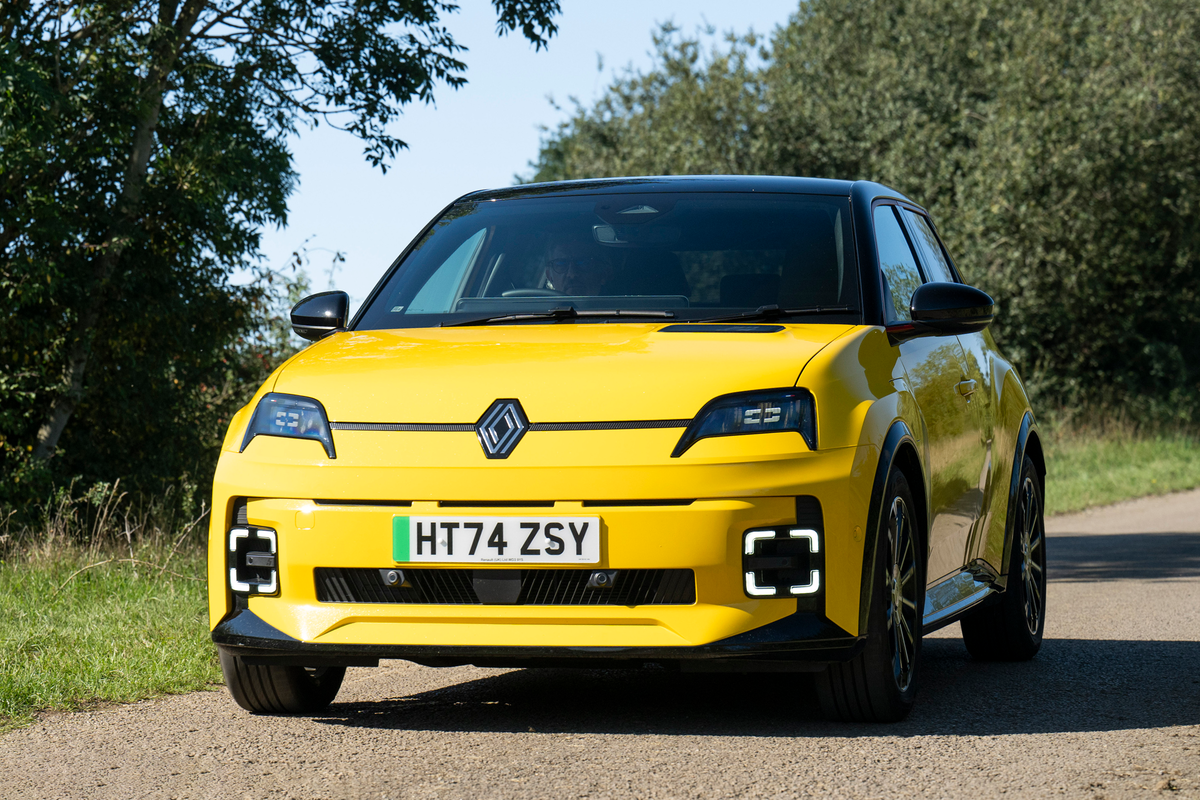
• Renault 5 (52 kWh)
These vehicles are among the greenest in the scheme, meeting the highest sustainability criteria and ticking all the boxes on range and warranty. For many, this translates to significant reductions: a family-friendly crossover or a compact city car can now cost thousands less than before.
The Band 2 list, eligible for the £1,500 grant, spans a wide range of everyday EVs from European and Japanese marques. They include models that may not meet the top-tier criteria but still deliver strong electric performance and practical appeal:
• Citroen e-C3, e-C3 Aircross and e-C3 Urban Range
• Citroen e-C4 and e-C4 X
• Citroen e-Berlingo
• Citroen e-SpaceTourer
• Cupra Born
• DS DS3
• DS N°4
• Kia EV4
• Kia PV5 Passenger
• Nissan Ariya
• Nissan Micra
• Peugeot E-208
• Peugeot E-2008
• Peugeot E-308
• Peugeot E-408
• Peugeot E-Rifter
• Peugeot E-Traveller
• Renault 5 (40 kWh)
• Renault Megane
• Renault Scenic
• Skoda Elroq
• Skoda Enyaq
• Toyota C-HR+
• Toyota Proace City Verso
• Vauxhall Astra Electric
• Vauxhall Combo Life Electric
• Vauxhall Corsa Electric
• Vauxhall Frontera Electric
• Vauxhall Grandland Electric
• Vauxhall Mokka Electric
• Vauxhall Vivaro Life Electric
• Volkswagen ID.3
• Volkswagen ID.4
• Volkswagen ID.5
Some of the names on the Band 2 roster are familiar to drivers considering their first EV. The Kia EV4 and PV5, for example, only recently joined the list, underscoring how fresh entries continue to join the scheme and broaden choice for buyers.
Get your charger and tariff now.
Save happily EV after.
T&Cs apply
ADVERTISEMENT
Get your charger and tariff now.
Save happily EV after.
T&Cs apply
ADVERTISEMENT
Industry reaction to the scheme has been broadly positive. Early in the rollout, the Ford Puma Gen-E – the electric version of the UK’s best-selling car – became the first model confirmed to qualify for the full grant, emphasising how even volume sellers can benefit. Manufacturers such as Renault have since confirmed eligibility across most of their electric lineup – from practical hatchbacks to family SUVs – while Nissan’s latest Leaf, built in Sunderland, is also expected to feature prominently among Band 1 discounts as it arrives on UK forecourts.
Critics still warn that the ECG alone won’t solve all barriers to electrification – charging infrastructure remains patchy outside urban centres and consumer awareness of total cost of ownership is mixed. But with the UK recently recording that plug-in vehicles account for a growing share of new registrations, the grant appears to have nudged more buyers into showrooms, according to early data and surveys.
For those in the market for a new electric car, the list of eligible models is now something to check early in the research process – whether chasing a band-one saving that cuts thousands off the price tag, or a band-two rebate that still sweetens the deal. With the ECG now embedded in UK EV policy and EV prices dropping as more and more affordable models are launched, buyers have a clearer path to making the switch to zero-emission driving than at any point in recent years.
Join thought-provoking conversations, follow other Independent readers and see their replies
Please refresh the page or navigate to another page on the site to be automatically logged inPlease refresh your browser to be logged in
Related Article