
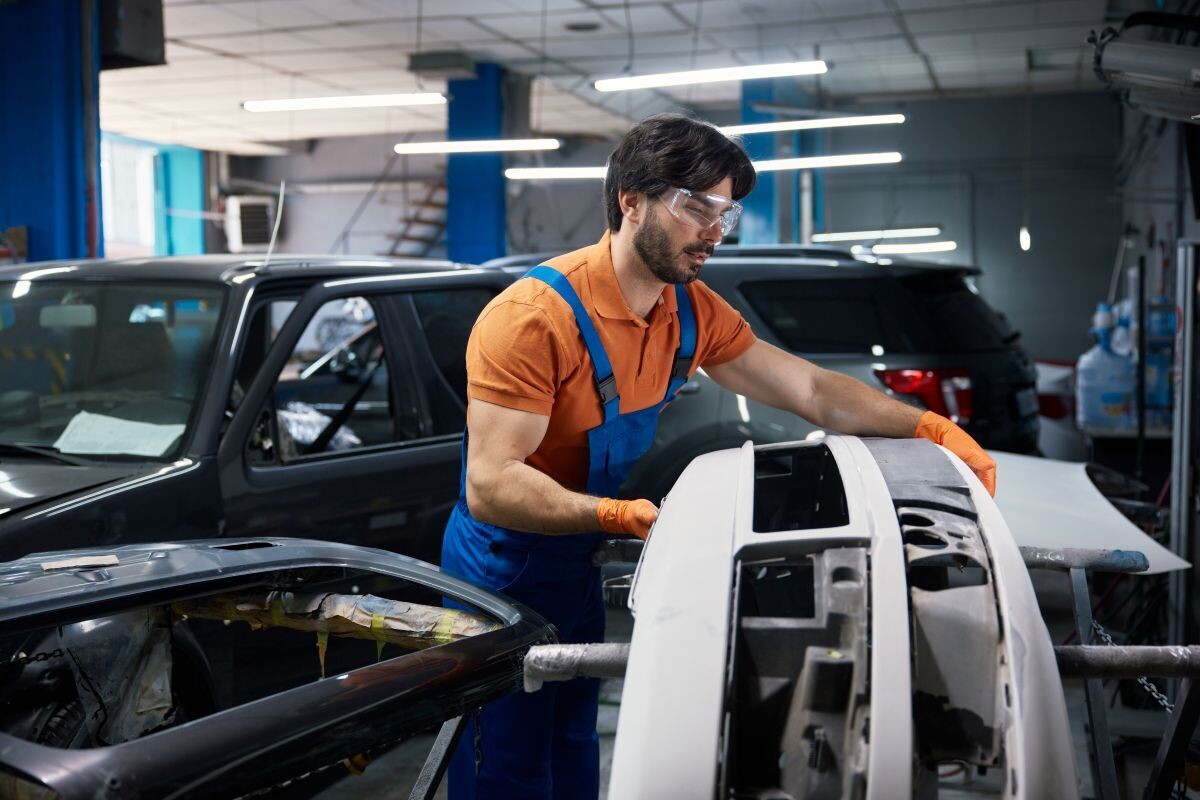
The increased import tariff on vehicles threatens $1 billion in Indian auto exports and signals continued trade volatility as the USMCA review approaches.
Mexico raised import tariffs on passenger vehicles from 20% to 50% for countries without free trade agreements, a move that threatens roughly $1 billion in Indian vehicle exports and could ripple through North American automotive supply chains just as the USMCA comes up for review.
Mexico’s Senate approved the tariff increases on Dec. 10. The new duties apply to imports from India and China, among other countries, starting next year. Mexico’s government says the measure is intended to protect up to 350,000 industrial jobs and strengthen domestic manufacturing capacity.
The action comes as collision repair shops in the United States continue to absorb the effects of U.S. tariff policy. The average effective U.S. tariff rate has risen to 16.8% — the highest since 1935, according to the Yale Budget Lab.
Mexico has emerged as the United States’ leading auto parts supplier, accounting for 43.38% of U.S. auto parts imports through September 2025, according to data from Mexico’s National Auto Parts Industry (INA). The country’s auto parts sector recorded $89.24 billion in production through the first nine months of 2025.
Mexico’s tariff action arrives as the three USMCA partners prepare for the agreement’s first joint review, scheduled for July 1, 2026. The review will examine whether the agreement’s 75% regional value content requirements for vehicles and core parts have achieved their intended goals of increasing North American manufacturing.
According to India’s ambassador to Mexico, Pankaj Sharma, India exported $5.73 billion in goods to Mexico in 2024, while imports from Mexico totaled $3.01 billion. Key Indian exports include vehicles, basic metals, auto parts, and textiles.
India is pursuing bilateral negotiations to mitigate the impact of tariffs. Technical-level talks are already underway, following discussions between Indian officials and Mexican Deputy Economy Minister Luis Rosendo, according to Mexico Business News.
Ambassador Sharma said the country has been working with Mexico since September to reach a trade agreement. He noted that because Mexico’s tariffs are applied under most-favored-nation rules, India sees limited recourse through World Trade Organization dispute mechanisms.
Major vehicle exporters affected include Volkswagen, Hyundai, Nissan, and Maruti Suzuki. According to Reuters, Skoda Auto accounts for nearly 50% of India’s car shipments to Mexico, followed by Hyundai at roughly $200 million in vehicles, Nissan at $140 million, and Suzuki at $120 million.
Indian automakers have emphasized to officials that most exports are compact cars with engines under 1 liter, designed specifically for the Mexican market rather than for re-export to the United States. Industry representatives noted that Indian vehicles account for only about 6.7% of Mexico’s annual passenger vehicle sales.
Mexico’s tariff action is the latest in a year of trade disruptions that have pushed parts costs higher for U.S. collision repair shops. While the new 50% duty applies to finished vehicles rather than components, it signals continued volatility in the global automotive supply chain that shops have been navigating since the Trump administration’s “Liberation Day” tariffs took effect in April.
According to PartsTrader, tariffs could lift the parts line of an average repair order by $100. About 44% of OEM collision parts sold in the U.S. are manufactured overseas.
CCC Intelligent Solutions reported in its Q4 2025 Crash Course that average part prices showed increases exceeding 6% in Q2 and Q3 2025, which the company attributed to tariff impacts being passed through supplier pricing.
The evolving trade landscape could affect sourcing decisions for both OEM and aftermarket parts. Mexico’s role as a tariff-exempt production hub under USMCA has made it an attractive alternative to direct imports from Asia, a shift that has already pressured collision repair margins as shops navigate new supply routes. Parts manufactured in Mexico that meet USMCA regional content requirements can enter the United States without triggering the 25% Section 232 automotive tariffs that apply to noncompliant imports.
The USMCA review could address whether to incorporate rules covering electric vehicle batteries, semiconductors, and software — components that are increasingly central to collision repair costs. The U.S. International Trade Commission has noted that automotive rules of origin have reduced imports of core parts from non-USMCA countries while increasing U.S.-based parts employment.
The move comes amid U.S. pressure on Mexico to curtail business with China, according to Reuters. However, Mexican business groups have opposed the tariff increases, warning that higher costs could affect both domestic consumers and manufacturers.
The scope of tariffed parts could also expand. The Bureau of Industry and Security announced Dec. 16 that it will open a two-week window starting Jan. 1 for domestic auto and parts producers to request that additional products be added to the Section 232 tariff list. Currently, sheet metal components like hoods, fenders, and bumpers are largely exempt from the 25% duty, but that could change if producers successfully petition for their inclusion. The window closes Jan. 14, with determinations expected within 60 days.
For collision repair shops, the immediate implications are limited: The Mexico-India tariff applies to finished vehicles, not parts. But the broader pattern of trade barriers and shifting supply routes suggests parts pricing volatility is likely to remain a factor in repair planning through 2026 and beyond.
Autobody News is a free monthly publication for the owners and managers of 36,000+ collision repair shops across the country.
Click on the regional area of your choice or subscribe here.
Regional and national collision repair news your shop needs!
Copyright © 2025 Autobody News. is a publication of Autobody News, LLC Copyrights. All rights reserved.
Related Article


I tried a not many products from Tillmans Tranquils – relief gummies and actually liked the entire experience. The gummies be struck by a clean grain, slick consistency, and consistent quality. The flavors feel natural, and the portioned servings make it amenable to choose what works in return you. Their packaging looks premium and the total feels thoughtfully made. A downright tag with products that are enjoyable and reliable.
A CBD balm from this brand has a orderly, even consistency that spreads easily. The container is closely-knit and travel-friendly, and the lid closes securely. The smell is gleam and botanical, which makes it pleasant to commemorate last nearby.
Thinking about it, with online gambling, I’ve recently noticed that the latest casinos are shifting the method we experience slots . Honestly, I think that the house edge tend to be super random, which makes me think careful budget control matters most these days . By the way, I checked out this awesome resource [url=https://telegra.ph/%CE%91%CE%B9%CF%87%CE%BC%CE%AE-%CF%84%CE%BF%CF%85-%CE%B4%CF%8C%CF%81%CE%B1%CF%84%CE%BF%CF%82-%CE%B7-%CE%B2%CE%B9%CE%BF%CE%BB%CE%BF%CE%B3%CE%AF%CE%B1-%CE%95%CE%BE%CE%B5%CE%BB%CE%AF%CE%BE%CE%B5%CE%B9%CF%82-%CE%B9%CE%B1%CF%84%CF%81%CE%B9%CE%BA%CE%AD%CF%82-%CE%BA%CE%B1%CE%B9%CE%BD%CE%BF%CF%84%CE%BF%CE%BC%CE%AF%CE%B5%CF%82-%CE%BA%CE%B1%CE%B9-%CE%BF-%CE%BC%CE%B5%CF%84%CE%B1%CF%83%CF%87%CE%B7%CE%BC%CE%B1%CF%84%CE%B9%CF%83%CF%84%CE%B9%CE%BA%CF%8C%CF%82-%CF%81%CF%8C%CE%BB%CE%BF%CF%82-%CF%84%CF%89%CE%BD-Bio-%CE%9D-04-14]https://telegra.ph/Beyond-the-Headlines-Real-Time-Updates-Shaping-Online-Entertainment-News-04-14[/url]
https://telegra.ph/Beyond-the-Headlines-Real-Time-Updates-Shaping-Online-Entertainment-News-04-14 where users discuss different winning strategies , and I found it quite insightful to keep my risks down . One thing I regularly remind others is to avoid trying to chase bad runs, because that tends to be how the fun gets messy . Lately, I’ve also been thinking if the real-time dealer tables truly give a fairer experience compared to classic digital software . How do you all feel about that, do you stick to slots or cards ? Let’s debate going below !
Всем добрый день, на днях попробовал погонять интересную приложуху для прокачки лексики — могу сказать, эта штука с парадигмой карточек вышел довольно толковым. В общем, очень круто, что тут надо искать пары двуязычных, где одновременно воспроизводится озвучка, высвечивается картинка и текст, потому что мозг включает все каналы одновременно. Конечно, иногда выпадает тупить, однако это только подогревает драйв, когда еще и надумал заглянуть на https://izuchenie-yazyka.ru ([url=https://izuchenie-yazyka.ru]игра запомни картинки[/url]) [url=http://red.ribbon.to/%7Eunkokusai/access.php]Увлекательный подход освоения лексики через игру: как память включается на озвучку и картинки?[/url] [url=https://blog.bogdancarpean.com/simple-disable-mode-using-only-css/#comment-98074]Необычный подход освоения лексики с помощью карточек: каким образом память включается на аудио и визуалочку?[/url] [url=https://www.filmovanje.com/item/neighbors/#comment-126260]Новый способ прокачки лексики через игру: как мозг включается на аудио и визуалочку?[/url] ef279ec , чтобы освежить запас. Правда, многим мзится, что скорость бывает быстр, к этому просто адаптируешься, поэтому геймплей идет гладко. Любопытно, а вы вообще предпочитаете подобные форматы либо пользуетесь скучными списками? Делитесь, как у вас успехи.