Hyundai’s smallest Ioniq EV blends familiar styling with clever tech and strong range but won’t come to the US despite global launch plans
Electric vehicle sales may be cooling off with the rollback of government incentives in the United States, but Hyundai isn’t lifting its foot off the pedal just yet. In fact, it’s charging ahead with its most compact EV after the Inster. Named the Ioniq 3, this practical five-door hatch slots below the Ioniq 5 and Ioniq 6 in both size and price.
Read: Audi A4 Returns With Concept TT Styling To Give BMW Something To Worry About
Previewed by the recent Concept Three, the Ioniq 3 could become one of Hyundai’s most significant global EVs, combining affordability with everyday usability. Camouflaged prototypes have already been spotted testing out in the open, hinting that an official debut is just around the corner. Here’s a look at everything we know so far.
Striking the Middle Road
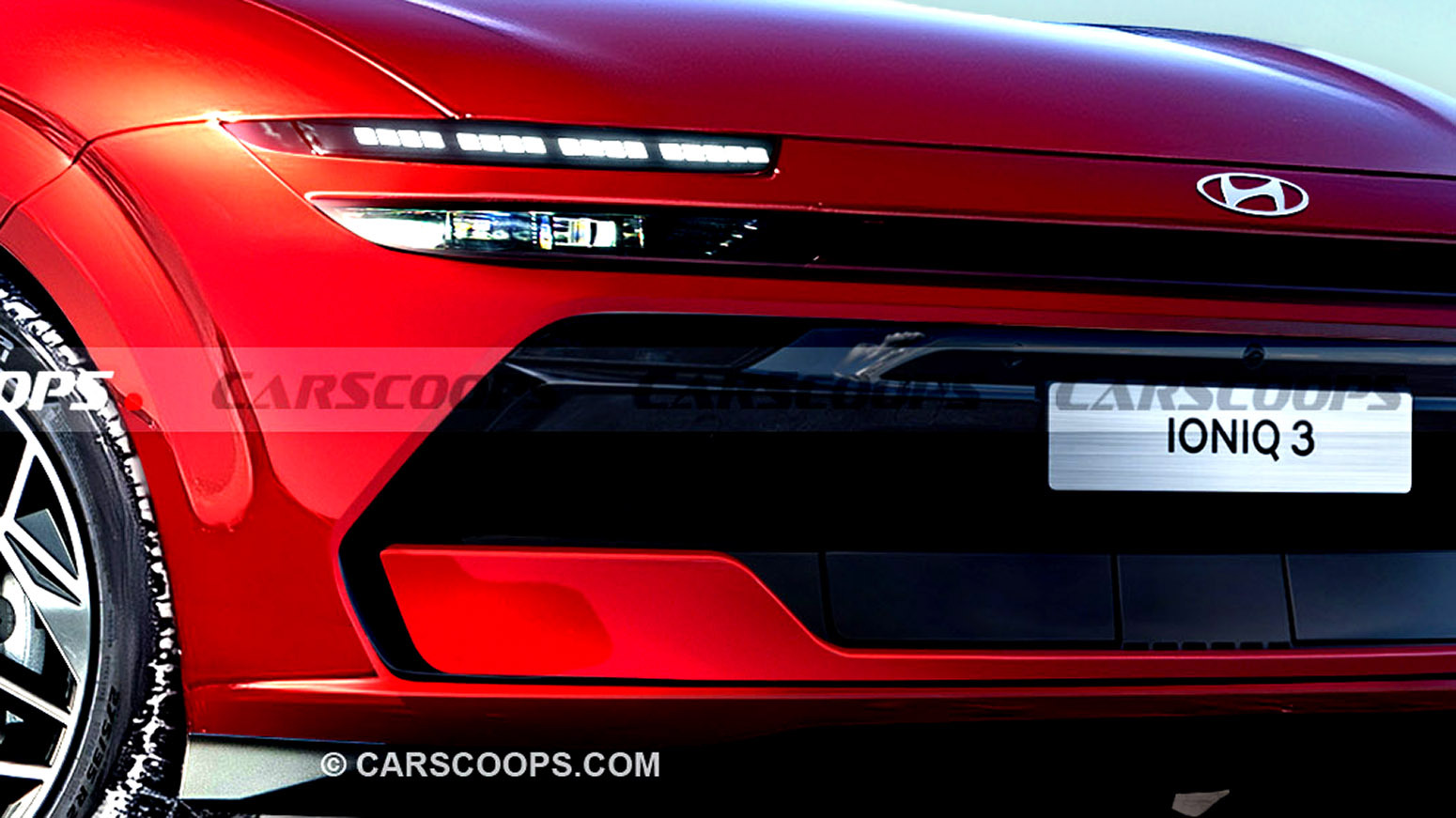
Unlike its larger siblings, the Ioniq 3 avoids polarizing the public with a look that’s easier on the eye. Prototypes confirm that it retains the Concept Three’s coupe-like proportions, although the front fascia is toned down with more conventional battery-cooling intakes and slim pixel DRLs split from the main headlamps underneath.
From the profile, it trades the concept’s slim-frame windows for clamshell items (welcome back to the 90s). Elsewhere, it’s a clean, uncluttered profile with smooth surfacing and intersecting lines drawn from Hyundai’s ‘Art of Steel’ design language.
The rear features a high-mounted full-width tail light cluster with LED pixel elements and a split-glass hatch configuration similar to that of Toyota’s Prius. The concept’s translucent aero elements and wild lower diffuser won’t make the cut, yet it still sports a subtle spoiler.
A Tech-Focused Interior
In a significant departure from Hyundai’s existing lineup, the cabin offers an all-new experience with a separate digital instrument cluster and a large Tesla-style infotainment display.
Also: BMW’s Largest SUV Is About To Get A Lot More Interesting
The screen runs Hyundai’s new Pleos Connect system, which is built on Android Automotive OS, bringing cloud-based user profiles (allowing owners to download features on demand) and conversational voice control for navigation and other vehicle functions.
Importantly, spy shots confirm the presence of physical buttons for HVAC controls below the infotainment screen. Elsewhere, the 5-seat cabin follows the same design theme as other Ioniq models, with minimalist door cards and ovoid trim elements.
Other highlights include Apple CarPlay Ultra compatibility, ambient lighting and enhanced Level 2 driver assistance.
Platform, Powertrain, and Battery
While key specs remain under wraps, we know the Ioniq 3 will ride on a pared-down version of the E-GMP platform. Unlike the 800-volt architecture used in the Ioniq 5 and 6, this model runs a 400-volt system, helping to keep costs in check.
It shares much of its underpinnings with the upcoming Kia EV4, meaning a single-motor, front-wheel-drive layout is expected at launch, delivering 201 hp (150 kW). A dual-motor setup may follow in a potential N performance trim.
Two Lithium-ion NCM battery configurations are said to be on the cards, with the smaller packing coming in at 58 kWh, while the larger one muscles up 81.4 kWh. The latter should be good for a range estimate of 390-400 miles (628–644 km), and both offering V2G (vehicle-to-grid) and V2L (vehicle-to-load) capabilities.
Rivals and Reveal
Key rivals include Kia’s EV3 and EV4 (essentially an Ioniq 3 in different clothing), Volkswagen ID.3, Cupra Borne, Peugeot e-308, Mini Aceman Electric, MG4, BYD Dolphin, and Skoda Enyaq.
See: Kia’s Smallest EV Could Become One Of Its Most Thrilling Performance Models
With thin camouflage and key interior tech already known, we expect a full debut within the next six months and a global rollout by 2027. North American availability? Sorry folks, as this will be built in Turkey, it won’t be offered in the States.
Should Hyundai bring the Ioniq 3 to the USA? We’d love to hear your views in the comments below.
Google News
MSN Start
Josh is a New Zealand-based contributing writer and illustrator for Carscoops. Many years ago, after… Read full bio
Related Article