Cecilia Lallmann Cecilia Lallmann
Leave your feedback
If you’re looking to buy a new car in the new year, you might notice the prices seem to be higher than in the past. Most notably, there are fewer budget cars on the market. Digital producer Cecilia Lallmann explains why that is.
Notice: Transcripts are machine and human generated and lightly edited for accuracy. They may contain errors.
Lisa Desjardins:
If you're looking to buy a new car in the new year, you might notice the prices seem to be higher than in the past. Most notably, there are fewer budget cars on the market.
PBS News digital producer Cecilia Lallmann talks with two experts about why that is.
Cecilia Lallmann:
In 2017, there were 36 vehicle models for sale in the U.S. for less than $25,000. This year, according to Cox Automotive, there are only five. So where did all the cheap new cars go?
Here are four things to know. One, you would think, in this economy, people would be snapping up cheap new automobiles, but Sean Tucker of Kelley Blue Book says Americans' buying habits have changed.
Sean Tucker, Managing Editor, Kelley Blue Book:
In November, cars priced over $75,000 outsold cars priced under $30,000. And that's a relatively new phenomenon.
Cecilia Lallmann:
But the phenomenon is tied to consumer demand, says Christian Seabaugh, features editor with "MotorTrend."
Christian Seabaugh, Senior Features Editor, "MotorTrend": Automakers have realized that the subcompacts, the traditional entry-level cars that we always think of just weren't moving. And so they have pivoted it away with the SUV, small SUVs and stuff.
Cecilia Lallmann:
And a bonus to meeting consumers where they are, bigger profit margins.
Sean Tucker:
Most SUVs these days are made on the same platform as cars are. The cost of actually building one is relatively similar, and they're able to sell them successfully for a higher price.
Cecilia Lallmann:
Two, tariffs aren't to blame yet. American car companies like GM and Stellantis say that, so far, production cost increases from President Trump's tariffs have largely only cut into profits, but eventually they will raise prices.
Sean Tucker:
They can't afford to absorb the hit forever. It's a question of when somebody finally makes the move. Then I think they all will.
Cecilia Lallmann:
But tariff policies on vehicle imports could spell trouble for some existing cheaper models. When GM brought back a redesigned Chevy Trax in 2024, it had a price tag under $22,000. More than $200,000 of the vehicles sold in the first year on the market. But,
Sean Tucker:
The tariffs kind of threw a wrench into that. To save money, they built it in South Korea. And so just after they introduced the new one that was far more attractive, its price went up dramatically due to tariffs.
Cecilia Lallmann:
And let's not forget inflation.
Christian Seabaugh:
Even with the cars that have had price increases, it's hard to say how much of the price increases are tariffs, how much of it are just cost. Everything costs more.
Cecilia Lallmann:
Three, can lawmakers help bring down prices? In early December, President Trump announced a rollback of fuel emissions standards, stating this will help make cars more affordable.
President Donald Trump:
The action is expected to save the typical consumer at least $1,000 off the price of a new car.
Cecilia Lallmann:
And the Senate Commerce Committee is holding a hearing in January focusing on how some safety standards, like automatic emergency braking and rear seat alarms, are driving up vehicle prices.
But Tucker doubts either move will make a significant dent in prices.
Sean Tucker:
Back in June, they stopped enforcing the fuel economy standards. So chasing — changing a standard that you don't enforce has pretty limited impact anyway. Were they to remove some of those restrictions on safety that enables the automakers to remove a few sensors and such, that would bring costs down a bit, but nowhere close to what they're discussing.
Cecilia Lallmann:
One policy that did reduce vehicle prices, E.V. incentives. Some entry-level subcompact E.V.s like the Chevy Bolt and Nissan Leaf start below $30,000.
If you bought an E.V. manufactured in North America with the Biden era $7,500 tax credit that's now been rolled back by Trump, the final price could have been below $25,000. Those incentives and other investments in E.V.s did lead to battery costs coming down, and rolling back these incentives will also likely hinder American car companies competing on a global level.
Sean Tucker:
The pressure globally is on, can you build an inexpensive E.V.? And the pressure in the United States is now on, can you return to gas-powered cars? It's a real challenge for them.
Cecilia Lallmann:
But it could also push American companies to shift back towards affordable new models.
Christian Seabaugh:
Not having that, in theory, will drive automakers to focus more on the entry-level. And instead of fitting all these cars with bells and whistles, like self-driving systems and whatnot, they will focus more on the traditional basic car.
Cecilia Lallmann:
But Tucker says this is easier said than done. Creating new affordable vehicles takes time.
Sean Tucker:
If Ford were to wake up today and say, we need to move back into the subcompact market and start making inexpensive cars, the first ones would roll off the line in five or six years.
Cecilia Lallmann:
Four, so, in this current market, what are some sub-$25,000 vehicles our experts would recommend?
Christian Seabaugh:
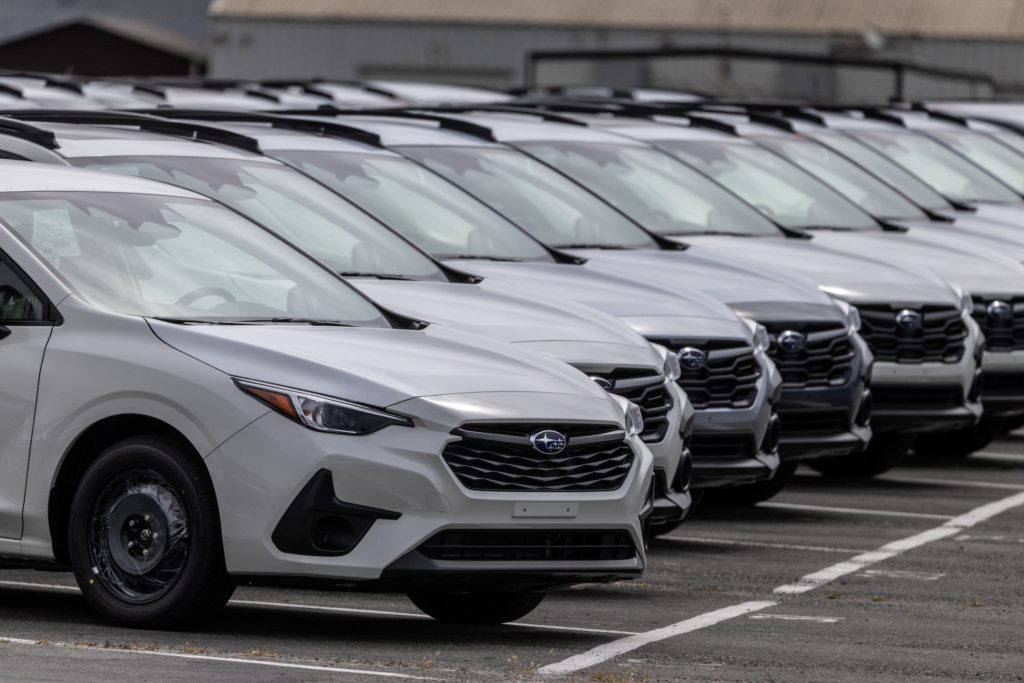
Some of our favorite cars in that price range would probably be the Nissan Sentra. Kia K4, it's a Sudan that's quite good, the Subaru Crosstrek. So, there's a lot of great options.
Sean Tucker:
I am a fan of the Hyundai Venue and the Kia Soul below the $25,000 line.
Cecilia Lallmann:
However:
Sean Tucker:
Both of those are somewhat endangered and that I'm not certain they're going to be built for the 2027 model year.
Cecilia Lallmann:
For PBS News, I'm Cecilia Lallmann.
Watch the Full Episode
Dec 15
By Amir Vahdat, Associated Press
Nov 14
By Associated Press
Nov 07
By Darlene Superville, Steve Karnowski, Associated Press
Oct 24
By Christopher Rugaber, Associated Press
Cecilia Lallmann Cecilia Lallmann
Cecilia Lallmann is a video production assistant at the PBS NewsHour.
Support Provided By: Learn more
Subscribe to Here’s the Deal, our politics newsletter for analysis you won’t find anywhere else.
Thank you. Please check your inbox to confirm.
© 1996 – 2026 NewsHour Productions LLC. All Rights Reserved.
PBS is a 501(c)(3) not-for-profit organization.
Sections
About
Stay Connected
Subscribe to Here’s the Deal with Lisa Desjardins
Thank you. Please check your inbox to confirm.
Support for News Hour Provided By
Related Article