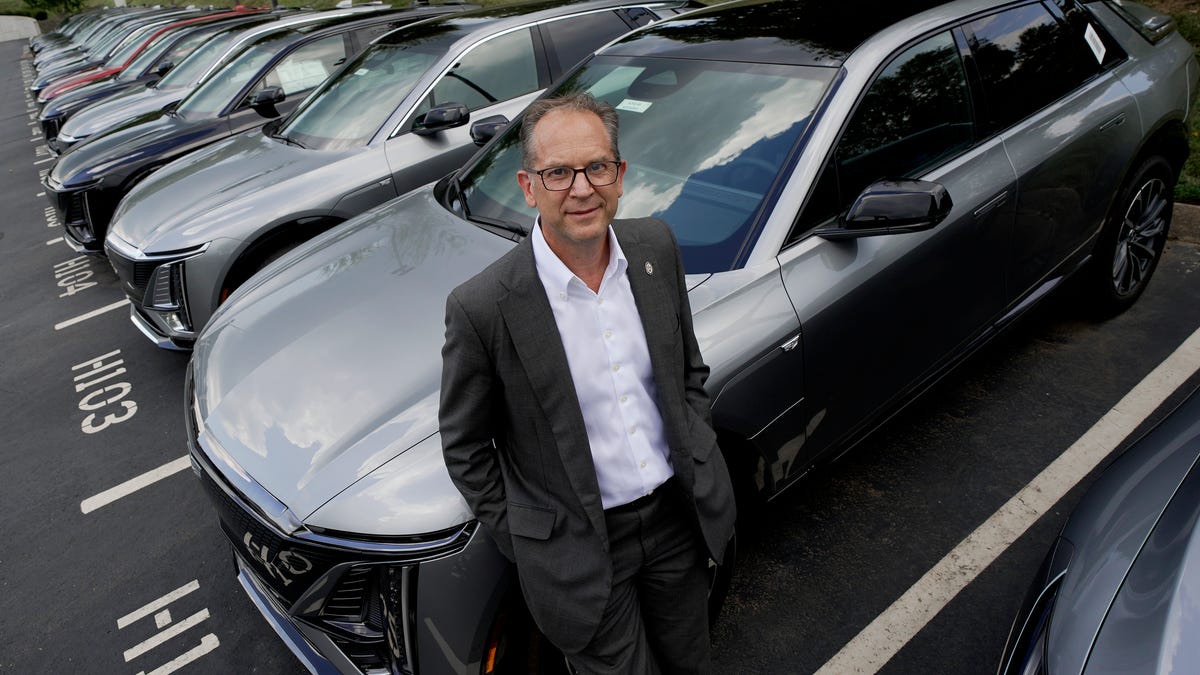
Economists say lower‑ and middle‑income buyers are being squeezed out of the new‑car market. But at the top end, demand remains strong. Luxury dealers like Nelson Andrews in Brentwood, Tennessee, say their customers are still spending — a sign of the widening divide over who can afford record‑high vehicle prices.
Andrews, who serves as Brentwood’s mayor and runs Andrews Transportation Group, which owns four dealerships across Middle Tennessee, said his business is on track for a milestone year.
“We’re going to have our best year ever this year,” he said.
His dealerships sell high‑end brands such as Cadillacs, Jaguars and Range Rovers, vehicles that have grown even more expensive as new‑car prices hit historic highs.
“We don’t call the tune, we just dance the dance,” Andrews said.
In September, the average new vehicle in the U.S. sold for $50,080, according to Kelley Blue Book. That marks the first time the average price has ever topped $50,000. Cox Automotive Executive Analyst Erin Keating said prices remain elevated with “no indication of softening,” as buyers are actively choosing high-priced cars.
Shopping for a vehicle: You can still buy a top-rated car in the US for under $40,000
That strength at the top contrasts sharply with broader consumer behavior earlier in the year. A year‑end report from the Boyd Center for Business and Economic Research at the University of Tennessee found households pulled back sharply on durable goods, especially cars, as high financing costs and economic uncertainty made buyers more cautious.
“Consumers had already been reluctant to re‑enter the auto market after the pandemic‑era surge in vehicle prices and loan rates,” the report states. “The beginning of 2025 brought an additional layer of hesitation.”
But spending has begun to rebound. National GDP surged 4.3% in the third quarter, according to the Commerce Department. Consumer sentiment has also ticked up, rising 3.7% in December, though it remains well below last year’s levels.
That pressure is showing up in Andrews’ business as well. While his luxury sales are strong, he said demand in the mid‑market has softened.
“That mid‑part of the market seems to have slowed down maybe a little bit more than the high end,” he said.
His most expensive vehicles, he added, are often the first to sell because many of his customers are making “enthusiast” purchases. “Vehicles are more expensive because that’s what people want to buy,” he said.
Andrews has also noticed a rise in longer‑term financing.
“There seems to be a little movement where banks will let people go longer, and so you’ll see an 84‑month contract, although I don’t really recommend that,” he said.
“If you’ve got somebody with a 94‑month commitment and a 48‑month attention span, they’re going to be upside down.”
In his segment of the market, he added, it’s rare for buyers to keep a car for a decade. Most trade out after three or four years.
“People love the latest and greatest,” Andrews said.
Related Article