Infotainment screens have become a ubiquitous feature in modern cars. Screens allow drivers to perform functions that they might otherwise handle on a phone, such as managing audio content, navigation, or text/phone calls. Screens also allow manufacturers to meet a key NHTSA regulation requiring that every car offer a backup camera, which took effect in 2018.
Touchscreens for infotainment have become the preferred option over wonky solutions like the trackpad. They are straightforward to use and relatively affordable to implement. Manufacturers stuck early variants into a model’s existing dashboards, before eventually integrating these displays as an aesthetic piece of the cabin design.
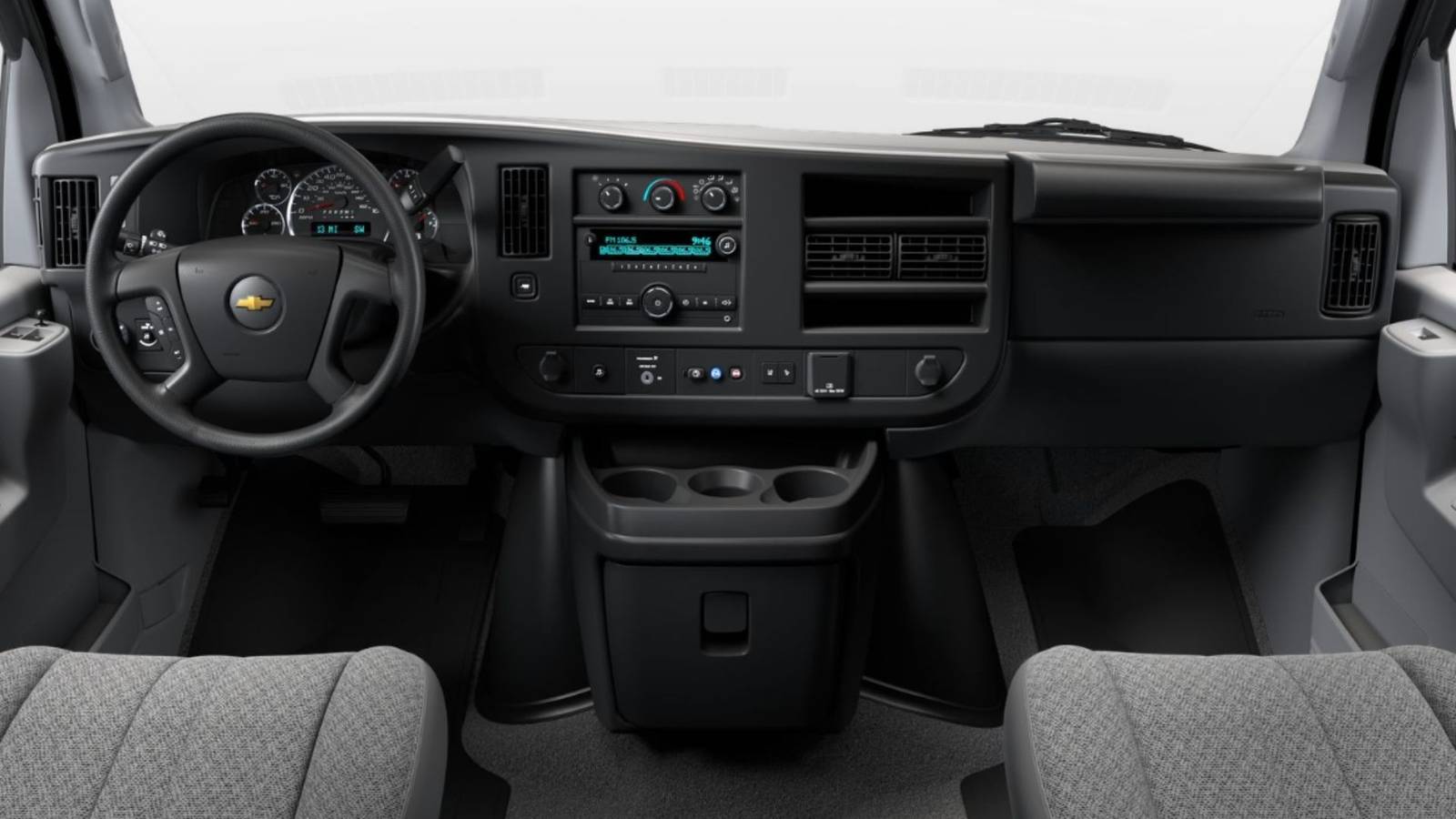
It’s hard to think of a feature that could date a car more than not having a touchscreen. However, incredibly enough, the Chevrolet Express is one vehicle from a major manufacturer still on sale in 2026 without an infotainment screen. The GMC Savana, the Chevy’s rebadged twin, also lacks one. This commercial platform remains popular despite its dated, analog in-vehicle entertainment technology.
These SUVs get you the most value for your money when you sell them again in the future.
The Chevrolet Express and GMC Savana are full-size, body-on-frame vans. GM offers the vehicle in cargo, passenger, and cutaway chassis versions. It is currently the only vehicle sold in the US market that does not allow buyers to add a factory infotainment screen. Why do the Express/Savana vans lack a central screen? They are exceptionally old, and GM has not updated them in a long time.
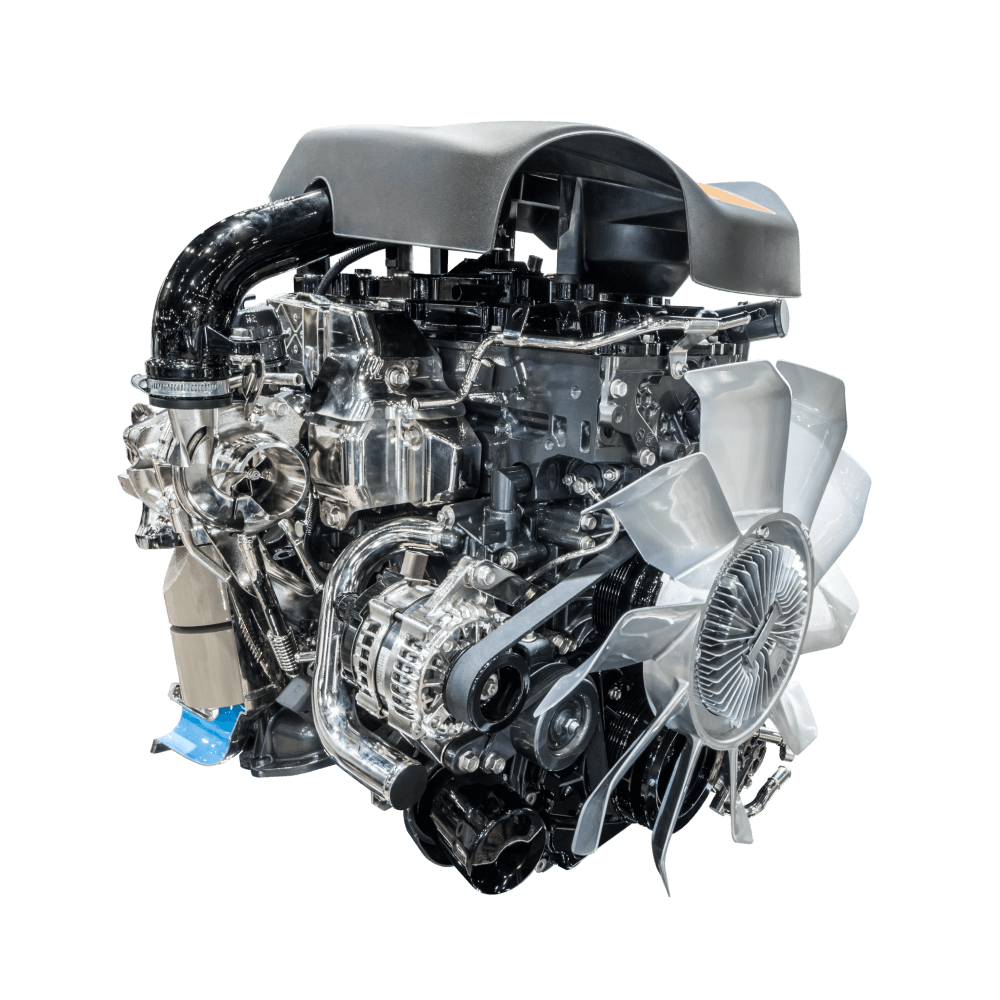
The Express/Savana entered production in January 1996, meaning the current generation has been in production for 30 years. GM has sold the vans with engines ranging in displacement from a 2.8-liter inline-four diesel to the current 6.6-liter V8. The company also upgraded the vans from the initial four-speed automatic to a six-speed unit, and later to an eight-speed transmission.
Another reason GM kept the same Express/Savana vans in production for 30 years and counting was that there hasn’t been much incentive for the company to change them. Fleet customers love these vans because they are consistent, reliable, and easy to service. The vans are also a profit center for GM, as customers continue to buy them by the tens of thousands each year. If there’s one segment of the market that couldn’t care less about modern infotainment technology, it is fleets.
2025 Chevrolet Express 3500 V8 Specifications
Engine
6.6-liter V8
Transmission
Six-speed automatic
Drivetrain
Rear-wheel drive
Power
401 hp
Torque
464 lb.-ft
Payload capability
4,280 lbs
Towing capacity
up to 10,000 lbs
The Chevrolet Express has no infotainment screen, but it still meets the legal requirement to have a reverse camera. Shifting the van into reverse activates the camera screen on the rearview mirror (a workaround Toyota used in the first-generation 86).
Visibility out the back is quite helpful for commercial vans because they often need to navigate tight spaces. Buyers can also opt for a fixed rearview camera, like those found in other General Motors vehicles, as a $1,295 option.
The lack of a modern infotainment system does not prevent the Chevrolet Express and GMC Savana from offering some in-car entertainment options. General Motors eliminated the in-dash CD player from the Express for the 2022 model year. But buyers can still party like it is the mid-to-late 2000s by hooking a device with MP3s through the AUX jack.
Express/Savana buyers can add Bluetooth device compatibility as a $200 option. Buyers can also add modern tech like keyless entry and remote start as $175 and $300 options, respectively. To reach the height of Express/Savana decadence, customers can add the ability to display the outside temperature on their display for an extra $10.
From old-school gaz-guzzling tanks to modern EVs, these are the best cargo vans on sale.
Thirty years is a long time for an automotive nameplate to be around, much less a single generation. The Express has been in production twice as long as the fifth-generation Toyota 4Runner was, and that SUV felt like it was in production forever. The 30-year run for the Express puts it among the longest automotive generations of all time. But it is not the longest.
The Lada Niva, which debuted in 1977, has been in production for 49 years. The Toyota Land Cruiser 70 Series, the rugged successor to the FJ40, is still in production in some markets after 42 years. Toyota originally introduced it in 1984. Citroën also kept the 2CV in production for 42 years from 1948 to 1990.
The Chevrolet Express edges out the next-longest American vehicle generation in production, which is the Jeep Wagoneer SJ. That SUV stayed in production for 29 years (1962 to 1991), surviving through three different ownership regimes at Jeep.
We don’t know how much longer the Express/Savana might stick around, but they’re still around for the 2026 model year. Thus far, GM has focused on building a next-generation van by developing an electric model. However, the automaker canceled the Chevrolet Brightdrop electric van project but has signed a deal with Hyundai to work on a different electric van together.
Investing in a completely new combustion van in an uncertain market would be a bold move for GM. There could be a new Express/Savana that still borrows heavily from the old. But it seems likely GM would stick by the current Express and Savana until future EV vans are ready, or the market tells the company to do otherwise.
Here’s every car you can buy with a manual transmission in 2026:
Car designers have been lamenting the rise of massive screens lately. The Chevrolet Express/GMC Savana might not be the only vehicle without a new screen for long. Startup Slate Auto’s tiny electric pickup truck is nearing production, with the first deliveries expected before the end of 2026. And it will buck convention by deliberately not offering an infotainment screen.
The base truck or “blank slate” will also lack speakers and power windows. Owners will have a hookup to add their own phones or tablets rather than use a vehicle operating system, and folks will be able to pair them to accessory speakers via Bluetooth.
However, it’s not clear whether this is a model other manufacturers might emulate. Most established automakers view in-car tech not as a nuisance but as an opportunity to build an alternative source of profits through subscription services. Using projection services such as Apple CarPlay and Android Auto on a touchscreen is a feature buyers generally like. Also, screens are relatively cheap compared to other parts of a vehicle. Not having a touchscreen saves Slate Auto time, effort, and costs associated with developing a vehicle operating system. But removing the screen is not a substantial cost savings to the consumer.
Sources: NHTSA, Chevrolet, GM Authority
We want to hear from you! Share your opinions in the thread below and remember to keep it respectful.
Your comment has not been saved
This thread is open for discussion.
Be the first to post your thoughts.
Related Article