More from The Sun
Registration fees for owning both EVs and Hybrids are set to hike with owners forced to pay hundreds more every year.
A NEW set of rules is set to hike the cost of owning an electric car.
The new proposals will see the initial costs of owning an EV car hiked, raising concerns it may put people off opting for the greener option.
Please provide a valid email.
Your info will be used in accordance with our Privacy Policy
You'll now receive top stories, breaking news, and more, straight to your email.
Registration fees for owning an EV is set to scale up, with owners forced to pay hundreds of dollars upon purchase.
And it is not just full electric models being targeted with the new costs in Minnesota.
Plug in hybrids are also being hit with the new costs, with owners warned to expect a new $75 minimum yearly surcharge.
The annual rise of costs across the board will also hike further, depending on the type of model EV you drive.
read more on cars
MART OFF
Car Mart shuts down dealerships and lays off workers
PLOW DOWN
Drivers risk having cars towed as US town hit with seven-hour parking ban
“The fees are punitive for these drivers, and we are concerned that these new state fees will increase the barriers to EV adoption and undermine the state’s electrification and climate goals,” Drive Electric Minnesota told PC Mag.
Until now, electric vehicle owners have paid a flat fee of $75 annually in lieu of gas taxes.
This amount is used to fund local road maintenance.
But under the new laws, which came into force in Minnesota on January 1, that amount has now doubled to a minimum of $150 for all makes and models.
Drivers risk having cars towed as US town hit with seven-hour parking ban
DMV confirms office shutdown for 'several days' including phone services
New '11mph' rule means $50 fines for drivers after 60-day warning period
Car Mart shuts down dealerships and lays off workers
And this could be even higher depending on the make and model of your car.
The cost scale depends on what the car was originally worth when purchased and the current age of the car.
Under the new laws, in the first year of registration, fully electric vehicles will be required to pay an additional fee equal to 0.5 percent of the manufacturer’s suggested retail price, known as the MSRP.
For plug-in hybrids, the rate is set at 0.25 percent.
As vehicles age, the surcharge is reduced each year according to a sliding scale.
By the second year, the calculation uses 95 per cent of the original MSRP, with the figure then dropping to 90 per cent in year three.
The figure drops again in year four to 80 per cent in year four, and continues to decline by 10 per cent year-on-year.
Once a vehicle hits ten years old, the fee is based on 10 per cent of its original MSRP and then stays at that rate ongoing.
It means costs will be higher for those wanting to buy the latest EV model.
For those considering a brand new electric pickup like the Ford F-150 Lightning, the first-year fee could run as high as $325.
By year two, that drops slightly to $309, and by year three it will fall again to around $253.
Drivers of a Tesla Model 3, one of the state’s most common EVs, would be looking at $221 in the first year, followed by $210 in year two and $172 in year three.
Lawmakers have put the new rules in place as a way to “ensure road infrastructure funding keeps pace with the shift away from internal combustion engines.”
But some fear the move will stop people from opting to choose an electric car.
“So much for being liberal/progressive state. My wife’s now 10 year old PHEV just doubled in surcharge. My EV surcharge doubled up as well. Obviously making it based off actual usage makes too much sense,” one driver told Kare11.
The changes come at the same time as another new law is set to be introduced to make major changes to how cars are manufactured, especially in the electric era.
The law’s proposal comes in response to growing safety concerns about how passengers can safely exit disabled vehicles.
The Securing Accessible Functional Emergency Exit Act, or SAFE Exit Act, was introduced to the United States House of Representatives earlier this month.
Illinois Democrat Representative Robin Kelly introduced the measure, which would require all automakers to equip all new vehicles with clearly accessible manual door releases that can operate without electricity.
RECOMMENDED STORIES
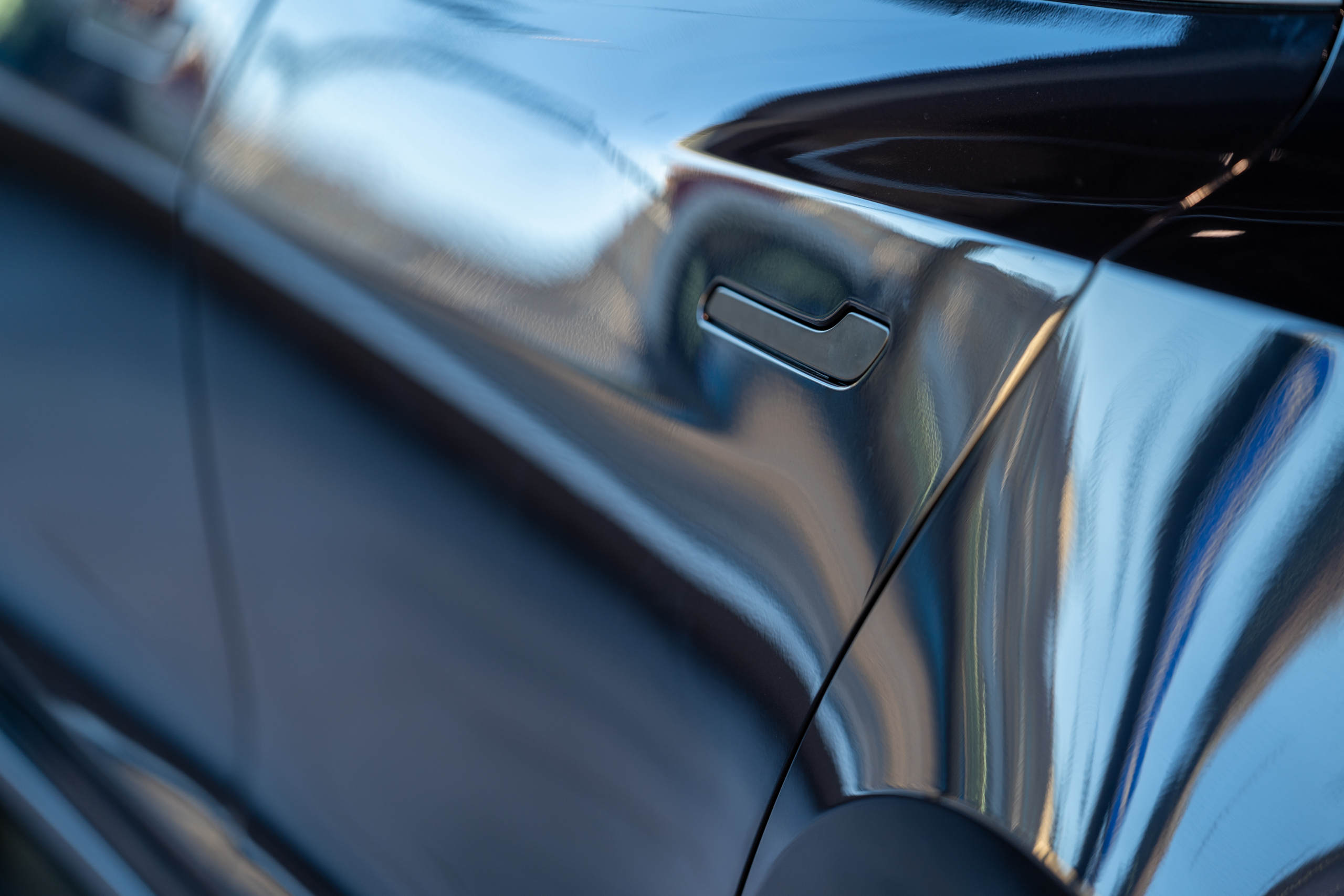
While not specifically singling them out, the law most notably applies to makers of electric vehicles with powered door handles that are liable to fail in the event of a crash if power is cut to the vehicle.
“When a vehicle loses power and people are trapped inside, that is not a design inconvenience, it is a life-threatening failure,” said Kelly in a statement announcing the bill. “Cars must be designed so that people can get out quickly and safely in an emergency.”
New Audi F1 car with distinctive colour scheme revealed ahead of debut season
'Stop-arm' law hits drivers with $300 fines – the lights & signs to look for
'Wheel' rule introduces $880 fines for all drivers who fail to add safety aid
Fines up to $1,500 under winter driving laws – use an $9 tool before you drive
© NEWS ENTERPRISES, INC. ALL RIGHTS RESERVED | TERMS OF USE | PRIVACY | YOUR AD CHOICES | SITEMAP
Related Article