To keep reading the latest motorsport news,
simply subscribe to our free newsletter
Get direct access to our journalists, bonus
podcast episodes, discounts, no ads + much
more when you join our community
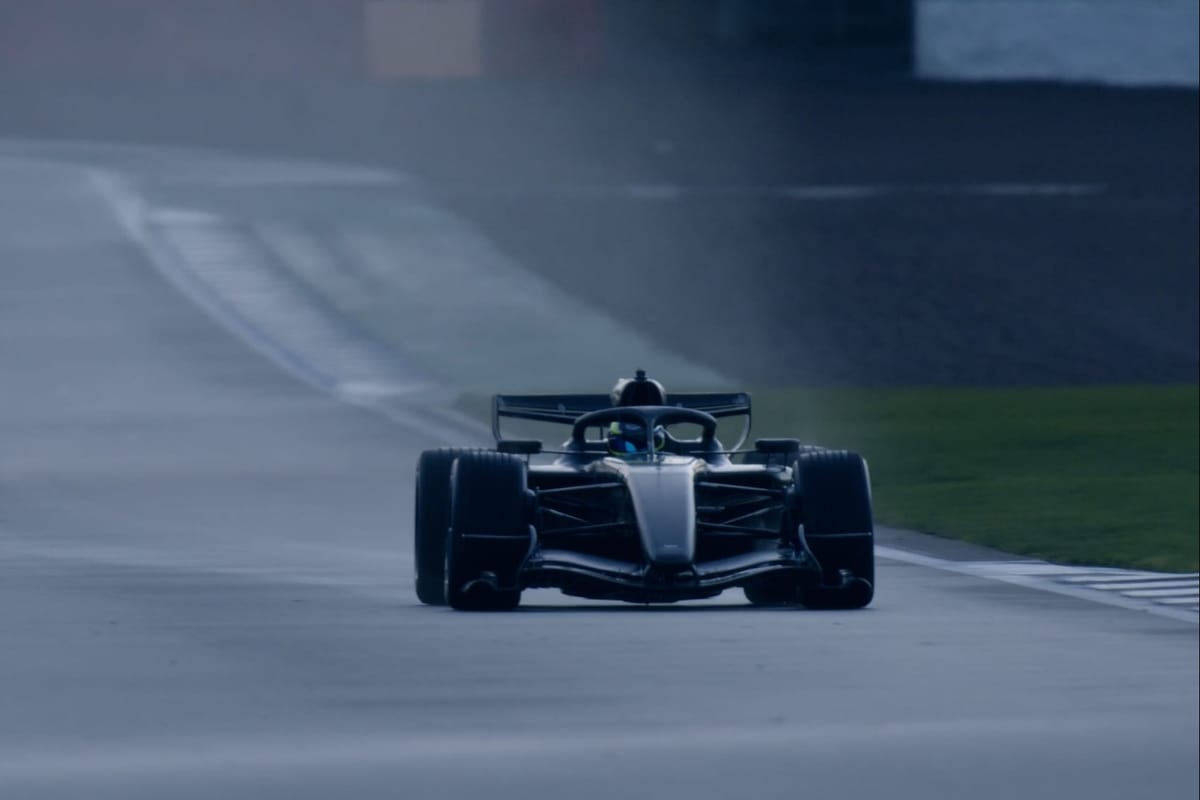
F1 2026 brings with it a host of engine and chassis rules changes that could in turn prompt the biggest shake-up in decades.
We’ve already detailed the engine changes here, but what are those all-important car changes?
We detail what’s different versus 2025 below…
The FIA has reversed the trend of larger, heavier cars with a more nimble car concept for 2026.
The 2026 cars will be around 30kg lighter than their 2025 counterparts, meaning the new minimum car weight is 770kg.
The cars are also shorter, with the wheelbase down from 3600mm to 3400mm, while the overall width reduced by 100mm and the floor width by 150mm.
The front wing has narrowed by 100mm, while at the rear the beam wing (a small horizontal plane underneath the main rear wing) has been removed.
So too the front wheel arches are gone on the 2026 cars.
The FIA believes the downforce of the cars will be reduced by around 30% with drag reduced by an estimated 55%. We’ll have to wait to see the cars in action to know the true figure.
The through corner speed and overall laptimes are expected to be slower as a result, but the FIA rubbished claims that cars would be anywhere near the pace of Formula 2 machinery.
It is expected F1 teams will recover much of the performance loss as they develop their cars through this next regulation cycle.
One of the aims of the 2026 regulations is to allow the cars to follow each other better.
Wheel bodywork has been ditched and in-washing, wheel-wake control boards will sit at the front of the sidepod to assist with control of the wake from the front wheel.
The FIA predicts that the following cars will maintain 80% downforce at 10 metres (one car length) and 90% at 20 metres (two car lengths).
What happens in reality – and whether some cars are more efficient at following than others – remains to be see.
The 2026 cars will feature both movable front and rear wings, known as ‘active aero’, with different configurations for ‘corner mode’ and ‘straight mode’.
The default mode is ‘corner mode’ (so when the cars leave the pits they’ll be in this configuration), whereby the front and rear wing flaps will be in their resting position, with higher downforce.
Then, once manually activated by the drivers, in ‘straight mode’, the front and rear wing flaps will ‘open’ to reduce drag in predetermined activation zones around the circuit.
For more on active aero, head to our explainer of the new 2026 terms here.
The FIA continues to try to make F1 safer with its new regulations, with revised front impact structures and increase side protection.
The rollhoop resistance loads have been increased from 16G to 20G impacts.
There will also be more stringent test loads.
There are now also rear wing endplate lights and lateral safety lights to identify a car’s ERS status.
Mercedes completed an impressive on-track debut as its brand new 2026 F1 car and engine immediately maximised its mileage allocation
Will Mercedes' 2026 F1 car return it to title contention, or will its problems continue? Here's Gary Anderson's verdict on the W17
F1 manufacturers and the FIA have made progress in agreeing a new way for compression ratios to be measured, but don't expect any rules to change just yet
Everything you need to know about the new F1 2026 engine rules
Honda's main concern for its 2026 F1 engine is the V6 as it expects this to be the primary differentiator and its previous approach is "largely unusable" for the new rules
Mercedes has revealed the 'W17 E Performance' design that it will use for the 2026 Formula 1 season
The Race started in February 2020 as a digital-only motorsport channel. Our aim is to create the best motorsport coverage that appeals to die-hard fans as well as those who are new to the sport.
Related Article