Prashirwin Naidu is a South African motoring journalist and presenter who lives and breathes cars, sharing the thrill of every drive with energy and insight. He contributes to Capricorn FM, eSwatini Sunday, Xploreza, Ignition GT, Swaziland Daily News, and NowinSA, delivering engaging car reviews, industry analysis, and motoring features that connect with enthusiasts across Southern Africa.
Spending money on a new car has never required more thought than it does today. Prices are soaring, technology is becoming more complex, and ownership costs extend far beyond the sticker price. The smartest cars on the market aren’t necessarily the cheapest or the most powerful — they’re the ones that balance efficiency, usability, design, and long-term peace of mind in a way that actually makes sense for everyday life. Ultimately, that balance matters far more than chasing specs or trends, and in reality, trends do eventually fade. A brilliant car delivers real value for the hard-earned money you put into it.
From hybrid sedan to EV hatchback, the cars on this list arrive at the same goal from different directions. Some focus on cutting fuel use, others rely on careful engineering or the simplicity of electric, but they all give the same impression once you step back — they feel like sensible purchases rather than impulse buys. These are cars you can buy with confidence, without second-guessing the decision months later, and that you can trust to deliver a smooth, sensible ownership experience over the long term.
Models are listed in ascending order based on starting MSRP, from the most affordable to the least affordable.
The 2026 Volkswagen Jetta tends to get overlooked, and that’s part of what makes it appealing. While much of the segment leans heavily on hybrid badges or aggressive styling, the Jetta sticks to a familiar, straightforward approach and does it well. Most versions are powered by a 1.5-liter turbocharged four-cylinder engine producing 158 horsepower, which translates to smooth, easy performance that suits everyday driving rather than demanding attention. Where the Jetta really makes sense is in how composed it feels for the money. It isn’t trying to impress with sharp tuning or flashy features. Instead, it prioritizes comfort, usable space, and a relaxed driving experience.
Inside, the Jetta’s best asset remains how spacious its cabin is, leaning towards midsize sedan territory. Seats are comfortable and supportive both for hard cornering and everyday driving, while rear leg and headroom are segment-leading.
– William Clavey for TopSpeed
The ride feels settled, the cabin is welcoming, and it carries itself with a calm confidence that contrasts with more tightly sprung rivals like the Honda Civic or Hyundai Elantra. You notice Volkswagen’s focus on build quality the longer you spend with the Jetta, particularly over broken roads and extended drives, where everything still feels tight and composed. It won’t match the headline efficiency figures of some hybrid competitors, but it performs well where many drivers actually spend their time — cruising on the highway. The mechanical setup is familiar and uncomplicated, which tends to make ownership less stressful in the long run. The Jetta shows that a car doesn’t need to be complex to make sense — it just needs to do its job consistently.
The 2025 Toyota Prius didn’t change overnight, but the shift is hard to miss now. In its fifth generation, the car has moved well beyond its old image and no longer feels defined solely by efficiency. The shape is sharper, the stance more confident, and the overall impression is far removed from the purely functional look that once defined the Prius name. It feels like a car designed to be chosen, not just justified. Under the hood, power comes from Toyota’s latest 2.0-liter four-cylinder hybrid system, producing a combined 194 horsepower in front-wheel-drive form.
It has good acceleration that makes it easy to get up to highway speeds and even gives you a little extra power when you need it for passing slower vehicles. It also handles well, and while it isn’t overly sporty, it is still responsive enough to make winding country roads fun to drive rather than a chore.
– Nicole Wakelin, TopSpeed Journalist
The numbers themselves aren’t the headline. What matters is that the power arrives more easily than before, making every day driving — whether in traffic or at highway speeds — feel far less strained. Fuel economy still sits around the 50-mpg mark, but it no longer feels like the sole reason to consider the car. Inside, the layout is straightforward to understand, with controls placed where you expect them to be and little unnecessary clutter. Ride comfort is clearly tuned for daily use rather than sporting intent, which suits the Prius’ role well. Competitors like the Hyundai Elantra Hybrid and Kia Niro Hybrid offer their own strengths. Still, the Prius continues to stand out for how settled the overall package feels, backed by years of real-world hybrid experience.
These models are sure to deliver years and years of commendable service at an affordable cost-to-own.
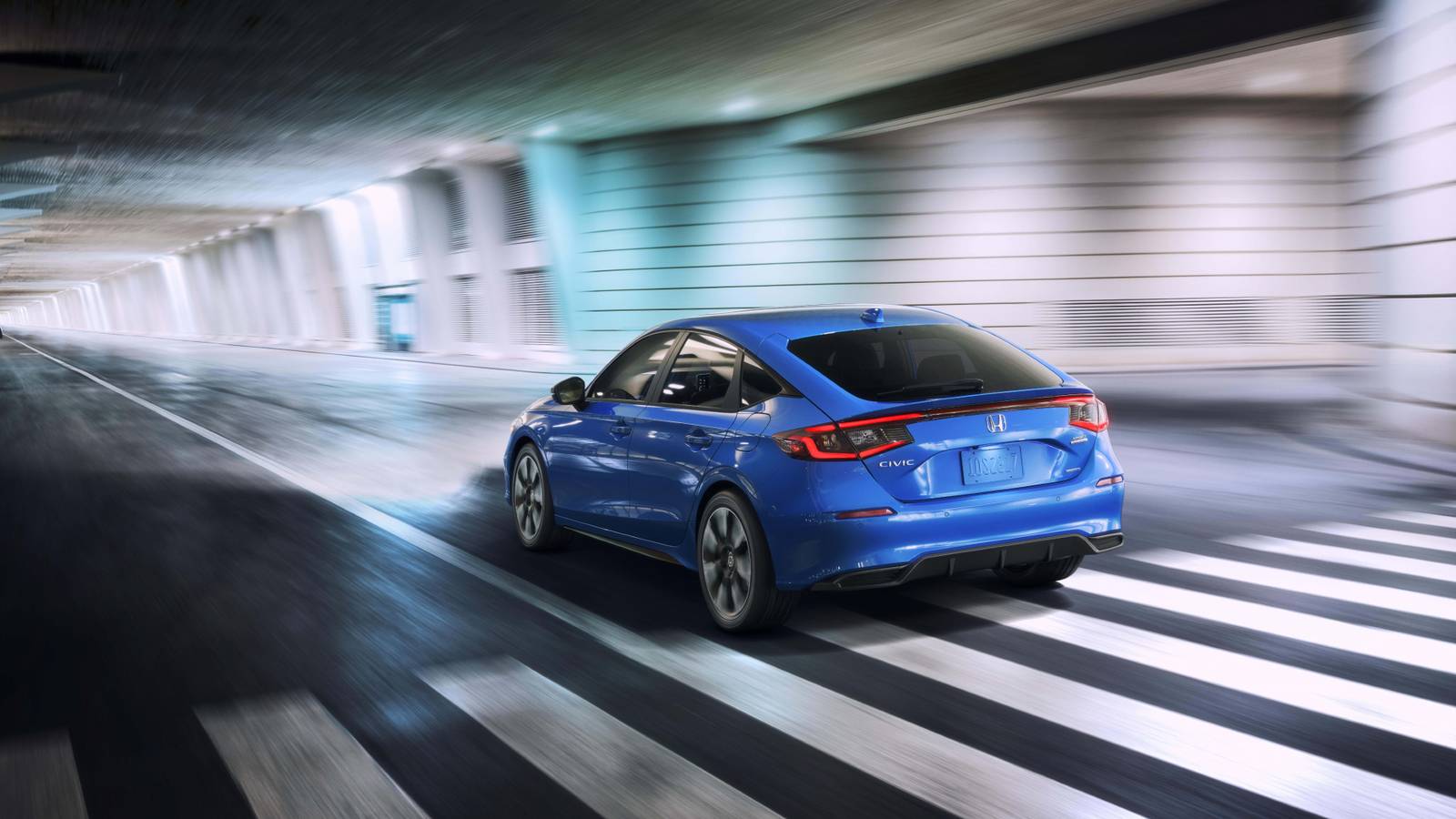
The 2026 Civic Hybrid doesn’t try to reinvent what people already like about the Civic, and that’s precisely why it works. Honda has added a well-sorted hybrid system to a platform that drivers already trust, keeping the familiar feel intact. The focus stays on efficiency, without sacrificing the balance and usability that have made the Civic such a dependable choice over the years. What powers the Civic is a sweet 2.0-liter Atkinson-cycle four-cylinder engine paired with electric motors, producing a combined output close to 200 horsepower, which translates into responsive performance and smooth sailing handling.
The Civic Hybrid’s acceleration is on par with the Civic Si’s, a tad quicker even. Combine this with the current-generation Civic’s stellar chassis, suspension calibration, and quick steering, and what you end up with is a compact car that’s just as entertaining to drive as an Si, minus the manual transmission.
– William Clavey for TopSpeed
The current Civic keeps its styling restrained, favoring clean surfaces and well-balanced proportions over anything overly dramatic. It feels noticeably more mature than earlier versions, and that mindset carries straight into the cabin. Everything inside is easy to get your head around, with a layout that focuses on day-to-day use instead of chasing features that tend to feel dated after a year or two. With fuel economy landing in the mid-40s to low-50s mpg range, the Civic Hybrid sits comfortably among efficient compact hybrids like the Toyota Corolla Hybrid and Hyundai Elantra Hybrid. Where it really stands out is in how naturally that efficiency fits into the package. Nothing about it feels forced, which makes the Civic Hybrid particularly easy to live with over the long term.
For buyers who want efficiency without giving up style or driving feel, the 2026 Mazda CX-50 Hybrid makes a strong case. It uses a 2.5-liter four-cylinder hybrid system developed in partnership with Toyota, producing around 219 horsepower, and is paired with standard all-wheel drive. In day-to-day driving, the powertrain is set up to feel easy and relaxed, whether you’re crawling through traffic or settling in for a more extended trip. It also uses less fuel than a comparable gas-only model, which is part of its appeal. Add Mazda’s track record for building cars that tend to age gracefully, and it’s easy to see why this setup feels reassuring for anyone planning to keep the car for a while.
Mazda is a carmaker that does a very good job at making you believe you’re buying a premium vehicle at a non-premium price, and the CX-50 Hybrid stays true to that promise… Everything looks and feels of good quality, and as if it were put together to last forever.
-William Clavey for TopSpeed
Long-term ownership experiences with models like the Mazda 3 have shown that the brand emphasizes durability, comfort, and timeless design. A well-maintained Mazda can rack up serious mileage — well over 85,000 miles in many cases — while still feeling composed and enjoyable to drive. That philosophy appears to carry over into the CX-50 Hybrid, which is positioned as a vehicle meant to be lived with for the long haul rather than traded in quickly.
What sets the CX-50 Hybrid apart is how carefully considered it feels inside and out. Mazda’s reputation for building cars that age well adds confidence for buyers planning to keep the CX-50 Hybrid long term. Past models have shown a focus on durability, comfort, and clean design, and that mindset carries over here. The CX-50 feels carefully thought out inside and out, favoring quality materials and sensible ergonomics over flashy tech. Compared with rivals like the Toyota RAV4 Hybrid, Honda CR-V Hybrid, and Subaru Forester Hybrid, it leans more premium without straying into luxury pricing, making it a strong option for buyers who want something that feels intentional rather than mass-produced.
These cars won’t disappoint with their combination of all-weather traction, affordable pricing, and predictive handling – the perfect first ride.
The 2026 Hyundai Ioniq 5 approaches electric driving with a sense of realism rather than trying to show off. Entry-level versions use a single electric motor rated at 168 horsepower, while higher trims add a second motor for all-wheel drive. Whichever version you choose, the emphasis stays the same: smooth, quiet progress and a range that works in everyday life, with most models capable of traveling more than 300 miles between charges.
The IONIQ 5’s cabin remains top-notch. Build quality is excellent, while the materials used reflect the carmaker’s dedication to building good-quality cars. Nothing feels cheap or brittle.
– William Clavey for TopSpeed
What really sells the Ioniq 5 is how easy it is to live with. The flat floor and flexible interior layout make it feel more spacious than its footprint suggests, and the design manages to look futuristic without being polarizing. Compared to rivals like the Tesla Model Y, Ford Mustang Mach-E, and Volkswagen ID.4, the Ioniq 5 places greater emphasis on comfort, charging speed, and everyday usability rather than outright performance. For many buyers, that balance makes it one of the most innovative ways to transition into electric ownership.
There isn’t a single statistic or feature that decides whether a car is a smart buy. In the real world, it comes down to how well a vehicle fits into everyday life once the novelty wears off. That means thinking beyond power figures or touchscreens and looking at how a car behaves over time — how easy it is to live with, how much attention it demands, and whether it continues to feel like a sensible choice months or even years after the purchase. Each of these five cars caters to a slightly different type of buyer.
The Prius appeals to those who value sensibility and efficiency above all else. The Civic brings a touch of fun and agility while maintaining its reputation for everyday reliability. The Mazda CX-50 Hybrid is aimed at families who want practicality without giving up comfort or thoughtful Japanese design. At the same time, the Jetta quietly delivers solid build quality and refinement at a price point that remains easy to justify.
Despite those differences, they all arrive at the same conclusion. None of these cars feels overdesigned or forced, and none rely on gimmicks to explain their value. Instead, they focus on the fundamentals that matter over time —manageable running costs, usable real-world performance, and designs that are unlikely to feel dated anytime soon.
Sources: The EPA, CarEdge
We want to hear from you! Share your opinions in the thread below and remember to keep it respectful.
Your comment has not been saved
This thread is open for discussion.
Be the first to post your thoughts.