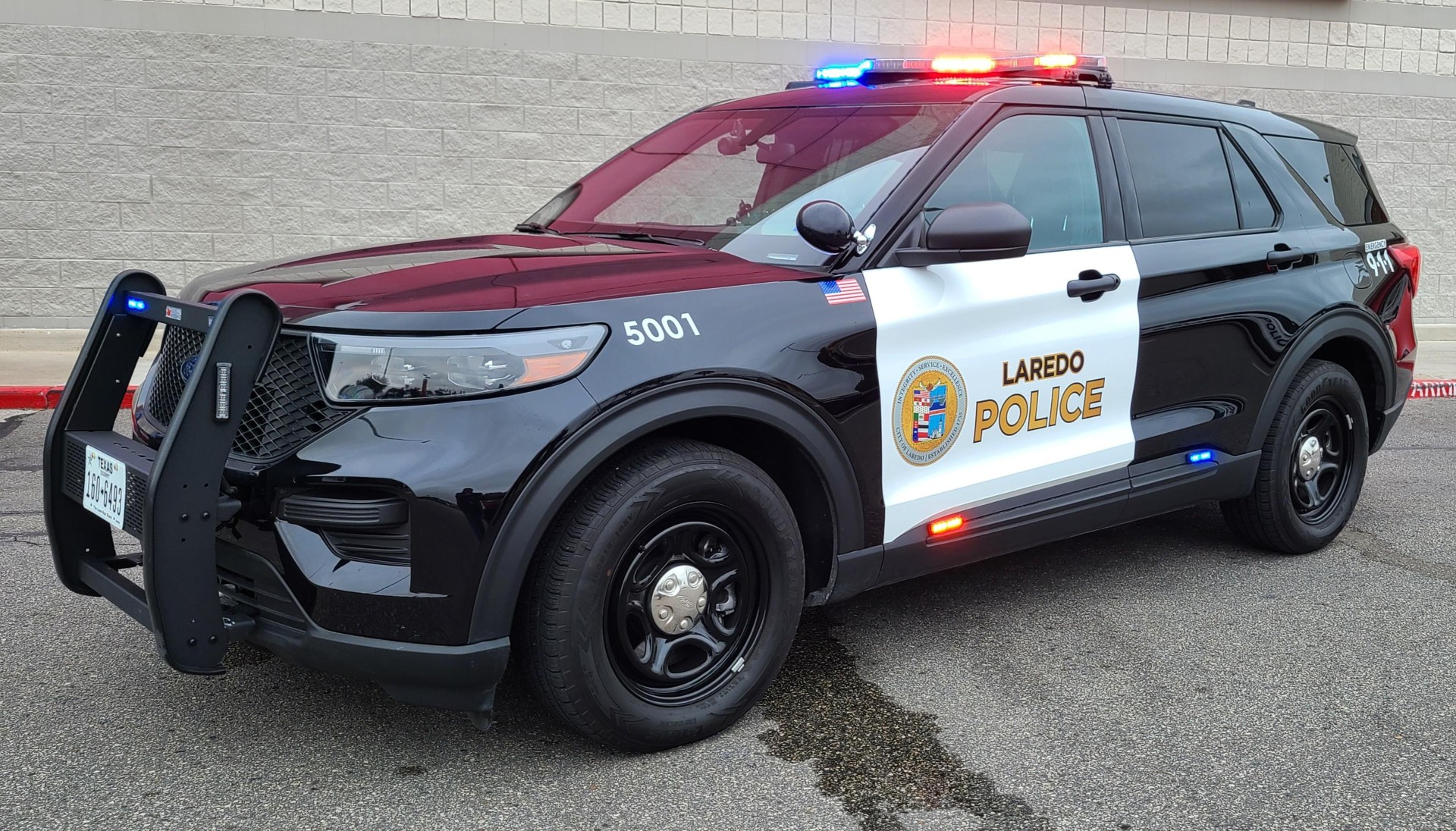
Laredo police introduced 37 state-of-the-art new patrol units with advanced safety features.
Editor's note: This is part of the annual Outlook publication looking ahead to the coming year. To read the full publication, view the e-Edition.
The Laredo Police Department will head into 2026 driving a growing fleet of new marked patrol vehicles as it continues a multi-year effort to replace aging units and modernize how patrol cars are managed.
Advertisement
Article continues below this ad
The rollout follows a series of City Council approvals in 2024 and 2025 that authorized vehicle purchases through a mix of local funding and state and federal grants, laying the groundwork for the largest phase of the fleet overhaul in 2026.
“We were given the opportunity to prioritize our needs, and one of our biggest needs right now is marked patrol cars,” Police Chief Miguel Rodriguez said.
City records show the vehicle replacements were approved in phases rather than as a single bulk purchase. Over the past two years, City Council authorized patrol vehicle purchases tied to grant funding and capital allocations, along with related approvals for equipment, upfitting and technology.
By late 2025, multiple batches of new patrol vehicles had already been ordered or delivered, positioning 2026 as the first year officers will see the impact of those approvals on a broader, department-wide scale.
Advertisement
Article continues below this ad
Rodriguez said the push to replace patrol cars accelerated after a review of the existing fleet following his appointment as police chief in 2023 revealed vehicles that were far older than their mileage suggested.
“A 2012 car, in 2025, shouldn’t have 52,000 miles,” he said. “A 2012 model should’ve been in the junkyard. We caught that and said, ‘Something is wrong here.’”
Rodriguez attributed the issue in part to a long-standing practice under prior administrations of assigning vehicles to individual officers — a system he said no longer works for a department of LPD’s size because patrol demands vary widely, with some areas seeing far more activity than others, leading to uneven vehicle use over time.
“We’re too big of a department to assign a vehicle per officer,” he said. “It doesn’t make any sense. We wouldn’t be fiscally responsible if we are only assigning one unit to every officer.”
Advertisement
Article continues below this ad
As the department moved to a rotation-based system, older patrol vehicles began cycling out more quickly, forcing long-delayed replacement decisions. Although many of those units had low mileage, they often lacked the technology required to meet current Criminal Justice Information Services standards for handling data, video and communications.
“To be CJIS compliant with that unit, we would have to invest another $20,000 in an old unit to make it work,” Rodriguez said.
Rather than investing in retrofitting outdated vehicles, the department opted to phase them out, using City Council-approved funding to acquire new marked patrol units equipped with modern computers, in-car video systems and GPS technology.
Rodriguez said the department’s immediate priority was to get enough new vehicles into service in 2026 to stabilize patrol operations.
Advertisement
Article continues below this ad
“The priority for us was to get 100 units because we are past the limit where we’re hurting,” he said. “We need to make sure we get those units out, and we are. Some are already here getting outfitted.”
Looking ahead, city records show the department’s fleet replacement effort is expected to continue beyond the initial rollout, with additional vehicle purchases anticipated as part of future budget and procurement actions.
Rodriguez said that beyond the initial 100 marked patrol vehicles, the next phase could include up to 75 additional units as the department works to fully catch up after years of delayed replacement.
Advertisement
Article continues below this ad
By the end of 2026, he added, the goal is to have a patrol fleet that turns over on a predictable cycle, reduces long-term maintenance costs and ensures officers are equipped for modern policing demands.
Jose De La Rosa is a reporter at the Laredo Morning Times.
About
Contact
Services
Account
Related Article