Formula 1
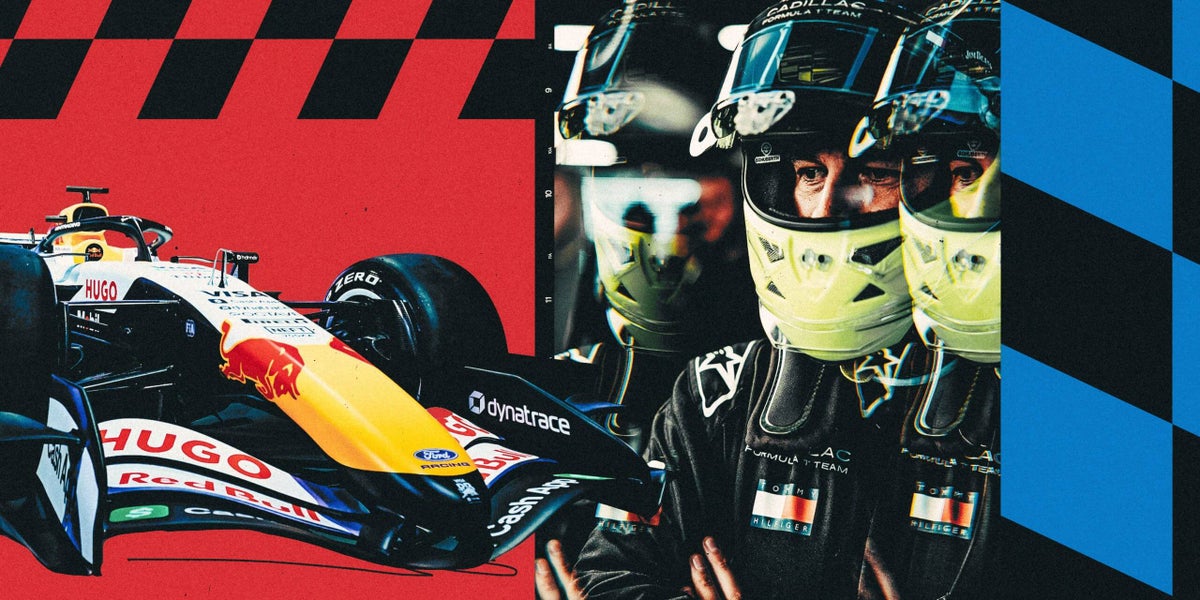
Illustration: Kelsea Petersen / The Athletic; Richard Carezzevoli / Getty, via Cadillac Formula 1 Team
The 2026 season marks the dawn of a new era for Formula One.
New names are joining the grid, Cadillac and Audi, and a brand new circuit in Madrid will make its debut come September. But this year will feature the biggest rules shake-up in more than a decade, with changes coming to car appearances and the engine regulations. The cars will be smaller and lighter, and the engines will use fully sustainable fuel and more electrical power. Active aerodynamics have ended DRS, which has been replaced by Overtake Mode.
Advertisement
In short, nearly every aspect of an F1 car is changing. And the teams still face unknowns. Red Bull technical director Pierre Waché told The Athletic during the team’s season launch in Detroit that the main question mark he has is what the car’s balance requirements will need to be for the drivers to consistently hit the best lap times.
As far as the competition side goes, the 11 teams face a clean slate. McLaren may have ended the last regulation era with consecutive constructors’ championships, and Red Bull may have closed the gap with Max Verstappen on Oscar Piastri and 2025 world champion Lando Norris’ heels, but new regulations mean F1 won’t truly know the proper pecking order until cars hit the track for the first race in Australia in early March.
As the season unfolds, Red Bull team principal Laurent Mekies told The Athletic that his team expects “a huge development race and huge performance (between teams) swings” this year, as the pack learns more about this regulation era. He drew a comparison to 2025, which he described as “a fairly stable season” that still featured significant changes in which teams were fast, or slow, at different tracks.
Mekies said, “Take this performance swing, multiply by four or five — it’s probably what you are going to see this season.”
The anticipation is that the private opening test, in Barcelona in late January, “will not be very representative,” Waché said. The Bahrain International Circuit will host two tests in February that are open to the media.
“It’s so early in the season, and the gap between the first test and the first race is quite big, that gives opportunities to most of the teams to make an update for the race one. Then I think it will be more (the) last Bahrain test or first race you will start to see how competitive you will be,” Waché said.
Advertisement
But it’s not just the teams that are facing this new challenge. The 2026 regulations are complex, and terminology has changed for systems to which we’d grown accustomed.
To help make sense of this new chapter in F1, what these changes mean and how they impact F1 as we know it, The Athletic’s F1 team is creating a library of explainer stories, featuring prominent voices across the championship who will help break everything down.
We’ll dive into a variety of topics, from how the engines have evolved to how overtaking will now appear. And as always, if there are questions you have about the 2026 regulations, please don’t hesitate to let us know.
This article will be updated.
Spot the pattern. Connect the terms
Find the hidden link between sports terms
Play today's puzzle
Madeline Coleman is a Staff Writer for The Athletic covering Formula One. Prior to joining The Athletic, she served as a writer and editor on Sports Illustrated’s breaking and trending news team. She is a graduate of the University of North Carolina at Chapel Hill and received her master’s degree from the University of Florida. Follow Madeline on Twitter @mwc13_3
Related Article