
Personalise the news and
stay in the know
Emergency
Backstory
Newsletters
中文新闻
BERITA BAHASA INDONESIA
TOK PISIN
Topic:Transport
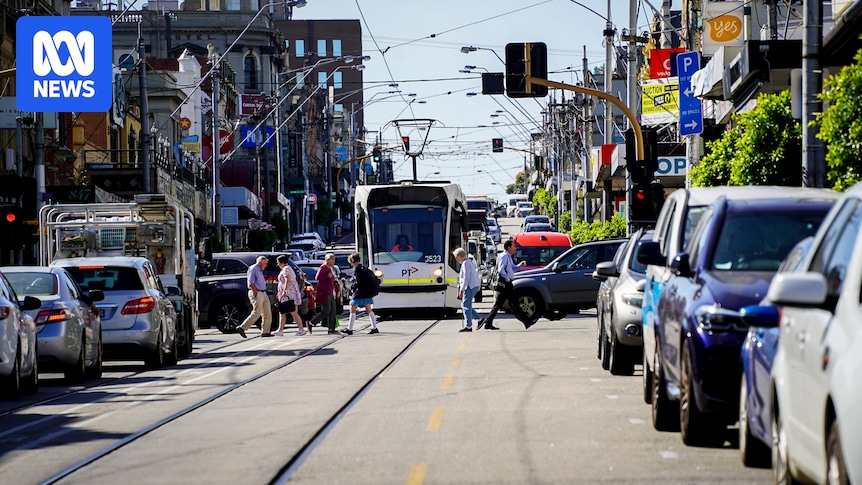
Camberwell in Melbourne's inner east is one area earmarked for more development. (ABC News: Danielle Bonica)
The Victorian government says it will loosen car parking requirements for new residential developments in well-connected areas in a bid to get more homes built.
It says the current framework fails to reflect the growth of public transport over recent decades.
Developments in areas with high-frequency public transport won't be required to provide the same number of car parks as homes further away from train stations.
The Victorian government says it will overhaul "outdated" car parking rules for new residential developments in areas that are well-serviced by high-frequency public transport.
The new rules will relax planning requirements in a bid to make it cheaper and easier to get more homes built.
The government says current planning rules require a minimum number of parking spaces per dwelling, with developers embarking on lengthy planning processes if they want to reduce the required number of lots.
Premier Jacinta Allan said the requirements failed to reflect the development of the public transport network since they were imposed decades ago.
"It's estimated in the inner city something like 40 per cent of the current car parking spaces aren't being used," she said.
"That’s spaces that can be used for homes. That’s money that developers have to put in for spaces that aren't being used.
"That’s an extra cost for developers and for home buyers."
Camberwell is one of the first areas to witness the way the Victorian government's new housing development plan is playing out on established neighbourhoods, heritage protections and property prices.
Under the changes, homes built next to high-frequency public transport, including in so-called "activity centres" earmarked for development, will no longer be required to provide the same number of car parks as homes built further away from train stations.
Planning Minister Sonya Kilkenny said the changes were overdue.
"It doesn't make sense to have the same car parking rules for really well-located areas as those that are much further from access to public transport," she said.
Requirements for accessible car parks will not change.
The Allan government has made building more housing a get part of its legislative agenda, including by progressing plans to allow higher-density development across dozens of transport hubs.
On Wednesday, the government also announced it would expand its infrastructure contributions scheme — in which residential developers contribute to the cost of community infrastructure — to an additional 50 so-called Train and Tram Zone Activity Centres across Melbourne.
From July 2027, developers will need to make a contribution of $11,350 per new dwelling in the targeted areas.
The money will go directly to the local council for things like roads, parks, schools and community facilities to support the development of the area where the home is built.
The government is planning to relax minimum car parking requirements for new housing near high-frequency public transport, including in designated activity centres. (ABC: John Gunn)
Brendan Coates, the housing and economic security program director at the Grattan Institute, said the days of requiring every home to have car parking were over.
He said it was time to let the market decide whether developments should include parking.
"When London did something similar a couple of decades ago, the amount of car parking required in new apartment buildings fell by about 50 per cent," Mr Coates told ABC Radio Melbourne.
"There are examples today where there are apartment buildings that have gone up around Melbourne that don't involve any car parking at all, such as one of the Nightingale developments quite close to where I am, next to Fairfield train station.
"It took a while for that to get council approval but that area is working really well."
He said there would still be demand for parking for developments further away from public transport.
Topic:Domestic Violence
Analysis by Michael Janda
Topic:Shootings
Topic:Courts
Topic:Defence and National Security
Topic:Explainer
Topic:Shootings
Analysis by Michael Janda
Melbourne
Transport
Topic:Domestic Violence
Analysis by Michael Janda
Topic:Shootings
Topic:Courts
Topic:Defence and National Security
Topic:Extreme Weather Events
Topic:Unrest, Conflict and War
Topic:Urban Development and Planning
Topic:Courts
We acknowledge Aboriginal and Torres Strait Islander peoples as the First Australians and Traditional Custodians of the lands where we live, learn, and work.
This service may include material from Agence France-Presse (AFP), APTN, Reuters, AAP, CNN and the BBC World Service which is copyright and cannot be reproduced.
AEST = Australian Eastern Standard Time which is 10 hours ahead of GMT (Greenwich Mean Time)
Related Article