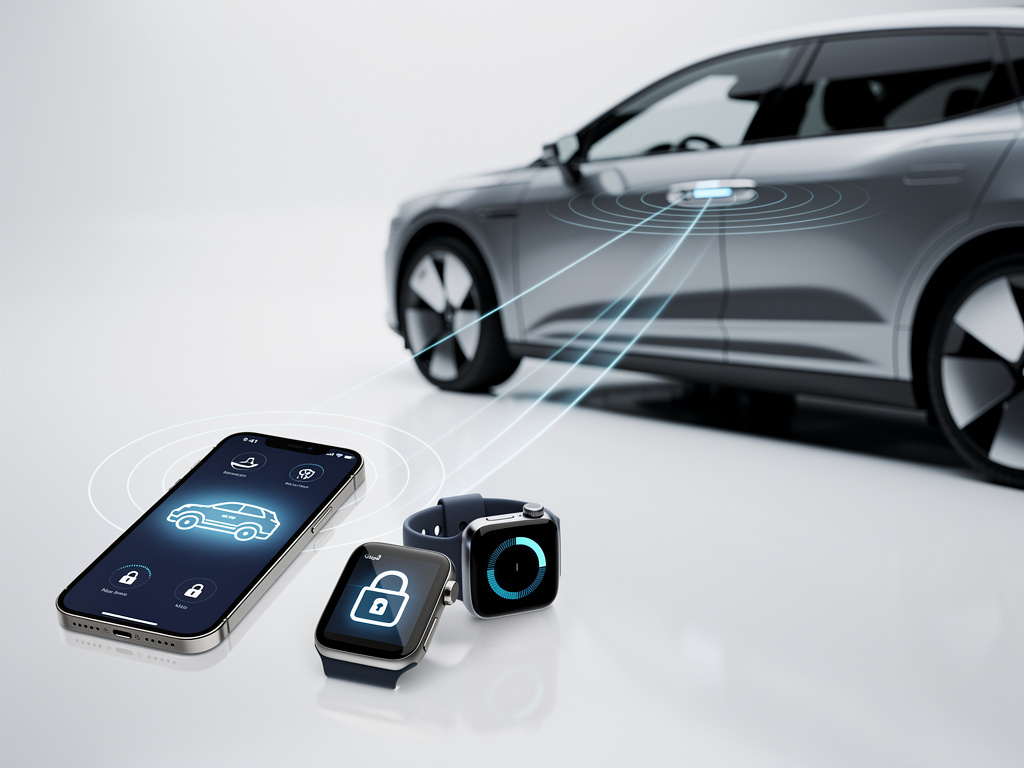
Unlocking Tomorrow: Apple’s Digital Car Keys Gear Up for a Broader Automotive Horizon in 2025
Apple’s push into the automotive sector is gaining momentum, with the company’s digital car key feature poised for significant expansion. As consumers increasingly seek seamless integration between their smartphones and vehicles, Apple has announced plans to bring its Car Key functionality to 13 additional vehicle brands. This move, detailed in a recent report from 9to5Mac, underscores the tech giant’s strategy to embed its ecosystem deeper into everyday life, transforming iPhones into virtual key fobs for a growing array of cars.
The Car Key feature, first introduced in 2020, allows users to lock, unlock, and start compatible vehicles using their iPhone or Apple Watch via the Wallet app. It relies on near-field communication (NFC) technology, with some models incorporating ultra-wideband (UWB) for enhanced precision and security. Until now, support has been limited to a select group of luxury and premium brands, including BMW, Mercedes-Benz, and Hyundai. The impending addition of 13 new brands signals a shift toward broader accessibility, potentially democratizing this technology across more affordable and diverse vehicle segments.
Industry analysts view this expansion as a calculated response to competitive pressures. With Android’s Digital Key feature already available on a wider range of devices, Apple is working to close the gap. Sources indicate that the new integrations will roll out progressively through software updates, ensuring compatibility with existing iPhone models equipped with the necessary hardware. This development comes at a time when electric vehicles and smart connectivity are reshaping consumer expectations, making digital keys a key differentiator for automakers partnering with tech firms.
Expanding Alliances in the Auto-Tech Realm
Among the brands slated for integration are several high-profile names that could appeal to a global audience. According to the 9to5Mac report, the list includes Volvo, Polestar, and Audi, which have been teased in backend code discoveries earlier this year. These additions build on Apple’s ongoing collaborations, such as with Rivian, which recently confirmed support for its R1T and R1S models via a software update. Rivian’s move, highlighted in a post on autoevolution, introduces UWB precision for hands-free access, allowing users to approach their vehicle without even pulling out their phone.
This wave of adoptions isn’t limited to electric vehicle upstarts. General Motors is also on the cusp of integration, with code hints suggesting Cadillac, Chevrolet, and GMC models could soon join the fold. A report from AppleInsider points to backend preparations in Apple’s Wallet app, indicating that select Cadillac vehicles might be among the first GM offerings to support digital keys. Such partnerships reflect a broader trend where traditional automakers are aligning with Silicon Valley to enhance user experience and stay relevant in an era of software-defined vehicles.
Beyond the technical specs, these integrations carry implications for security and privacy. Apple’s Car Key uses encrypted communication to prevent unauthorized access, and users can revoke shared keys remotely if a device is lost. However, as more brands come online, questions arise about standardization across the industry. The Car Connectivity Consortium, of which Apple is a member, aims to establish universal protocols, but fragmentation remains a challenge. Insiders note that Apple’s rigorous certification process ensures compatibility, potentially giving it an edge over less stringent rivals.
Rivian’s Leap and the Electric Vehicle Surge
Rivian’s recent update exemplifies how digital keys are becoming table stakes for modern EVs. The company’s 2025.46 software release, as covered by MacObserver, enables Apple Wallet support for second-generation R1S and R1T models, complete with NFC fallback for scenarios where UWB isn’t available. This not only simplifies access but also facilitates key sharing among family members or friends through iMessage, a feature that has proven popular in existing implementations.
Posts on X (formerly Twitter) from users and tech enthusiasts highlight growing excitement around these features. For instance, discussions around Rivian’s rollout emphasize how it integrates with Apple’s ecosystem, allowing seamless transitions from navigation in Apple Maps to vehicle unlocking. Similar sentiment surrounds potential GM integrations, with users speculating on how this could extend to popular models like the Chevrolet Silverado, based on code leaks reported in various tech forums.
The electric vehicle market, projected to grow exponentially by 2030, is a fertile ground for such innovations. Brands like Polestar, an EV-focused offshoot of Volvo, stand to benefit from Apple’s user base, which skews toward tech-savvy consumers. A list compiled by VOI outlines current supporters, from BMW to Volvo, and anticipates further expansions that could include more mass-market options. This alignment is strategic: as EVs incorporate more software features, digital keys reduce reliance on physical fobs, cutting manufacturing costs and environmental impact.
Security, Compatibility, and Market Dynamics
Security remains paramount in these discussions. Apple’s implementation includes biometric authentication via Face ID or Touch ID for starting the engine, adding a layer of protection against theft. Recent updates have also introduced Express Mode, which allows unlocking without authentication for trusted scenarios. However, cybersecurity experts warn that as digital keys proliferate, so do potential vulnerabilities. Reports of keyless entry hacks in traditional systems underscore the need for robust encryption, which Apple has prioritized in its partnerships.
Compatibility extends beyond hardware to software ecosystems. For the new brands, integration requires automakers to adopt Apple’s APIs, a process that involves extensive testing. Insiders familiar with the matter suggest that the 13 brands mentioned in the 9to5Mac article were selected based on their willingness to meet these standards, ensuring a consistent user experience. This selectivity could limit rapid expansion but guarantees quality, a hallmark of Apple’s approach.
Market dynamics are shifting as a result. Automakers like Audi, already invested in connected car tech, see Apple’s Car Key as a way to attract iPhone users, who represent a significant portion of premium vehicle buyers. Data from industry surveys indicates that over 60% of new car shoppers prioritize smartphone integration, making this feature a competitive necessity. Meanwhile, Apple’s revenue from services, including Wallet-related features, continues to climb, bolstering its position in the auto-tech intersection.
Broader Implications for Consumers and Industry
For consumers, the appeal lies in convenience and versatility. Imagine lending your car to a friend with a quick digital share, or accessing a rental vehicle without fumbling for keys at the airport. These scenarios are becoming reality as more brands join the ecosystem. Posts on X reflect user anticipation, with many expressing eagerness for brands like MINI, which Apple has been preparing support for since late 2023, according to earlier MacRumors updates.
The industry’s response has been mixed but generally positive. Traditional key manufacturers face disruption, while app developers explore tie-ins, such as insurance apps that monitor driving habits via connected keys. Economically, this could spur growth in related sectors, from semiconductor production for UWB chips to software engineering for vehicle interfaces.
Looking ahead, Apple’s roadmap may include even more ambitious features, like integrating Car Key with home automation or public transit. While the exact timeline for the 13 new brands remains fluid, with some potentially launching by early 2026, the momentum is clear. Partnerships with entities like the Car Connectivity Consortium could pave the way for cross-platform compatibility, reducing ecosystem silos.
Strategic Moves and Future Horizons
Strategically, Apple’s expansion aligns with its broader services push. By embedding Wallet deeper into daily routines, the company fosters loyalty and generates ancillary revenue through App Store integrations. Automakers, in turn, gain access to Apple’s vast developer community, enabling features like remote preconditioning or geofenced access.
Challenges persist, including regulatory hurdles in regions with strict data privacy laws. In Europe, for instance, GDPR compliance adds layers to key-sharing functionalities. Yet, Apple’s track record in navigating such issues positions it well.
As 2025 unfolds, the integration of digital car keys into more vehicles could redefine ownership experiences. With brands like Rivian leading the charge and others following suit, the fusion of tech and automotive worlds promises a smoother, more connected drive. This evolution, driven by innovations from Cupertino, is set to accelerate, leaving traditional keys in the rearview mirror.
Subscribe for Updates
The AutoRevolution Email Newsletter delivers the latest in automotive technology and innovation. Perfect for auto tech enthusiasts and industry professionals.
Help us improve our content by reporting any issues you find.
Get the free daily newsletter read by decision makers
Get our media kit
Deliver your marketing message directly to decision makers.
Related Article