Get the best experience and stay connected to your community with our Spectrum News app. Learn More
Continue in Browser
Get hyperlocal forecasts, radar and weather alerts.
Please enter a valid zipcode.
Save
LOS ANGELES — From school zones to freeways — and even the dealership lot — the new year is bringing major changes for California drivers.
The new laws are aimed at slowing traffic, protecting first responders, improving e-bike safety, increasing accountability for self-driving cars and giving consumers more transparency when buying used vehicles.
Behind the wheel with the California Highway Patrol, Officer Katherine Hendry says enforcement is already ramping up.
“Sometimes people miss us, too,” Hendry said. “You know, they’re on their cellphones.”
One of the first changes drivers will notice is in school zones.
Under AB 382, drivers are now required to slow down to 20 miles per hour instead of 25, particularly during arrival and dismissal times. CHP says even small speed reductions can make a big difference when children are present.
It’s not just kids that drivers need to watch out for.
Two new laws — AB 289 and AB 390 — expand California’s “slow down and move over” requirements. Drivers must now slow down or change lanes not only for emergency vehicles, but also for construction crews and stalled vehicles on the side of the road.
“You’re required to move over, away from the work zone, leaving at least a lane in between,” Hendry explained. “And if you cannot, just slow down at a safe pace so we can keep those people safe.”
Another major update targets the growing number of e-bikes on California roads.
Under AB 544, riders under 18 must wear helmets, and law enforcement now has clearer authority to stop unsafe riding. Officers can also tow e-bikes that don’t meet safety requirements.
“They also have to have correct lighting. You have to wear your safety equipment like a helmet,” Hendry said. “They can also be towed. Now we have the authority to tow a bicycle.”
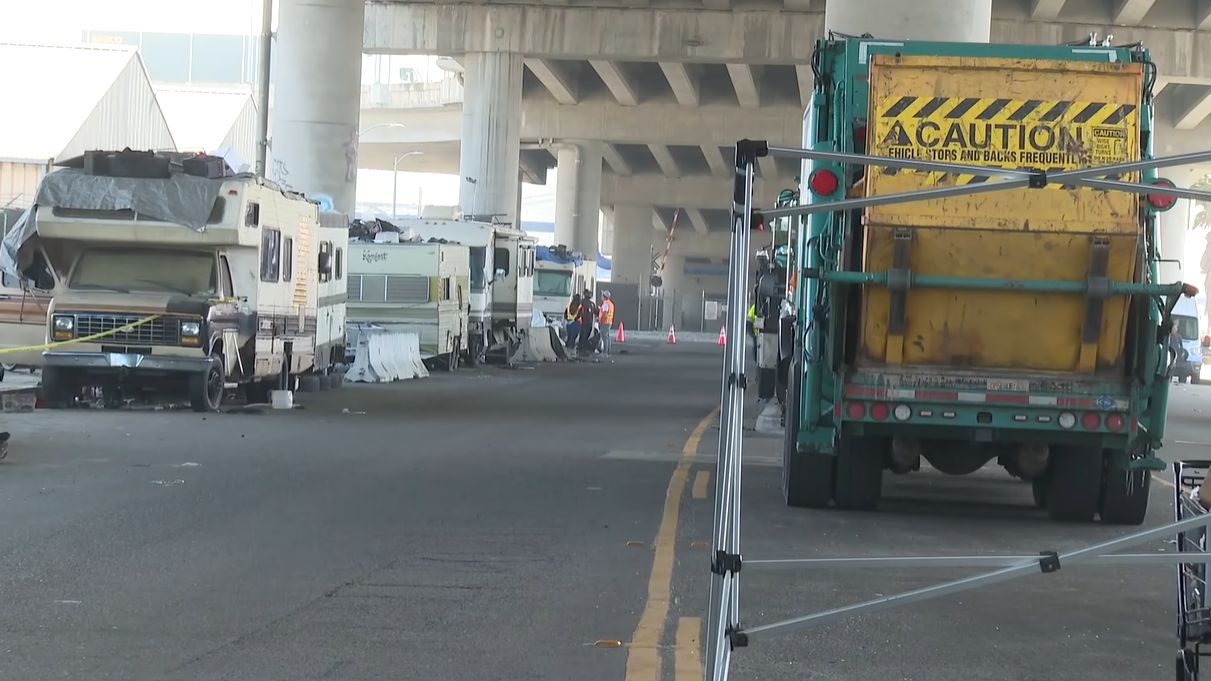
For communities dealing with abandoned RVs, AB 630 streamlines the process for towing recreational vehicles left on public streets — especially when they pose safety or sanitation hazards.
Local agencies say the law gives them clearer authority to act while still requiring notice.
In Hollywood, a self-driving Waymo vehicle was seen driving into an active fire scene Monday night, highlighting another growing concern.
Under AB 1777, autonomous vehicles must obey emergency closures and follow first responder directions — and starting in July, they can be cited if they don’t. The law is part of a broader effort to hold self-driving car manufacturers more accountable as autonomous vehicles become more common on California roads.
The changes also extend to the dealership lot.
SB 766, which goes into effect in October, gives used car buyers a three-day cooling-off period for returns, cracks down on hidden fees and limits excessive dealer markups.
Lemon law attorney Greg Agubyan with YAG Law says the law targets charges that often catch buyers off guard.
“It prohibits dealers from charging you for services that are not going to be applicable to your car,” Agubyan said. “The best example I can give you is when you go to the dealer and buy an electric vehicle, and then they charge you for oil change services for the next two years.”
Dealers must now clearly disclose pricing upfront.
“This law will now require them to put it right in front of you in big, bold letters and give you the option to opt out,” Agubyan said.
He added the law benefits both sides.
“I think it’s beneficial for everyone,” he said. “It will hold the dealers accountable, and it will give consumers the ability to understand exactly what they’re paying their hard-earned money for.”
Hendry says the simplest way to avoid a ticket under any of these new laws is to slow down and stay alert.
“Drive to arrive,” she said. “We’re not trying to speed to get there. We’re just trying to arrive and get there safely. Have respect for the other people on the road, just like they should be respecting you.”
From how fast you drive, to how you pass a stranded car, to what you sign before driving off the lot — California’s new laws are designed to make 2026 safer and more transparent for everyone on the road.
Related Article