Subscribe to The Connexion
See prices & plans
HELP GUIDES
Income Tax in France
Healthcare in France
Inheritance Law and Wills in France
Visas and residency cards for France
Subscribe to The Connexion
See prices & plans
HELP GUIDES
Income Tax in France
Healthcare in France
Inheritance Law and Wills in France
Visas and residency cards for France
Note that changes marked ## are included in the ongoing negotiations for France’s 2026 budget and may be subject to change
# People planning to buy a used car in France in 2026 are being warned of possible extra costs when registering the vehicle, as the pollution malus rules tighten from January 1.
Until now, the malus – a sliding tax based on a vehicle’s emissions and weight – has only applied to newly purchased or newly imported cars.
From 2026, however, the scope widens significantly: second-hand vehicles will also be checked for malus liability upon application for the carte grise (certificat d’immatriculation) registration certificate.
All second-hand buyers must obtain a new carte grise in their name. Dealerships usually handle the process, but private sales require buyers to complete the online formalities themselves.
Under the new rules, the tax calculation will be triggered at this point. Authorities will examine the vehicle’s CO2 emissions, weight and year of first registration to determine whether a malus applies – mirroring the system already used for new cars.
The additional charge will concern vehicles first registered after January 1, 2015, with:
CO2 emissions from 131g/km;
weight over 1,500kg (still subject to confirmation in the draft legislation).
The tax will be reduced according to the vehicle’s age. For example, a 2015 model emitting 145g/km will face a lower malus than a 2021 model with the same emission level.
Importantly, if the previous owner already paid the malus at the time of first registration, the charge will not be applied a second time. Vehicles first registered before 2015 remain exempt.
These changes are part of a broader tightening of the malus system from 2026. The national emissions threshold will fall from 113g to 108g CO2/km, meaning more vehicles will enter the taxable range. The maximum penalty will rise from €70,000 to €80,000.
The separate ‘heavy vehicle’ malus also becomes stricter. Where it formerly applied from 1.6 tonnes; from 2026 this drops to 1.5 tonnes, bringing more SUVs and family cars into scope.
Although the precise tax bands for used vehicles are not yet published, buyers can already estimate potential costs for new models using an online simulator.
The environment ministry says equivalent tools for second-hand vehicles will be updated “in the coming months”.
For now, drivers are advised to check a vehicle’s emissions (g/km), weight and year of first registration before committing to a purchase, as these factors could add a significant extra cost when the carte grise is issued.
The contrôle technique (CT) roadworthiness check is set to change from January 1, with tighter rules on how vehicles affected by safety recalls are treated.
The main change concerns vehicles subject to a ‘stop drive’ campaign, notably those fitted with defective Takata airbags.
Under draft rules, if a CT identifies that a recall-linked repair has not been carried out, the vehicle will automatically be required to undergo a follow-up (contre-visite) verification once the problem is fixed.
It remains to be clarified by decree whether unrepaired Takata airbags and similar issues will be classified as major faults, allowing a two-month grace period to carry out the work, or critical faults, which require an immediate repair.
The new CT rules also strengthen requirements for test centres. They will need to collect and pass on owners’ contact details to manufacturers for recall information to be tracked more easily.
Centres that fail to meet their obligations could face penalties of up to €1,500.
Drivers should expect a modest rise in motorway tolls from February 1, 2026, with fees set to increase by an average of 0.87%. The rise is lower than inflation but follows consecutive increases of 4.75% (2023), 3% (2024) and 0.92% (2025).
The exact amount will vary depending on the motorway operator. According to Le Parisien, the agreed rises are:
0.95% on APRR/AREA
0.85% on Sanef/SAPN
0.82% on Vinci Autoroutes (ASF, Cofiroute, Escota)
The increases are automatic and require no action from drivers. Télépéage badge holders will see the updated amount debited automatically, while the same calculation applies to barrier-free stretches such as the A13.
Toll rates are partly tied to inflation but also reflect concessionaires’ investment plans, as the fees finance maintenance and upgrades.
Operators have previously warned that further rises could be triggered by new taxes.
Vinci Autoroutes noted earlier this year that the planned increase of the taxe sur les infrastructures de transport – from 4.6% to 10% in the draft 2026 budget – could feed through to toll prices if the measure survives the budget process.
Drivers in eastern France will notice a structural change in 2026: the disappearance of traditional paper toll tickets on several AREA-managed motorways.
The operator is switching 253km of its network to automatic number-plate scanning at entry points.
The new system, already familiar to users of barrier-free routes such as the A79, A13 and A14, identifies where a vehicle joins the motorway using cameras installed on 27 gantries.
However, unlike fully barrier-free systems, drivers will still pass through physical exit barriers to pay. Terminals at the exit will display the amount due, payable by card or cash depending on the lane. Télépéage users will have dedicated lanes as usual.
The rollout will affect stretches of the A41, A43, A48 and A49, although AREA says the system will not be fully operational until mid-2026.
It is already in place on part of the A41 between Chambéry and Aix-les-Bains, where more than 90% of drivers report preferring the system.
AREA says the change will reduce paper waste by up to 24 tonnes a year and allow land previously used for large entry lanes to be replanted or converted into car-sharing facilities.
Drivers using the AP-7 motorway between France and Spain could have access to a new, more responsive traffic-information app from December 2026, according to Catalan authorities.
The tool, being developed by the Servei Català de Trànsit (SCT), will provide geolocated voice alerts about congestion, accidents, flooding and other incidents along the route between Pyrénées-Orientales and Barcelona.
The aim is to help drivers reroute earlier and reduce traffic jams – a growing issue on the AP-7, where accidents have doubled in a year (from 33 in 2023 to 66 in 2024), particularly involving lorries.
Also note that from 2026 vehicles registered in Spain must carry a siren, to be placed on the roof in case of breakdown. However, this rule does not apply to foreign-registered vehicles in Spain.
More than half of French departments now mix 80 km/h and 90 km/h limits after a 2019 law allowed councils to revert where safety studies support it.
Eure (Normandy) will follow suit in 2026, with the departmental council planning to implement a 50-70-90 km/h system.
However, the issue remains contentious. Critics say higher speeds increase accidents and emissions, while supporters argue lower limits encourage risky overtaking and penalise rural drivers.
A new pink licence plate will appear on certain vehicles from January 1 to help authorities better identify cars with temporary registrations.
The plates will be applied to:
new vehicles awaiting their permanent French registration
cars imported from abroad pending French registration
professional vehicles undergoing on-road testing
Until the change, temporary plates for new or imported vehicles looked like standard plates, typically starting with ‘WW’, which led some drivers to continue using them past the four-month limit or even after the plate had been assigned to a different vehicle. This created cases where the new owner received fines intended for the previous user.
While authorities describe this as a marginal problem, it has grown in recent years.
The new pink plates will be highly visible and include the month and year of expiry instead of the regional identifier and department number, making it easier for law enforcement to spot vehicles with temporary status.
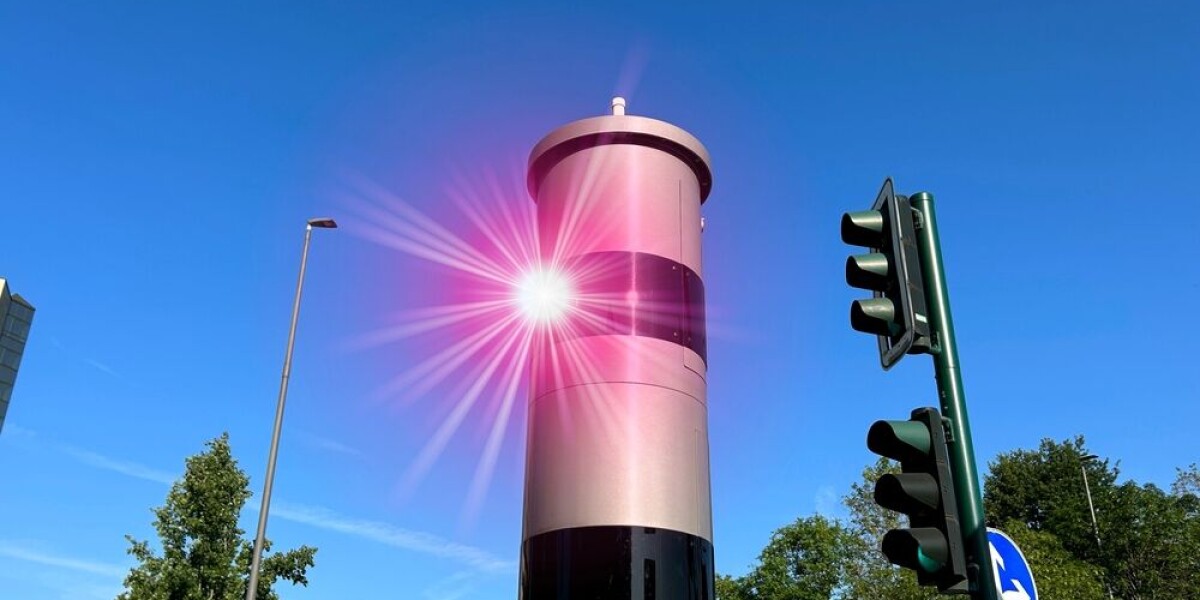
Many of France’s fixed speed cameras will once again flash visibly in 2026, as a signal to drivers that an offence has been recorded.
The measure is intended to make enforcement more educational and preventative, rather than relying solely on stealth infrared flashes that have been standard for the past decade.
The Département du contrôle automatisé (DCA), part of the interior ministry, says new flashes will be implemented across:
1,552 turret (radar tourelle) cameras, operational since 2019.
latest-generation discriminating radars, which identify vehicle types and lanes.
some 350 urban radars already installed by the central state.
thousands of new ‘local authority’ radars, to be installed in towns under the 2022 decentralisation (3DS) law.
The visible flash will trigger just after the infrared capture of the vehicle’s speed, ensuring enforcement is recorded accurately while immediately notifying drivers that they have exceeded the limit.
Authorities hope this will increase driver awareness and acceptance of penalties.
In addition, new urban camera models are expected to be installed from 2026, with around 5,000 local authority cameras planned over ten years.
The cameras will monitor both speeding and red-light offences, and some models may be adapted in future to detect other violations, such as driving in bus or cycle lanes.
Many older speed cameras (10-15 years old) will also be replaced with new models this year.
# Drivers exchanging a non-French driving licence for a French one need to pay a €40 fee from January 2026, under a new rule introduced in the 2026 budget. The charge applies to all licence exchanges, including:
mandatory switches for new residents.
renewals when an old non-French licence expires.
cases of loss, theft, or a driving offence.
Previously, the procedure was free. The government says the fee is designed to cover the costs of producing and delivering licences. Officials expect the changes to generate around €160million in revenue.
All residents in France using a non-French licence must eventually switch to a French one. The deadlines depend on the licence type and origin:
EU/EEA licences (excluding Swiss) or UK licences issued before January 2021: exchange is only required when the original licence expires.
non-EU/EEA licences from countries with a reciprocal exchange agreement (including recent UK licences, Australia, New Zealand, Japan, Brazil, and others): must switch within 12 months of moving to France. No test is required.
licences from other countries without reciprocal agreements (or in some US/Canada cases, depending on the state/province): a full French driving test is necessary.
Drivers must also apply for a French licence if their non-French licence is lost, stolen, damaged, if they commit a French traffic offence, or if they need to add a new vehicle category to their licence.
Applications are made online, with requirements varying according to the driver’s country of origin and reason for exchange. Drivers are advised to check the government simulator to confirm their obligations before moving.
EV sales hit new record in November 2025
Cost-price fuel may also entice buyers into the supermarket
Red traffic warnings are in place for Friday December 19
EV sales hit new record in November 2025
Including the new pollution tax on used cars, motorway toll changes and speed camera changes
Sharp drop in temperature sees cold weather plan activated in more than a dozen departments
Including the EU’s launch of travel authorisation scheme ETIAS and the continued ‘phase in’ of its digital borders system, EES
Growing trend of airlines trying to avoid paying out, research finds
Classification as ‘non-professional’ used to be simplest way to register revenue
Use it when expressing frustration and learn how it relates to health habits in January
Calls from French numbers abroad will need to be verified or show as ‘hidden number’, with residents urged to be vigilant about answering
Airline previously said that more routes to France will be axed next year
There are various routes to follow dependent upon the issue
Columnist Samantha David describes the ups and downs of a French birthday party for children
Protests are being maintained on the A64, A83 and A63 and on departmental roads
As Christmas approaches, we look at a phrase to describe someone who takes advantage of a situation
The Connexion speaks to Sir Thomas Drew, who took up the role on September 1
Action is also continuing outside mairies and other public buildings in south-west
New wording brings extra people into scope of fee originally aimed especially at American retirees
Proposals will not be included in future budget discussions and current levels will remain in place
Boar numbers are rising and the ‘unpredictable’ animals can cause serious injury
However wait continues for couples affected as officials consider further follow-up
Significant rises are not forecast for customers on regulated tariffs in next two years
Several roads and public areas closed in Montpellier due to flooding
Step back in time to explore Neolithic, Roman, and Templar traces… but you will not find any châteaux
Successful campaign by foreign residents should bring relief to hundreds of public sector pensioners
Measures designed to curb Airbnb-style lets are set to hit traditional B&Bs particularly hard
Subscribe to The Connexion
See prices & plans
HELP GUIDES
Income Tax in France
Healthcare in France
Inheritance Law and Wills in France
Visas and residency cards for France