Chrysler is allegedly about to enjoy a major renaissance. Chrysler CEO Christine Feuell has made overt promises that things are about to change. She has issued statements that the brand will not only start seeing new models, with assurances that some of those will see performance-focused SRT variants, but also a renewed focus on building affordable luxury cars.
“I am so excited to bring back SRT,” she told Mopar Insiders late in November. “I can tell you after meeting with my counterparts Tim Kuniskis and Matt McAlear we got a really awesome plan for SRT. It’s a great opportunity for us to bring back the performance brands and products that have been so iconic in the past as we look to the future.”
“To cut to the chase, I think you can expect to see some SRT models under the Chrysler brand.”
At this point, a lot of automotive enthusiasts were just waiting around for Stellantis to eliminate the nameplate. When Fiat Chrysler Automobiles was bought out by France’s PSA Group, the newly formed management team (Stellantis) suggested that the struggling American brands would be given heavy support for a couple of years before any decisions about their fate were made.
But the level of actual support being offered has been highly questionable, particularly at Chrysler. Jeep looks to have been a priority from the start, as does Ram (albeit to a lesser extent). Dodge received an updated version of the Charger, including an electrified variant that was probably a mistake, and the admittedly decent Hornet crossover (pictured) that nobody bought. Dodge has since issued promises that V8 engines would return.
This is apparently due to consumer sentiment and a shift in management. Whereas former Stellantis CEO Carlos Tavares seemed EV obsessed and not particularly interested in the American brands, new-CEO Antonio Filosa seems more welcoming of combustion and appears aware that customers in the United States have tastes that differ from Europe.
The new strategy is to pivot Stellantis’ American brands to refocus on their roots whilst maintaining a level of affordability. Dodge will be the practical performance brand, Ram will retain its focus on trucks, Jeep will keep being jeep, and Chrysler will support “blue-collar luxury.”
Considering Chrysler hasn’t received much help to speak of over the past decade, any action would be meaningful. Now limited to a few different versions of the same minivan (below), the brand isn’t even a shadow of its former self.
In its heyday, Chrysler sold cars that offered cutting-edge vehicle technologies, unparalleled luxury, and oodles of performance — a feat that lasted into the early 1970s. However, as the years rolled on, the company found itself in serious financial trouble and pivoted to innovative models with lower price tags. It also invented the minivan during this “turnaround era” under Lee Iacocca.
While Chrysler eventually attempted to reenter the luxury space by reintroducing the iconic 300 in 2005, the rest of its lineup continued to shrink as its flagship sedan developed a bit of a reputation. Your author always loved the model, as it offered a good balance of comfort and performance at a price that felt downright reasonable. But the company never really bothered updating the model, similar to the Dodge Charger/Challenger it shared its platform with.
That has only made the car more desirable to some drivers who bemoan the ways in which vehicles have been “modernized” and certainly helped keep pricing down. But it also arguably hurt the brand’s image and ensured the Chrysler lineup would continue to dwindle. No new models have come from the nameplate since 2017 and the previously stated plan was to gradually pivot the marque toward all-electric vehicles. But that never happened either.
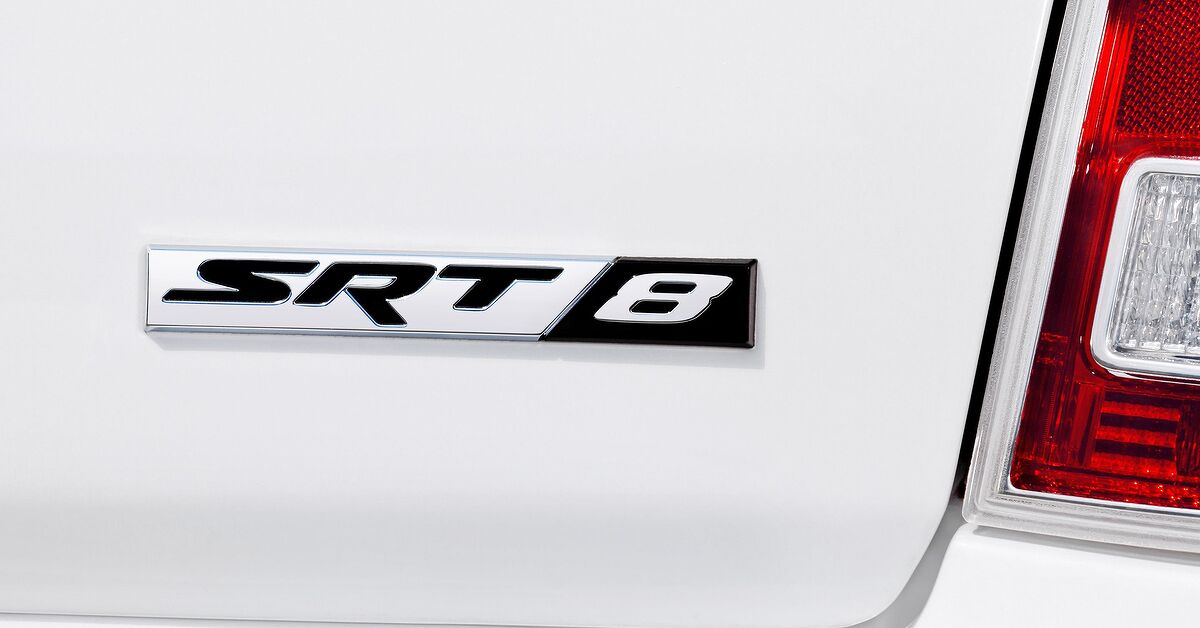
With the Charger back in action, there’s certainly a chance the 300 sedan could return as an SRT model. However, it would presumably utilize the 3.0-liter Hurricane twin-turbo I6 found and not the old 6.1-liter or 6.4-liter HEMI V8 that went into the 300 SRT8. Due to the lack of interest, an all-electric powertrain seems unlikely. But Stellantis has expressed that it plans on building more V8 motors, now that emission laws are supposed to be relaxing.
And, let’s face it, Mopar fans tend to like more power and larger engines whenever possible.
Returning the V8 to Chrysler is speculative on our part. However, it does sound as though the brand will be doing some extensive sharing with Dodge and Alfa Romeo on their STLA platform cars, both of which will leverage the spicy Hurricane motor, moving forward. That said, electrification hasn’t been removed from the conversation entirely.
“Our new STLA multi-energy platforms, as well as our existing platforms, are engineered to offer a variety of powertrain options, including internal combustion, hybrid, and electric,” stated Feuell.
“To better meet the needs of our customers and provide freedom of choice across our offerings, both Chrysler and Alfa Romeo are pursuing multi-energy powertrain strategies for our future product lineup.”
Beyond promises that Chrysler will be getting SRT models and a revised lineup, we don’t have much to go on. Still, leadership has offered some firm statements on the matter. Chrysler will apparently be getting new models with Stellantis’ new management indicating that nobody wants to see the brand being dropped.
“I want to put to rest any thoughts, rumors, or assumptions that it is being sold. It is not,” Feuell explained. “Like I said, Antonio Filosa is now at the helm of the company, he believes in Chrysler, he is rebuilding our portfolio, and he is doubling down his investment to grow in the North American market and reclaim leadership in all of our brands.”
Officially, we know Chrysler wants to offer an entry level model priced below $30,000, a couple of crossover vehicles, and a sedan (that we assume will be the returning 300). It also plans on offering a totally revised version of the Pacifica van — most of which is supposed to take place within the next year or two.
“One of the things that is very important for us to prioritize though is affordability… we are working on a small car or whether you call it a compact car, but something that can transact under $30,000… something that will be beautiful and fun to drive and aspirational, because you want people to feel proud… that it’s wearing a Chrysler badge,” noted the CEO.
It feels early to be super optimistic about Chrysler. But this is also the first time we’ve had reason to hold any real hope for the company in quite a while. Any automaker that’s willing to even consider performance-variants of a minivan is one that you kind of want to root for.
[Images: Stellantis]
Become a TTAC insider. Get the latest news, features, TTAC takes, and everything else that gets to the truth about cars first by subscribing to our newsletter.
Consumer advocate tracking industry trends and regulations. Before joining TTAC, Matt spent a decade working for marketing and research firms based in NYC. Clients included several of the world’s largest automakers, global tire brands, and aftermarket part suppliers. Dissatisfied, he pivoted to writing about cars. Since then, he has become an ardent supporter of the right-to-repair movement, been interviewed about the automotive sector by national broadcasts, participated in a few amateur rallying events, and driven more rental cars than anyone ever should. Handy with a wrench, Matt grew up surrounded by Detroit auto workers and learned to drive by twelve. A contrarian, Matt claims to prefer understeer and motorcycles.
More by Matt Posky
I’m rooting for them. I loved the minivan. And I’d be happy to have a performance sedan with an American nameplate and with American engineering and manufacture, regardless of the corporate structure.
Bring back the Chrysler 200. No.