Blue Sky thinking
Citroen has followed up the award-winning Oli concept with a new study that reframes the car as a companion following market research into the realities of everyday life.
Dubbed the ELO, it is both colourful and playful, with plenty of experimental technology and production techniques. Fun, clever, accessible and spacious are key descriptors employed by the design team, and we tend to agree. This is also our favourite type of concept car, as we are told it will actively inspire how the brand approaches future products.
“Citroen has made many fun cars,” noted Citroen style director Pierre Leclercq on stage this afternoon. “But we’ve always managed to create lots of exciting lifestyles. This is about more than just the car.”
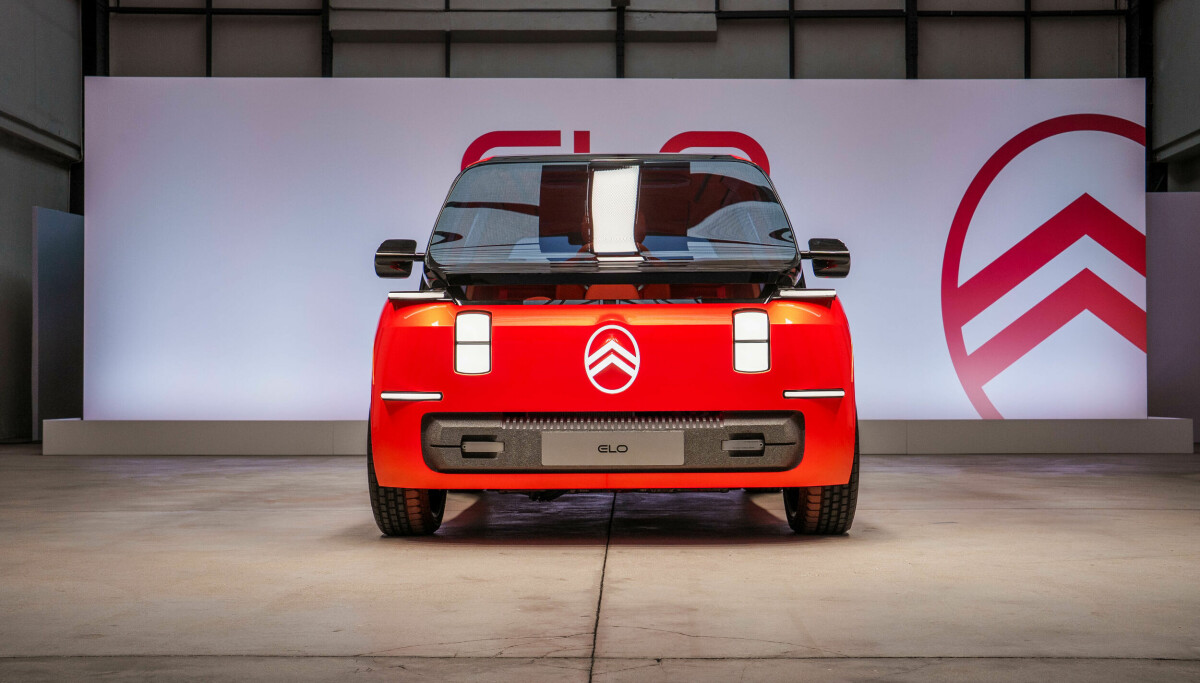
Visually, the ELO — pronounced like “hello” — might reasonably be classified as an MPV but it is by no means a conventional exterior. At 4,100mm long it is about the same size as the ë-C3, which makes sense as it is in fact based on the C3 platform.
The glasshouse dominates the overall form and nudges it close to ‘bubble top’ territory; as it happens, design boss Pierre Leclercq has described the car as “a bubble of energy.” At 1,700mm tall it sits higher than a Dacia Jogger, and only slightly lower than a Chrysler Pacifica minivan (1,777mm). Those might seem like slightly awkward proportions but in the metal it does have a bit of stance to it and seems less farfetched than press images would have led us to believe.
The open glasswork is enabled courtesy of a lower beltline which improves visibility out of each window. Lecercq recognised that by sitting the driver centrally, the view of both sides is naturally compromised. Pushing the glass lower solves that, we are told. “It’s the same as if you were sitting left or right,” he affirmed.
Square headlamps sit like cute, beady eyes on the front mask and a prominent illuminated Citroen chevron occupies the centre of the bonnet. There is no doubt as to which brand has made this show car. Conventional wing mirrors are a surprise given the industry’s march towards antennae-like side cameras but here, in gloss black, they blend in with the tinted windows, black pillars and roof. It reduces ‘vertical bulk’ and lowers the eye towards the car’s waistline.
We are told that panels have been duplicated at the front and rear to boost manufacturing efficiencies, but at first glance you would struggle to notice. The grey bumpers at each end are probably the biggest giveaway, and are in fact ‘crash bars’ made from recyclable materials. They are strong enough to withstand dents, but cheap enough (and green enough) to replace without a fuss if needed.
Indeed, this is not a case of symmetrical design. The roofline does not loop over in a single clean bow and instead creases inwards towards the rear hatch. There certainly feels like a distinct ‘head’ and ‘tail’ to the car. The roof itself can pop up camper style and allow for stargazing, if that is your thing.
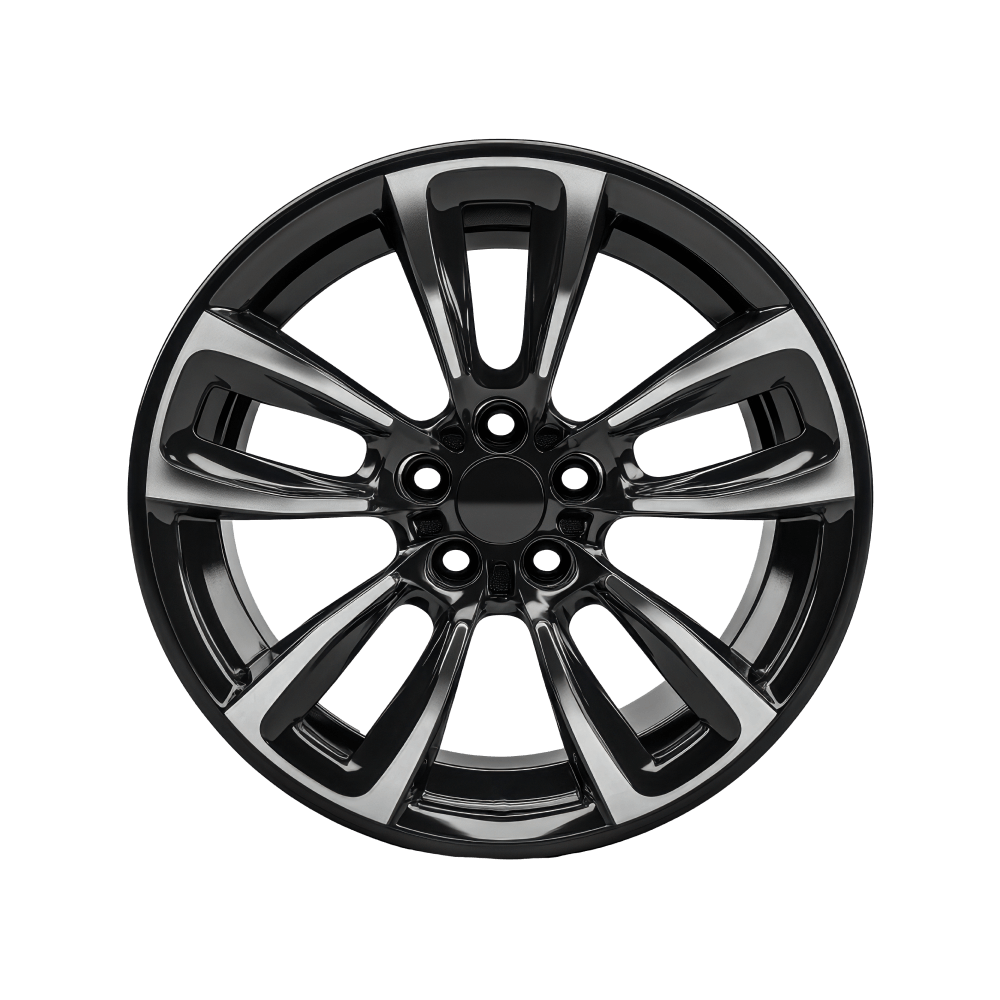
The tyres are chunkier than expected, with tread patterns that verge on ‘all terrain’ and seem to be the same (or an evolution of) the Goodyear ‘Eagle Go’ prototypes used on the Oli. These wrap around some interesting honeycomb-style rims that promise reduced drag.
Pierre Leclercq is not one to sit idle for too long and has openly spoken about his desire to keep things fresh at Citroen. Speaking to CDN at the Paris Motor Show last year, he noted that “if we don’t manage to do something different, the job doesn’t interest me.” The ELO seems to have tapped into that desire for fresh approaches, with Leclercq defining this new concept as “the perfect expression of what design should be: combining form and function.”
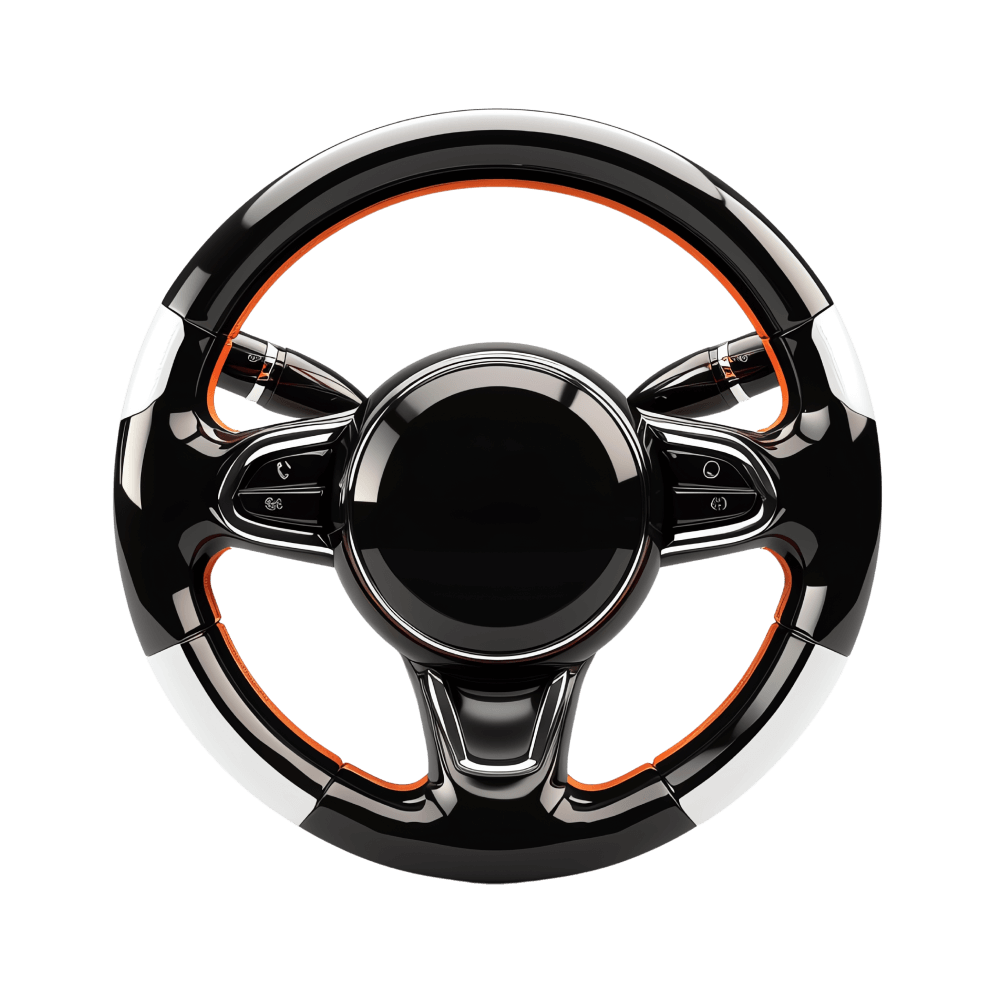
Like the Oli, colour has been employed generously on the interior, this time in bright orange — CDN of course approves. In fact, it is difficult to find a surface that is not orange. Up front, the steering wheel blends a conventional oval and a yoke-type situation, although it does also hark back to earlier Citroens; the single connecting arm reminds us of the Pallas. The driver sits centrally, meaning no need for left- and right-hand drive configurations. Again, saving cost and energy.
Three passengers occupy the rear row, each benefitting from “immense space” according to Citroen. It could get lonely up front with no other passengers in the main row, but the driver does have the option to spin the seat round to face passengers, or alternatively 90 degrees to look out the side window.
“We have people here who work remotely. There’s no reason why this couldn’t become their office for the day,” suggested Leclercq. If needed, an additional two seats can be brought in to the front row, boosting capacity to six people. On the UX front, an evolution of the ‘Smartband’ display has been brought in from the Oli, now using reflective film so that information “floats” across the entire width of the windscreen. Certain features (CDN will investigate) are not operated electronically either — like the tailgate. “We’re Citroen and we don’t want everything automatic and electric,” mused Leclercq.
Elements of the Oli went on to inspire production cars like the C3 and C4, we are told, and more recently with the C5 Aircross concept and its sculptural taillights. The ELO continues this theme, sporting a series of misaligned rectangular lamps at the rear, jutting out like random extruded bricks on a wall. Brick expressionism was not a French trend, but it is very distinctly European, so the connection works. If that was indeed the idea.
Subtle branding around the taillamp promotes Citroen’s collaboration with sports and outdoor brand Decathlon. It might make sense then that the rear of the ELO looks like it would be a fine camping spot, at least for short escapes from urban life. “For two people who love each other very much, you can sleep in the back,” joked Leclercq, tongue firmly in cheek.
An app has even been created with the aim of preventing travellers from forgetting their gear for trips out into the wilderness, and the car itself was presented with a raft of Decathlon kit as props. “We are always inspired by Decathlon, they innovate not through expensive tech, but through good ideas and strong customer values,” said Leclercq.
Cues seen on the ELO, elevated from previous concepts, all point to the future design direction of future Citroens. From what we have seen so far, good things appear to be on the horizon. “The team had a lot of fun coming up with a model designed down to the smallest detail to be practical, fun and clever,” says Leclercq. “Sharing expertise with the designers at Goodyear and Decathlon was also a very stimulating part of developing this concept, thanks to the creativity and technical solutions they were able to bring to the table.”
Check back for more updates, as we are writing on the move.