REPORTED BY HUMANS SINCE 2009
A new facility to help local startups test autonomous vehicle (AV) innovations just broke ground southeast of Pittsburgh.
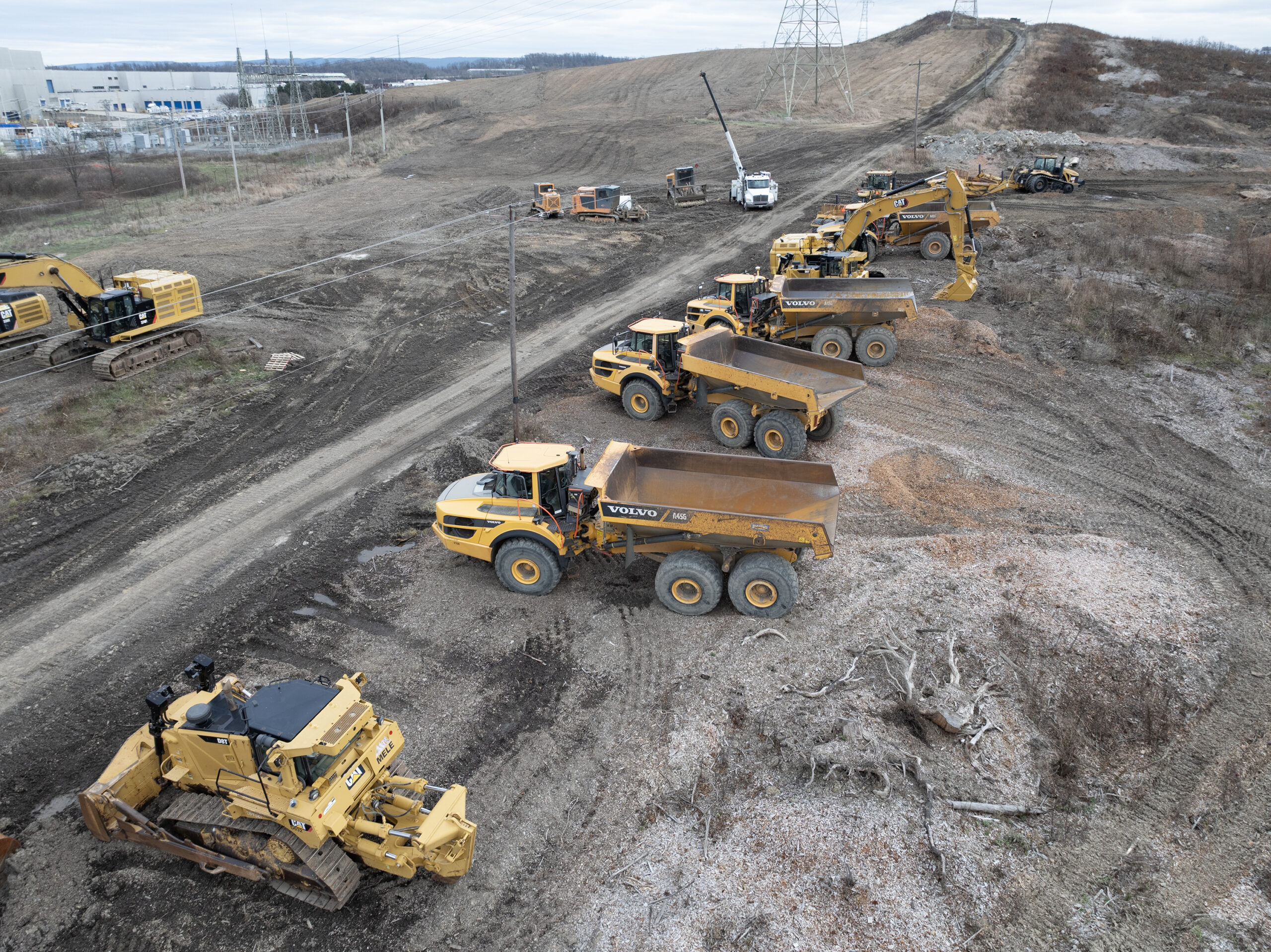
PennSTART, a state-of-the-art facility to assess transit tech like self-driving cars, began phase one of construction today at the Regional Industrial Development Corp.’s (RIDC) Westmoreland Innovation Center in Mount Pleasant. Startups should be able to begin renting time at the two-mile, closed-loop track by late summer or early fall next year, according to Tim White, senior vice president of business development and strategy at RIDC.
“We fully anticipate local companies like Aurora and Stack AV will test at the facility,” White told Technical.ly.
The companies will be able to try out their self-driving vehicles in simulated urban and rural settings, as well as areas with and without traffic signals. A high-speed loop will also be available, allowing vehicles to reach highway-level speeds.
“Stack is really excited about PennSTART,” Christin Baker, a spokesperson for the company, told Technical.ly. “This unique facility will help Pennsylvania-born companies grow at home. We look forward to continuing to work with RIDC on this extremely important project.”
Regular cars and trucks can also use the site. Along with AV testing, the track should be able to accommodate commercial, transit, off-road and aerial vehicles, as well as field robotics.
While there’s already interest in the track from local companies, the project is an opportunity for the region to attract new businesses, according to David Roger, president of Henry L. Hillman Foundation.
“[PennSTART] allows transportation technology startups to see our region not only as a leader in research and development, but a long-term place to grow a business and build a cutting-edge workforce,” Roger said in a prepared statement.
Join thousands of innovators, builders, decision-makers and aspiring technologists and entrepreneurs who rely on Technical.ly’s weekly updates with all things tech and startups.
Phase one of the project is set to cost $30 million, with only $25 million secured so far, according to RIDC President Don Smith. In total, the estimated final cost for the project could be more than $100 million.
The PennSTART project is a partnership between several organizations across the commonwealth, including Safety21, the US DOT National University Transportation Center for Safety, located at Carnegie Mellon University (CMU).
Established in 2010, CMU’s Safety21 received a $20 million grant from the federal government in 2023 to conduct transportation safety research. The center is now responsible for dozens of projects to advance autonomous vehicles.
The PennSTART project announcement also comes soon after autonomous taxi company Waymo announced it would be expanding operations to Pittsburgh, citing the city’s rich history with autonomous tech as a reason for the move.
“By giving researchers, companies and students a place to safely test, refine and deploy emerging technologies, PennSTART will accelerate solutions that will make transportation safer, more efficient and innovative,” Theresa Mayer, vice president for research at CMU, said in a prepared statement, “and continue to strengthen Southwestern Pennsylvania’s position as a national leader in autonomous vehicles.”
Subscribe to Technical.ly’s newsletters to stay connected. Each week, we share the latest in tech news, startup trends, career success stories, key resources and exclusive job opportunities, all delivered straight to your inbox.
Amid record-low inventory and cooling rates, Houwzer experts see a more strategic era for homebuyers.
How the Business Operations Rotational Program drives growth for one of Philadelphia’s fastest-growing companies.
Intentional policy and practice can steer this technology toward creators and communities, instead of reinforcing the firms that already dominate.
The nonprofit tech incubator, which launched with a $2M government grant, is scheduled to wire the money this coming week after social posts, legal involvement and questions from us.
“We all know American healthcare is broken,” said a Kaiser Permanente medical director in his introduction to the region’s newest, most promising innovations.
The massive grid operator will soon submit new rules on how it handles large loads, and the state has limited influence over the final guidelines.
Something went wrong. Please refresh the page and/or try again.
All News
Philadelphia
Pittsburgh
Maryland
DC
Delaware
Omaha
National
Civic Tech, Policy & Government
Entrepreneurship & Business
Workforce & Jobs of the Future
Jobs Board
Preferred Partners
Advertise With Us
Login | Logout
Post a Job
Manage Job Posts
Edit Company Page
Client FAQ
My Account
Our Team
Our Services
Strategic Vision
Ethics in Journalism
Privacy Policy
Report an Issue
Contact Us
Sign in by entering the code we sent to , or clicking the magic link in the email.
Read our Privacy Policy here. This site is protected by reCAPTCHA and the Google Privacy Policy and Terms of Service apply.