Let WardsAuto’s free newsletter keep you informed, straight from your inbox.
Wholesale used-vehicle values are expected to remain high in 2026, reflecting robust demand by both consumers and dealers.
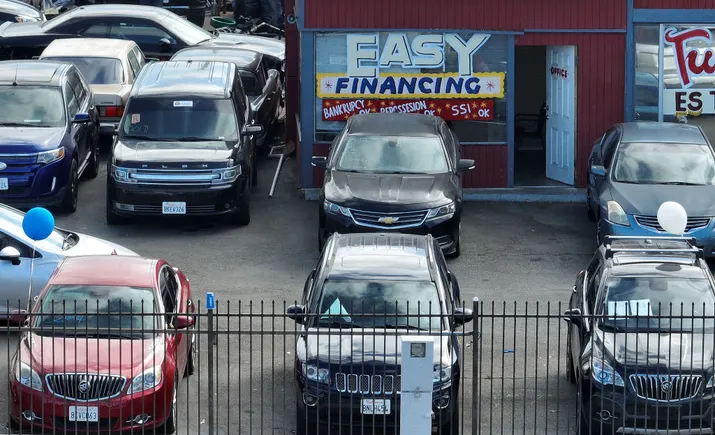
Despite a growing supply of off-lease vehicles in 2026, wholesale used-vehicle values overall are expected to continue to be strong, reflecting robust demand by both consumers and dealers for nearly-new models, according to the latest Manheim Used Vehicle Value Index report.
“We’re in this middle ground where supply is adequate but not abundant, and that’s likely to persist in 2026,” said Jonathan Gregory, senior manager for Economic and Industry Insights for Cox Automotive, in a webinar Jan. 8. Manheim is a Cox Automotive company.
“For dealers, these vehicles remain gold,” he said. CPO vehicles, often sourced from lease maturities, command higher prices because they are reconditioned to factory requirements and come with a factory-backed warranty, as well as the remainder of the first owner’s OEM warranty.
For December 2025, the Manheim Used Vehicle Value Index was 205.5, up just 0.4% vs. December 2024 – a stable outcome and part of a relatively flat trend since late 2023. The Manheim Index is a single measure designed to track used-vehicle wholesale price changes, weighted for a changing mix of product segments and mileage and seasonally adjusted. The index is calculated relative to a starting point, where January 1997 equals 100.
In the webinar, forecasters predicted the Manheim Index would rise 2% in 2026, compared with year-end 2025 — a forecast that’s in keeping with typical seasonal, historical trends.
That’s a big contrast to the roller-coaster ride in used-vehicle values following the COVID-19 pandemic outbreak. The Manheim index hit a low of 137.2 in April 2020 and peaked at 257.7 in December 2021 and January 2022, due to scarce supply of recent-model used vehicles and high demand.
Since then, both sides of that equation have moderated, with shakier demand combined with more supply. But it’s still a seller’s market, especially for newer used cars, economists said.
“Why are the 3-year-olds holding so strong? It’s all about supply or the lack of it. Remember three years ago when lease originations fell off a cliff? Those missing leases are becoming back to the market right now,” Gregory said.
According to Cox Automotive, auto lenders expected about 2.3 million leases to mature in 2025. That should increase to 2.4 million in 2026, with most of the increase coming in the second half. In 2027, lease maturities should hit 3.1 million, Cox Automotive said.
The increase in lease maturities also includes a higher share of used battery-electric vehicles, and in the long run that should make used BEVs more affordable. “When it comes to used EVs, we’re on the cusp of a major shift,” said Grace Huang, president of Inventory Solutions for Cox Automotive.
Cox Automotive expects BEVs to account for 6.9% of lease maturities in January 2026. That’s up from 2.8% in January 2025. In January 2027, it’s expected to be 18.7%.
“As you all know, millions of used EVs will re-enter the market in the next few years, and will have a notable impact on remarketing,” Huang said in the webinar.
Get the free daily newsletter read by industry experts
It’s appropriate that Ford, the company which first used the moving assembly line, will be the first to get rid of it.
The automaker has issued 109 recalls since the start of the year, extending to over 7.8 million vehicles.
Keep up with the story. Subscribe to the WardsAuto free daily newsletter
Subscribe to WardsAuto for top news, trends & analysis
Get the free daily newsletter read by industry experts
Want to share a company announcement with your peers?
Get started ➔
It’s appropriate that Ford, the company which first used the moving assembly line, will be the first to get rid of it.
The automaker has issued 109 recalls since the start of the year, extending to over 7.8 million vehicles.
The free newsletter covering the top industry headlines