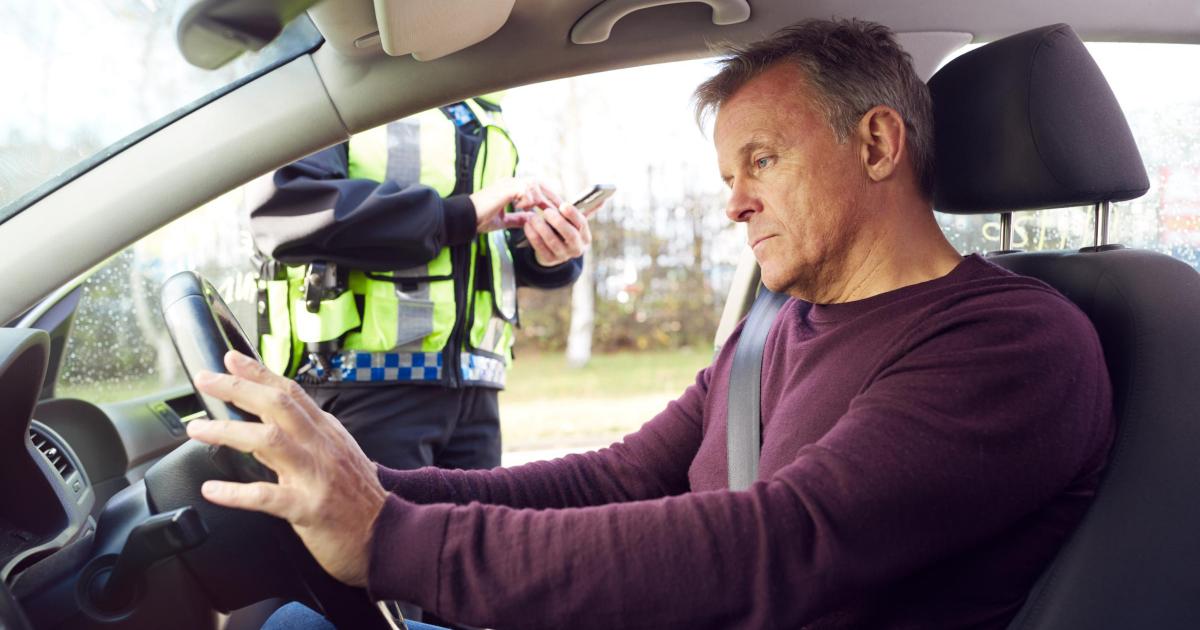
Doing this one thing in your car could see you lose your license, even if you have not turned your engine on.
Brits have been warned they could face harsh penalties, or even a driving ban, if they fall asleep in their car after a night out.
While many drivers may believe they need to have the engine running and be moving to face drink-driving charges, the law says differently.
According to Section 4 (2) of the Road Traffic Act 1988, it is an offence to be ’in charge of a mechanically propelled vehicle which is on a road or other public place’ whilst being ‘unfit to drive through drink or drugs’.

Officers usually categorise this as a DR50 driving offence, which prosecutes people for being in control of a vehicle while over the legal alcohol limit.
Meanwhile, Section 5 of the Road Traffic Act 1998 states it is illegal to be ’in charge of a motor vehicle on a road or other public place… after consuming so much alcohol that the proportion of it in his breath, blood or urine exceeds the prescribed limit, he is guilty of an offence.’
Drivers found guilty of a DR50 or DR40 could face fines of up to £2,500 along with up to 10 penalty points.
These convictions also stay on your driving record for four years from either when the offence happened or the conviction date where a ban was imposed.
In the most severe cases, you could even be hit with a discretionary driving ban or face up to three months behind bars.
Neil Sargeant, Head of Motoring Law at Motoring Defence Solicitors, reiterated the risks of being in a vehicle while intoxicated.
Neil said: “Many drivers are unaware that simply being ’in charge’ of a motor vehicle while over the legal alcohol limit is a serious criminal offence under Section 5(1)(b) of the Road Traffic Act 1988.
“You don’t need to be driving or even have the engine running; sitting in the driver’s seat with the keys in your possession while intoxicated can lead to an arrest and the most common example is when motorists intend to sleep in their car after a few too many.”
While motorists can be prosecuted for sleeping in their car drunk, Neil states a key defence drivers can use to prove they had no intent to drive while intoxicated.
He added: “However, a key statutory defence exists: if a defendant can prove there was ‘no likelihood’ of them driving while still over the limit, they should be found not guilty.”
This website and associated newspapers adhere to the Independent Press Standards Organisation’s Editors’ Code of Practice. If you have a complaint about the editorial content which relates to inaccuracy or intrusion, then please contact the editor here. If you are dissatisfied with the response provided you can contact IPSO here
© 2001-2026. The News and Star is owned and operated by Newsquest Media Group Ltd, an audited local newspaper network.
Visit newsquest.co.uk to view our policies, terms and legal agreements.
The Echo Building, 18 Albert Road, Bournemouth, England BH1 1BZ. Registered in England & Wales | 01676637
Data returned from the Piano ‘meterActive/meterExpired’ callback event.
As a subscriber, you are shown 80% less display advertising when reading our articles.
Those ads you do see are predominantly from local businesses promoting local services.
These adverts enable local businesses to get in front of their target audience – the local community.
It is important that we continue to promote these adverts as our local businesses need as much support as possible during these challenging times.