F1
Formula 1 in 2026 will see major changes to the sport as a new car era begins which will almost certainly shake up the pecking order; watch all 24 race weekends live on Sky Sports F1 and the Sky Sports app once again in 2026
Sports Journalist
Tuesday 2 December 2025 15:11, UK
Please use Chrome browser for a more accessible video player
As the 2025 Formula 1 season reaches its climax, there is increasing anticipation about 2026 and why it will be a pivotal year for the sport.
A lot. The technical regulations will be completely overhauled which will see major changes to the power unit, chassis and aerodynamic rules. The cars will be very different to say the least.
New car design rules in F1 almost certainly causes a shake-up to the pecking order. Sky Sports F1‘s Martin Brundle has described the new regulations as the “biggest changes ever” in the sport.
The teams have long been working on their 2026 cars because the regulations are scheduled to be in place for five seasons. Being quick from next year will set you up to be competitive for the years to come. Mercedes’ dominance in 2014, for example, lasted until 2016 before they were finally caught by Ferrari and Red Bull.
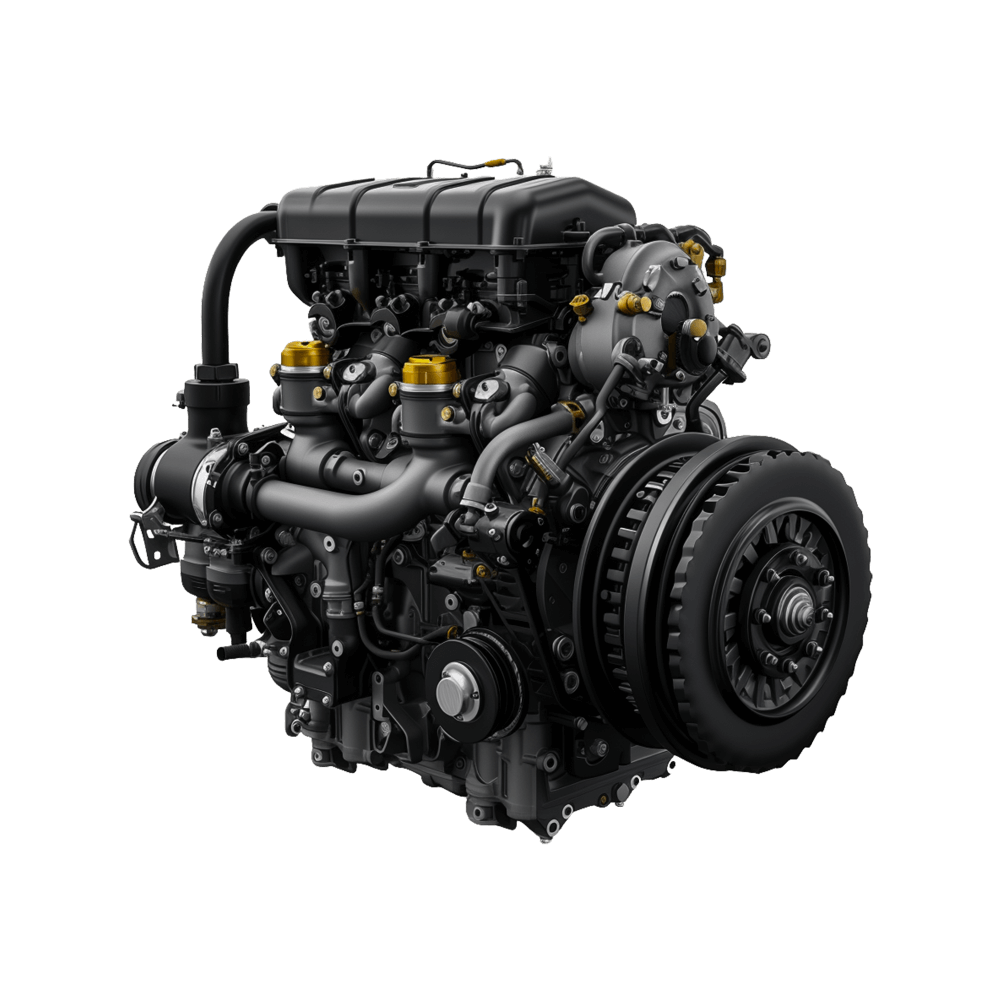
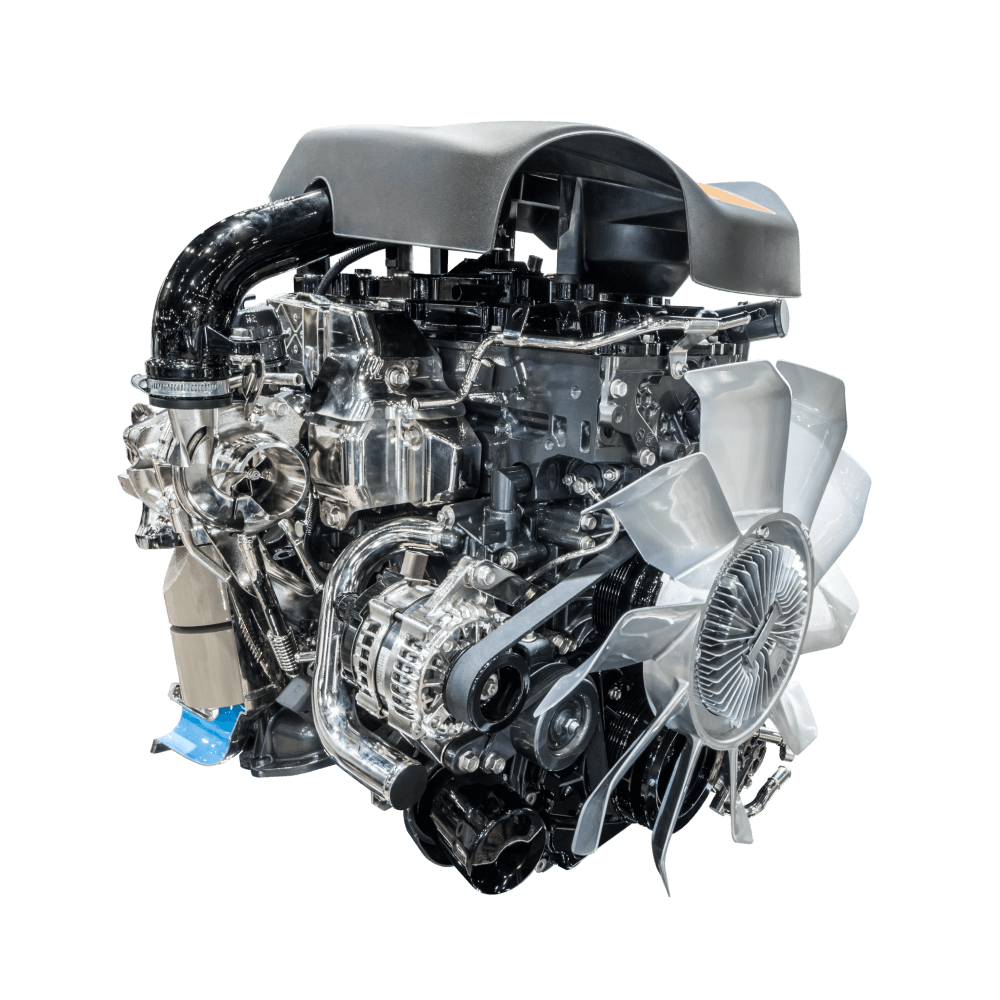
F1’s new power units will rely more on electrical energy, which will see a 50-50 split between hybrid power and the internal combustion engine, with nearly a 300 per cent increase in electrical power.
The engine itself is still the same 1.6-litre V6 turbo that has been used since 2014 but all the bits around that have changed, including the disappearance of the MGU-H.
All this means we are likely to see disparity between the best and worst power units. Expect varying levels of power and the return of unreliability, particularly in the early races.
F1 in 2025: The full race schedule
Stream every F1 race with no contract
Listen to The F1 Show podcast
Get Sky Sports on WhatsApp
“It’s very hard to just say it’s about crank power, or battery, or heat rejection,” said Aston Martin chief strategy officer Andy Cowell, who played a key role in Mercedes’ dominant turbo-hybrid power unit.
“All of these parameters are traded off. There are compromises in order to come up with the fastest race car. And we’re still many months away from the introduction point.
“I imagine that every single engineering team is looking at what they’ve got and going, ‘Ah, there are all these performance ideas. How do we get those in?’
“Then there will be a load of reliability issues – how do we solve those? The supply chain will be screaming because you’re asking for both performance and reliability. You just push really, really hard – and every single minute of every day counts.”
Due to the regulation changes which will continue to be somewhat road relevant, Audi will join the grid as they take over Sauber, Honda will remain in the sport and Ford will be an engine supplier in partnership with Red Bull Powertrains.
The FIA credits its new engine regulations for six power unit manufacturers – Ferrari, Mercedes, Renault, Honda, Audi and Red Bull Powertrains – for signing up to the sport.
Perhaps the most significant change in 2026 will be Red Bull producing their own engine for the first time, having formed Red Bull Powertrains in 2021, with the company taking on help from Ford.
Red Bull’s junior team Racing Bulls will also run the Red Bull Ford Powertrains from 2026. Both teams currently run Honda-supported power units after the Japanese manufacturer originally decided to leave F1 after 2021.
Audi will also be thrown in the deep end as they begin their first seasons in F1 but will be helped by having most of the same personnel from the current Sauber outfit.
Honda will leave Red Bull and Racing Bulls to become the sole supplier for Aston Martin, so there is plenty of excitement about their 2026 chances given the recent strength of the Honda engine in the last five years.
New entry Cadillac will use Ferrari power units and gearboxes until at least the end of 2028 before they hope to have their own engine.
Please use Chrome browser for a more accessible video player
From 2026, DRS will be replaced by a ‘manual override engine mode’ which provides a temporary boost in hybrid power. When the cars are at around 200mph, the speed will taper off due to the new engines, but the override button will give drivers more electrical power for longer. This will likely only be allowed when a car is within one second of another.
In addition, the cars will have two states at all times: ‘Z-mode’ and ‘X-mode’.
Z-mode means the front and rear wings are closed which generates more downforce for the corners. In X-mode, the drivers can open the flaps which will reduce drag and increase speed.
X-mode will only be allowed at certain points of the track and is likely to be forbidden in wet conditions.
“X-mode is our terminology for the low drag mode and that gives you your high top-speed,” said the FIA’s head of aerodynamics Jason Somerville.
“That’s the state you’d be in when you’re on a straight or past exiting a corner. As you approach the braking zone, you’d then pop into Z-mode, which is where the downforce is required to get through braking and around the corner.
“So we have these two modes that would be set up in terms of zones around the lap, and the drivers would be able to switch between these two modes when permitted. There may be Sporting Regulations that, for example, prevent use in wet conditions, but otherwise we would expect the drivers to have access to both modes around the track for every lap.”
This is the ultimate question. We will likely see an element of “lift and coast” so the drivers can recover energy and use it for longer acceleration periods at a higher power.
The MGU-K, a power unit element, will keep deploying a maximum 350kW power past up to 220mph. The best power units will probably have the best MGU-K as the drivers can deploy more power over a lap.
To drive an optimal race stint though may require lifting and coasting to maximise the efficiency of the MGU-K, which will create some interesting race scenarios.
If one driver is lifting into braking zones and another is not, we could see drivers from a long way back suddenly going down the inside of the car in front.
Please use Chrome browser for a more accessible video player
Williams driver Alex Albon said: “Look at Formula E as a more extreme version as to where we’re going to go to. You can see how the drivers manipulate the racing and qualifying and how they deploy and all these kind of things to gain performance.
“It’s not going to be that extreme, but there will be an element of the drivers who have the brain capacity to understand and facilitate all these demands will go well.”
Overtaking became increasingly difficult during the 2025 season due to the upgrades the teams put on the cars which created more dirty and and made it difficult to follow.
With new regulations, following should be much easier again in 2026, similarly to what we saw in 2022 when Max Verstappen and Charles Leclerc had epic battles in Bahrain and Saudi Arabia at the start of the season.
Mercedes driver George Russell said: “I think you will see more overtakes next year, but more overtakes in obscure locations – in locations where we’ve never seen overtakes before.
“If a driver’s at the bottom of their battery, and the one behind has more battery, in a given section of the track, they can suddenly jump past them at a corner in the past where there would never be an overtake.
“In terms of override itself, we said in the past we never like to see just pure DRS overtakes. I think the 2026 regs will offer better racing.”
Please use Chrome browser for a more accessible video player
It is expected the new cars will be around two seconds slower than the 2025 cars, depending on track characteristics.
Racing Bulls driver Isack Hadjar suggested the cars will be “closer to an F2”, though it was unclear whether he meant pace or handling-wise. FIA single-seater director Nikolas Tombazis says any comments about Formula 2 pace are “way off the mark”.
“We are talking about lap times, overall, which are in the region of one or two seconds off where we are now, depending on the track, depending on the conditions,” said Tombazis.
“At the start of a cycle, it would be silly to be faster than the previous cycle. It would cost us nothing from a regulations point of view, it would be very easy to make the cars go faster.
“But one has to gradually claw back what is gained by natural development. So you can’t start the cycle going faster than the previous one. In 20 years from now, you can imagine what would happen.
“It’s natural that the cars are a bit slower, but I don’t think we are anywhere near the ’it’s not a Formula 1′ discussion in any way or shape.”
The 2026 cars will be 20cm smaller in length and 10cm in width to a 3.4m wheelbase and 1.9m wide. The car weight has also been reduced by 30kg to 768kg. These new measurements should also help with the racing.
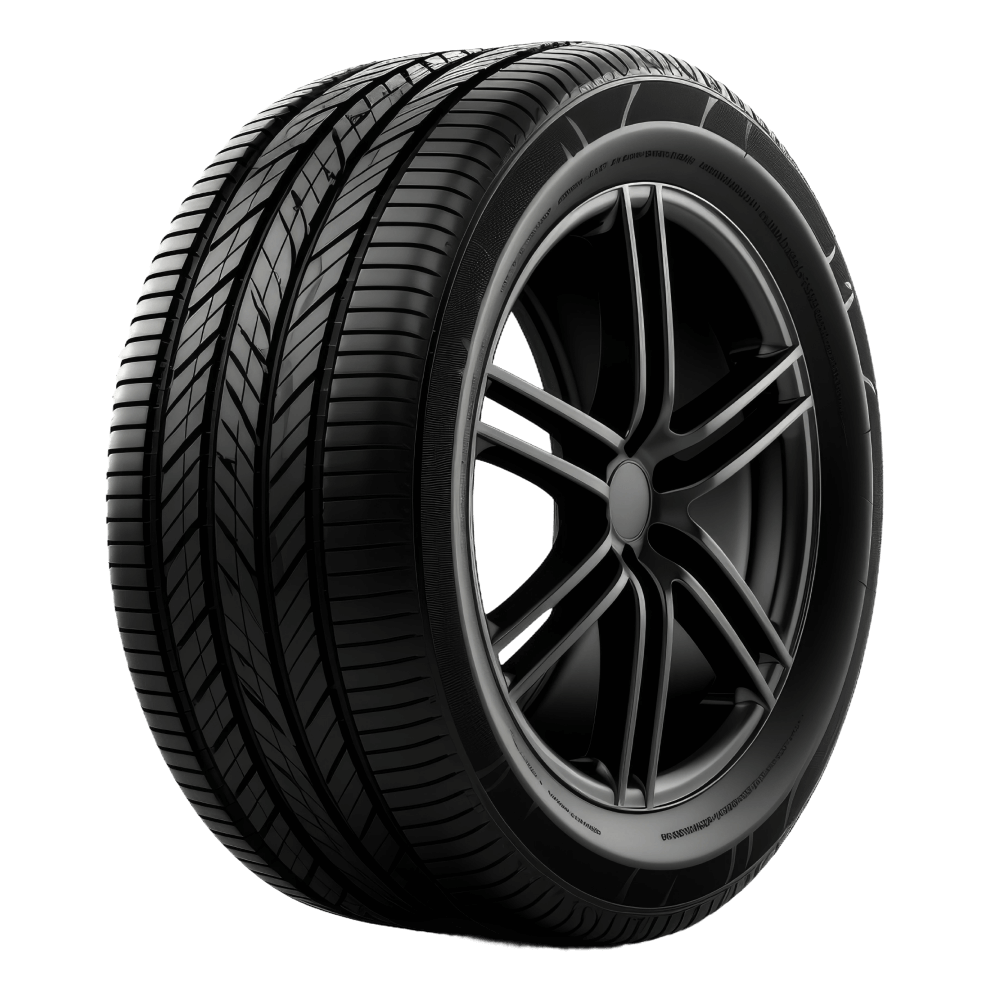
Pirelli have also reduced their tyre width by 2.5cm on the front and 3cm on the rear, although the 18-inch diameter will remain.
Tyres play a major role in car performance in modern F1, so the teams will need several races to discover what it takes to get the most out of the new rubber – What’s the tyre degradation like? How much do you push on an out lap? Is the tyre more susceptible to higher surface temperatures? Just a few of the questions the teams will need answers to for each of the C1, C2, C3, C4 and C5 compounds.
Each team will run 100 per cent sustainable fuel through non-food sources or waste, as F1 continues its goal to be net-zero carbon by 2030, another area which could be a performance differentiator.
A budget cap has been in place in F1 since 2021 and reduced to $135m (£102m) by 2023 which was the cap for 2025. However, the cost of making new cars means the FIA have upped the cost cap to $215m (£159.6 million).
Ferrari team principal Frederic Vasseur said: “The biggest challenge is probably that we are starting from scratch on everything-new tyres, new fuel, new engine, new chassis, new sporting regulations-new everything. It’s quite challenging.
“But somehow, it’s also the DNA of our sport to have this kind of challenge. Don’t complain too early about the show. We’ll see next year what the situation is.”
Watch all 24 race weekends from the 2026 Formula 1 season live on Sky Sports F1. Stream Sky Sports with NOW – No contract, cancel anytime
 © 2025 Sky UK