Formula 1
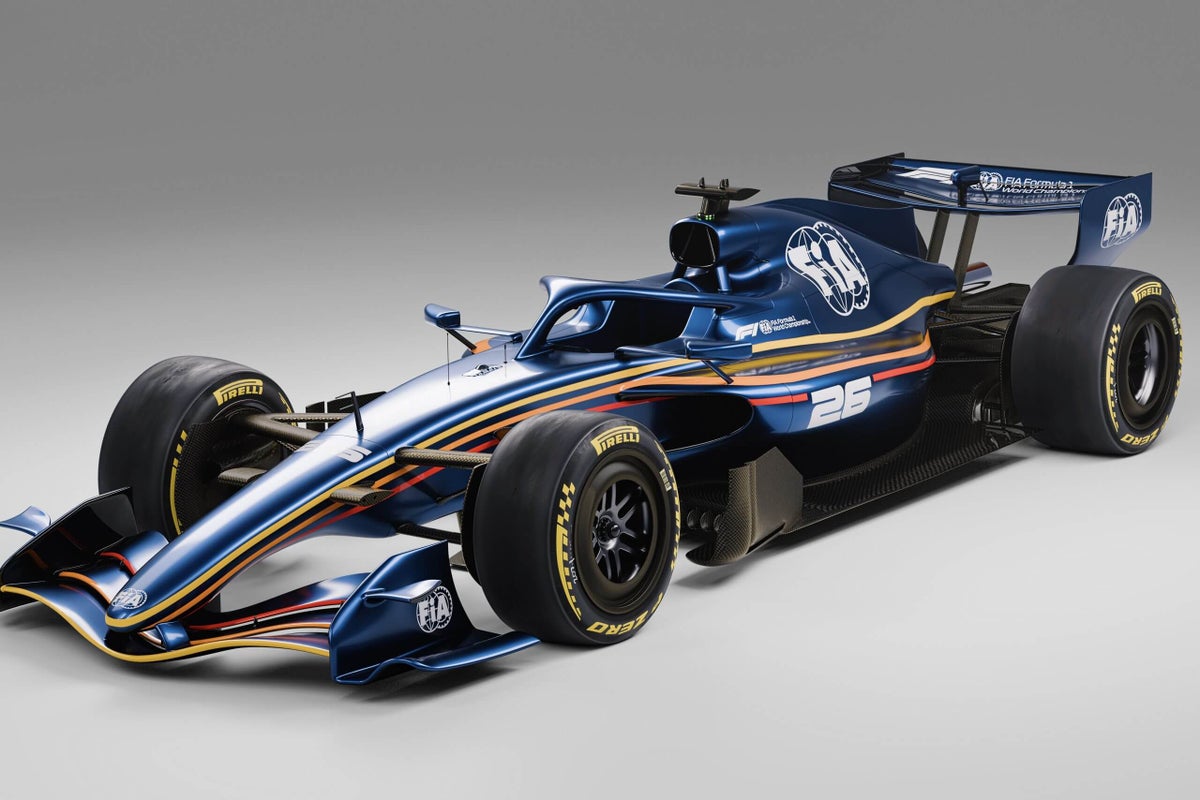
A rendering of the 2026 F1 car designs. FIA
Formula One is undergoing a significant overhaul of its technical regulations for next season, wiping the competition slate clean with new rules around car designs and technologies. As a new era approaches, motorsport’s governing body, the FIA, has issued updated terminology for the different operating modes of the new cars.
Advertisement
Last June, the FIA announced that the Drag Reduction System (DRS) overtaking aid in the rear wing would be replaced by a system called Manual Override Mode. That has now been renamed to Overtake Mode.
The new overtaking aid follows similar rules to DRS. It can be used when a driver is within one second of a car ahead at specific track activation points, but how Overtake Mode is used will vary.
Rather than opening the DRS flap on the rear wing, as the drivers did until the end of the 2025 season, Overtake Mode uses electric energy deployment from the engine’s battery to defend or attack a position — effectively a temporary power boost. Drivers will need to recharge the battery after using the mode, which could add some spice to strategies.
Two other terms, “Boost” and “Recharge,” are being carried over from the current cars.
Boost refers to the driver-operated Energy Recovery System (ERS) deployment, which enables drivers to deploy energy for attack or defense at any time freely around a lap, within the limit of the amount of energy available in the battery for such use. The ERS is another battery system that increases horsepower.
Recharge is the process by which the car’s energy is harvested back into the battery — the car recovers energy while slowing down as a driver lifts off the throttle or applies the brakes.
Drivers will have greater control over when to use their engine energy in 2026, but they’ll need to manage it more carefully compared to the old push-to-pass DRS system.
The terminology related to active aerodynamics on the new cars has been also been updated.
The previously designated terms “X-mode” and “Z-mode,” which referred to the different active aerodynamic configurations of a car depending on where it was on a track, have been simplified to “Corner Mode” and “Straight Mode.” This better reflects the definitions behind the names.
Advertisement
Corner Mode automatically positions the wings to generate higher downforce to maximize cornering speed, while Straight Mode reduces drag by moving the front and rear wing configurations into smaller profiles to increase straight-line speed. Both will switch without driver input as a car goes around a lap.
In a separate statement released on Wednesday, the Formula One Management organization said the terminology changes had been produced after being tested on “a group of new and traditional fans to understand and hear their views. This included using thorough third-party polling data and through our 50,000 strong community ‘Fan Voice.’”
When the 2026 technical regulations were first announced in June 2024, the FIA stated that the electrical output of the engines would nearly triple, from 120kW to 350kW. But if these new engines were run in the 2022-2025 era of car aero, Jason Somerville, the FIA’s head of aerodynamics, said straight-line speed would drop significantly, given the energy deployment requirements of the new engines.
This led to the increased use of active aerodynamics — Corner Mode and Straight Mode — similar to how an airplane’s flaps move during takeoff and landing.
For fans watching at home, the biggest change in 2026 will likely be how overtaking appears.
Instead of seeing a rear wing flap open and a car quickly gain speed as a result, it will be about watching for which drivers are managing their battery power smartly, and which ones are running low at the wrong time. This will likely be done via TV graphics showing how certain cars are using their energy deployment systems.
Overall, the new cars will be slightly lighter, smaller, and nimbler under the new regulations compared to the size of the cars used in F1 since 2017. Power units will also feature sustainable fuels.
Advertisement
As well as the expected changes to overtaking, it is expected that pit stop race strategy will also evolve.
In just 40 days, the new cars will hit the track for a private test in Barcelona, before the official preseason tests take place in Bahrain on February 11-13 and 18-20, and F1 is just 82 days away from its 2026 season-opener in Australia.
Madeline Coleman is a Staff Writer for The Athletic covering Formula One. Prior to joining The Athletic, she served as a writer and editor on Sports Illustrated’s breaking and trending news team. She is a graduate of the University of North Carolina at Chapel Hill and received her master’s degree from the University of Florida. Follow Madeline on Twitter @mwc13_3
Related Article