As a fan of anything related to the Japanese automotive culture and industries, there has always been one segment and aspect of the nation’s unique car scene I have aspired to experience – and that’s one area America may struggle to relate to: the world of kei-car ownership. While some examples of these compact models crop up from time to time on US roads, it’s something quite other to the US market, where size and stature matter in the popular SUV and pickup truck segments.
On a recent trip to Tokyo, however, we were given the opportunity to experience an extended drive with one of Nissan’s tiniest cars, to feel what it’s like to live with a vehicle that costs barely $10,000 new. Here’s what we learned.
All information about the models featured in this article has been sourced from the respective manufacturers. Prices quoted exclude destination, options, and fees, and are correct at the time of writing as converted to US dollars. Manufacturers reserve the right to change prices at any time without notice.
It’s very likely that you might not have heard of the Nissan DayZ before, given that this is a model primarily marketed and sold in Japan. The Nissan DayZ is among the smallest cars Nissan currently sells in its native Japanese market within the ‘kei-cars’ or ‘keijidosha’ segment – translating into English as ‘‘light vehicle.’
This segment was initially established by the Japanese Ministry of International Trade and Industry (MITI) to encourage manufacturers to provide affordable vehicles to the Japanese masses as the country emerged from World War II. Current regulations mandate that all kei cars cannot be longer than 11.2 feet, 4.9 feet wide, and 6.6 feet high. In addition, their powertrains must be no larger than 660cc, with a power restriction of 63 hp.
The fourth-generation Nissan Roox Kei car is class-leading in interior space, and now it can also boast the biggest screen setup.
Thanks to their low emissions output, combined with lightweight and compact dimensions, kei-cars are subject to lower purchase, registration, insurance, and weight taxes for those who own them in Japan, making them highly attractive options compared to a standard-sized vehicle or even what is considered ‘small’ in other markets; the Toyota Yaris Hatchback or Mazda 2 are compact, but still not as small as a kei car.
Aside from their very compact dimensions, kei cars can easily be made out in Japanese streets by their distinct black-on-yellow license plates.
On appearance alone, the Nissan DayZ remains fairly restrained, even though its compact size will definitely draw attention. Aside from its prominent vertical real estate, this kei car plays it safe with a design that is atypical of modern Japanese vehicles, presenting a funky, youth-inspired profile that is neither too boring, nor divisive.
The DayZ first debuted for the 2013 model year and is currently in its second generation, which has been in production since it was launched in 2019. After experiencing at least one facelift, its design reaches a happy medium that distinguishes this model clearly in Nissan’s lineup, without attempting to be too experimental.
An interesting bit of trivia is that while the DayZ bears the Nissan badge, this car wasn’t made by Nissan alone. Similar to how other brands, like Toyota, engineer and manufacture their kei car vehicles without having to invest in R&D to develop them from scratch, the DayZ is the result of a joint venture between Nissan and Mitsubishi (unofficially referred to as Nissan Mitsubishi Kei Vehicle) within the Japanese market that sees the two collaborate to design, develop, and manufacture kei cars. These are utlimately sold under both brands. The arrangement has Nissan responsible for the vehicles’ design and parts, while Mitsubishi handles the manufacturing and production processes.
And so, the Nissan DayZ shares a lot in common with the Mitsubishi eK Wagon, another Japanese-exclusive kei car compact. Look closely and, minus the badges and front bumpers, you can see some similarities between the two, from the body panels to the switchgear.
“Planning and development management of the New eK Wagon and eK X have been the responsibility of Mitsubishi Motors and Nissan Motor joint venture NMKV. With all-new platforms, engines, CVTs and other major components developed and produced through new processes, the new models offer a new kind of height-wagon keicar. They bring together Mitsubishi Motors’ 60 years of keicar knowhow [sic] and Nissan Motor’s advanced technology.”
— Mitsubishi Japan
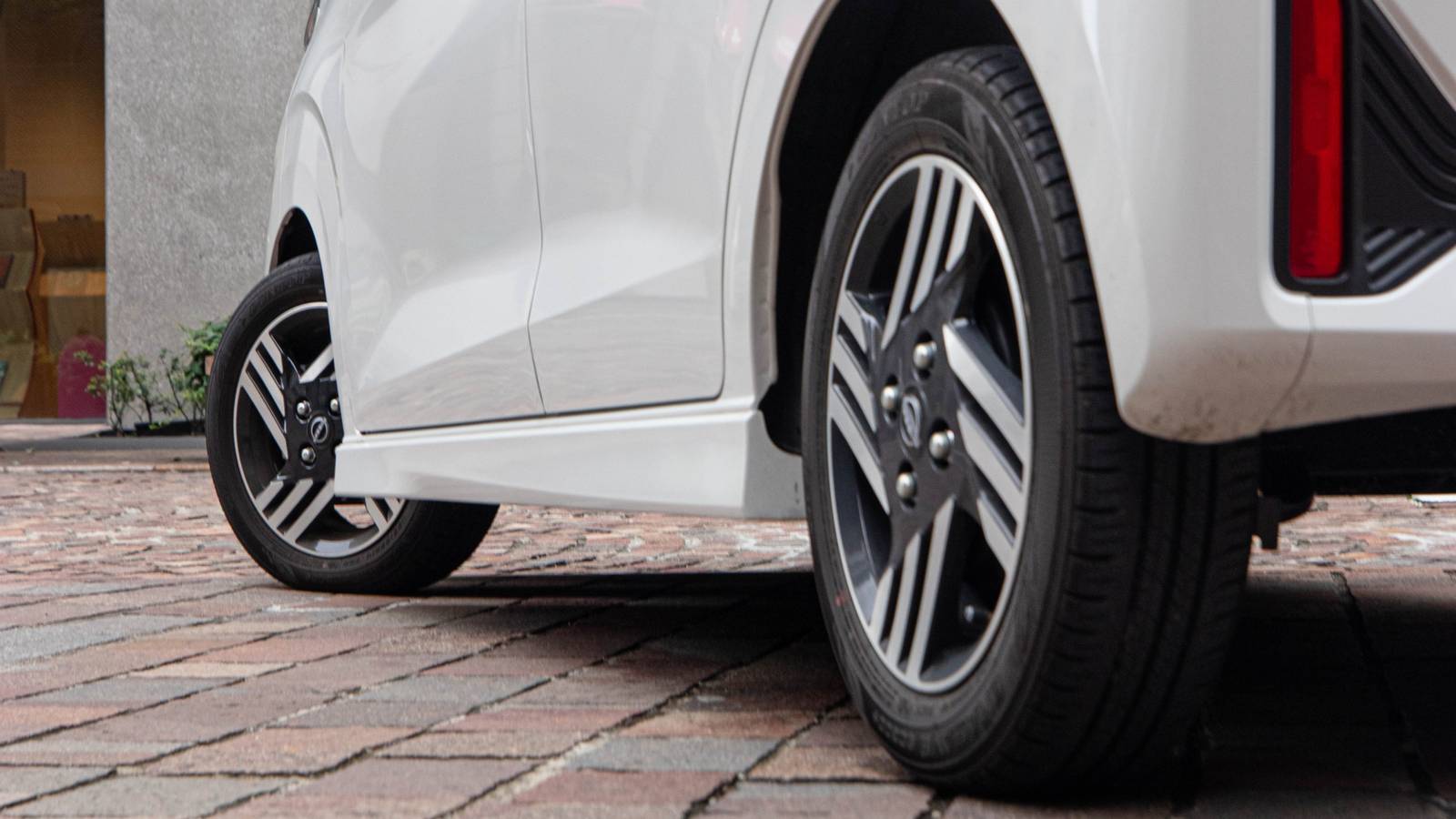
The model we spent our time with was one of the top-of-the-line trims, the Dayz Highway Star X ProPILOT Edition (2WD), which brings a slightly different front fascia compared to the base trims (referred to as the DayZ ‘S’ and ‘X’ in Japan) defined by a larger front grille, more LED daytime running lights (on the front corners, door mirrors), additional bits of chrome exterior trim, and slightly sportier alloy wheels. Small hints of Nissan’s current design language are evident, from the ‘V Motion’ grille-headlights design, to the alloy wheels featured on the Highway Star models, reminiscent of what can be found on the brand’s latest products, such as the Nissan Kicks.
It’s also worth highlighting that Nissan Japan allows DayZ customers to select from a wider color palette than what most American car buyers are content with in today’s market, with even two-tone options, combined with various factory accessories that allow far greater personalization.
You may have heard others rave about how kei cars have a ‘TARDIS’ like effect upon stepping in, and that very much applies to how you might react getting into the Dayz. Despite its obvious compact dimensions, Nissan has maximized every bit of the real estate inside — another quirky aspect of kei car engineering that confirms that smaller can still yield an efficient use of space.
The cabin is organized ergonomically, with plenty of physical buttons to operate all the functions when you need them. The tall driving position gives a clear view out front, complemented by important controls (the steering wheel and gear shifter) being in elevated positions to ensure you aren’t forced to reach far down to use them. There are also supportive armrests on either side of your seat that prevent your arms from getting tired since you’re sitting rather straight up. The touch-sensitive climate control settings exclusive to trims like the Highway Star are both a nice touch and easy to use.
Practicality is clearly the DayZ’s party piece — those using this vehicle for extended drives will find enough storage bins to carry any number of snacks/drinks from convenience store runs, combined with an array of slots and pull-out trays to count to stash away various items or essentials.
Headroom is more than sufficient, thanks to the tall profile, and the seating inside for four occupants doesn’t leave anyone claustrophobic, no matter how tall or wide anyone up front or in the back may be, with enough legroom and space for everyone seated to feel comfortable.
While we packed light for our trip, most people will find the space behind the rear seats just enough to hold a few suitcases and an overnight bag. It’s not cargo hauler, but it’s better than we anticipated. While this lacks any clever rear seat design like Honda’s ‘Magic Seats’ configuration, both rear seats can fold flat, leaving a far more cavernous area for those who need extra room for cargo and less seating for people.
We can see why they never pushed these through to production… but we wish they had.
When it comes to equipment, the Nissan DayZ features a lot in this top-line ‘Highway Star’ specification that should satisfy any modern car buyer. Standard features include a leather multi-function steering wheel, a touchscreen infotainment system with various audio/mobile services connectivity, an auto-brake hold function, and keyless entry/ignition. Certain trims in the Japanese market can also include higher levels of equipment, such as synthetic-leather upholstery, SOS emergency dispatch services, and power-folding door mirrors.
Nissan Dayz Performance Highlights
Powertrain
660cc turbocharged three-cylinder
Horsepower
~48 – 63 hp
Torque
~41 – 73 lb-ft (~56-100 nm converted)
Drivetrain
Front/All-Wheel Drive
Transmission
CVT Automatic Transmission
The majority of our time in the Dayz took us between Kawasaki (near the port area of Yokohama), and various neighborhoods within Tokyo city. While much of the city’s expressways offered the most direct, convenient ways to get to all of our destinations, we chose to avoid these as much as possible — deliberately choosing routes that took the Nissan through the tightest, most narrow side streets and areas that would normally be a struggle in a typical car… but this proved to be no challenge for a vehicle this size.
Worries over whether you might scratch a fender on a wall or have to perform a multipoint turn to clear through a 90-degree corner are forgotten instantly when navigating this Nissan through even the tightest of suburban Tokyo. Combine that with the very agile steering and all four wheels very close to the corners of the vehicle (which ride on particularly thin and narrow tires), and even cornering at low speeds can prove to be surprisingly fun, as this micro-car encourages you to dart from point to point.
We spent a good amount of time avoiding the wider main streets to really put the Nissan and its compact dimensions to the test — with not even the narrowest of side streets, packed with street signs, vending machines, and other kerbside obstacles getting in the way.
The 659cc turbocharged three-cylinder that’s under the hood may not seem like much on paper, but when you factor in that the DayZ weighs just between 1,830 and 2,072 lbs (whereas a gasoline-powered 2025 Mini Cooper C 2 Door weighs 3,014 lbs), it is a surprisingly spritely for a car of its size – and it hardly feels sluggish when getting up to speed throughout downtown Tokyo, especially given the maximum speed we could hit was around 40-50 km/h (24 – 31 mph).
The addition of mild-hybrid assist (also known as Nissan’s S-Hybrid system) helps fill in the gap before the turbocharger fully kicks in, meaning it never feels like the tiny engine is struggling at all.
Even though drivers have to put up with the mandatory Xtronic Continuously Variable Transmission (CVT), it’s only at the very top end of the rev range when you push it at its limits – which you’ll rarely do around town – that the buzzing of the engine can start to get a bit annoying.
On the occasion you find yourself on a highway, you’ll be surprised to find that the DayZ features adaptive cruise control, with a version of Nissan’s ‘PROPILOT’ semi-autonomous driving assistance allowing the car to manage its own acceleration and braking within certain speeds. Several active safety assists are also at hand to make driving easier, from blind spot detection to integrated road sign detection (which is extremely useful to identify easily missed stop signs).
Certain trims can also use sonar to detect objects or pedestrians nearby, and at low speeds, can prevent the common driver error of accelerator/brake pedal misuse. Nissan’s famous ‘Around View Monitor’ continues to make any degree of parking even more of a breeze, though some may find its integration within the rearview mirror a bit awkward, forcing some to squint their eyes hard.
If bigger is better, does than mean smaller is worse? Here are 10 of the smallest cars ever made in the USA.
Nissan Dayz
Fiat 500e
Mini Cooper C 2 Door Hardtop
Powertrain
660cc turbocharged inline-three-cylinder
Single Electric Motor
2.0L turbocharged inline-four cylinder
Horsepower
~48-63 hp
117 hp
156 hp
Torque
~41-73 lb-ft (~56-100 nm converted)
162 lb-ft
184 lb-ft
Top Speed
~130 km/h (~80 mph converted)
94 mph
150 mph
Transmission
CVT Automatic Transmission
Single-Speed Transmission
7-Speed Dual Clutch Transmission
Turning Diameter
14.7 ft (4.5m converted)
31.5 ft
36.4 ft
Length | Width | Height
133.7 | 58.1 | 64-65.4 inches
142.95 | 74.12 | 66.3 inches
152.6 | 68.7 | 56.4 inches
Overall Weight
~ 1,830 – 2,072 lbs
2,981 lbs
3,014 lbs
Though news towards the end of 2025 hinted that the American automotive industry may be incentivized to make kei cars domestically, it remains a fictitious idea for the time being. Nonetheless, we can still compare the Nissan DayZ to some close counterparts currently on sale in North America, namely the all-electric Fiat 500e and the latest generation Mini Cooper 2 Door Hardtop.
It’s obvious that the Fiat and Mini have the advantage when it comes to power output: the Fiat 500e benefits from the immediate power and torque delivery that only its all-electric powertrain is capable of, while even in its entry-level trim, the Mini Cooper C’s 2.0L turbocharged inline-four cylinder delivers the most power out of the three, as well as the highest top speed.
The Bolt’s reign as the cheapest EV will be short-lived.
But outside of spec sheets, in the real world, it’s not about how much power you have, it’s how much you can use all the time. The DayZ may not be the fastest or most powerful, but consider what environments and conditions these cars are primarily used in — navigating through urban streets, going no more than 30–40 mph in traffic, and using as little fuel as possible. Then the Nissan proves itself to be just as ‘fast’ as its larger compact equivalents and far more frugal. It helps that it’s the lightest out of the three, meaning it has an excellent power-to-weight ratio to its advantage.
In addition, the Nissan stands out among the other two as the most ‘compact’, with its smaller overall size, and as highlighted earlier, applies its smaller footprint more efficiently with its smart packaging inside, allowing it to be far more practical than the other two when it comes to storage and cargo carrying area.
Wrapping up our impressions of the Nissan DayZ, it’s starting to become a clearer picture for us as to why these little cars remain so popular in certain environments, with owners who advocate for these niche cars passionately.
Pricing for a new Nissan DayZ kicks off from around 1,437,700 JPY (just under $10,000 when converted). When you factor in all the discounted registration/tax fees Japanese buyers receive by opting for a kei car, on top of benefits like not being restricted to specific parking spaces, you begin to understand why these types of vehicles have been so successful in this country. Whether this segment can work in overseas markets like the United States is up in the air – especially when you factor in the additional fees, import taxes, and other government regulations that kei cars would have to adapt to, which could make them less affordable in the long-run.
We got behind the wheel of Nissan’s tiny Sakura, and it was everything we hoped.
While we had initial concerns over whether the small powertrain would provide enough grunt, and whether the compact dimensions would impede regular usability and comfort, all of those fears immediately went away after a bit of time behind the wheel. A kei car like the Nissan DayZ, drives and functions like any regular compact car, with the only difference being how it is packaged and engineered to suit its native Japanese environment where space is hard to come by. What Kei cars have done is force many industries, automotive especially, to think smarter about how their products can satisfy buyers without sacrificing too much with regard to standard function and usage. And that’s something that, especially in the current economic climate, is worth examining further.
Sources: Nissan, MINI, Stellantis, Mitsubishi
We want to hear from you! Share your opinions in the thread below and remember to keep it respectful.
Your comment has not been saved
This thread is open for discussion.
Be the first to post your thoughts.