Published 4:38 pm Monday, January 12, 2026
By Thomas Howard
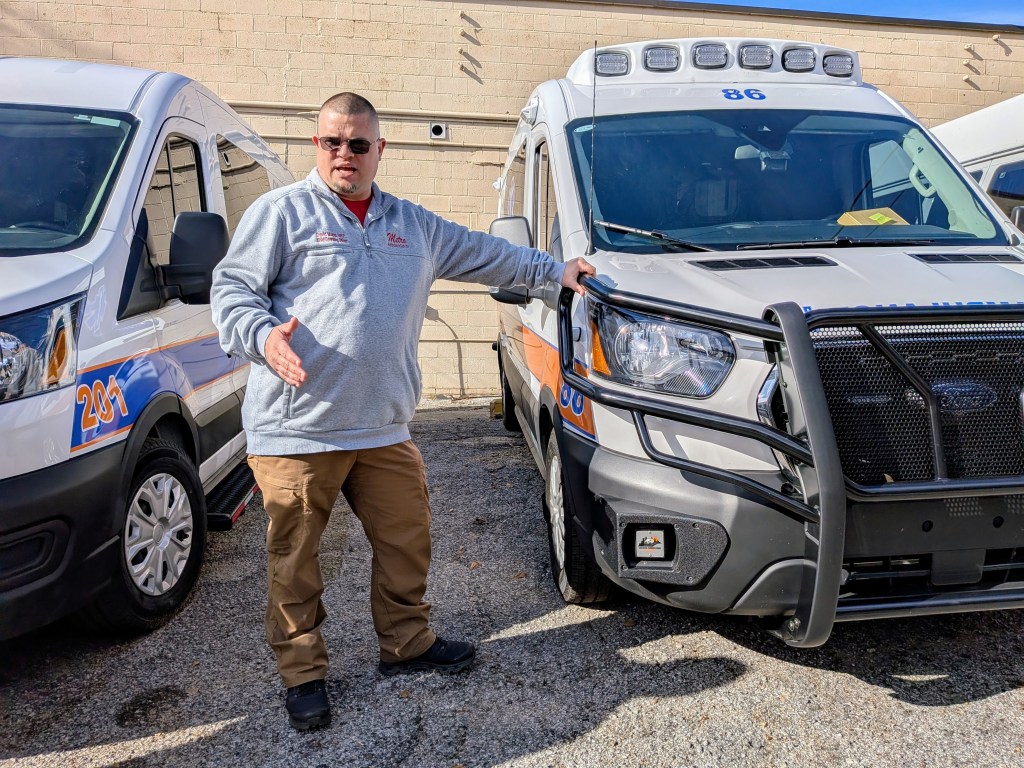
Metro Ambulance is improving its ability to provide emergency care for Lauderdale County residents with two new vehicles added to the agency’s growing fleet.
David Mapp, chief operating officer for Metro, said a new ambulance promises a more comfortable ride for patients and paramedics, and a new wheelchair transportation van brings a much-needed replacement for an older, smaller model.
The 2024 wheelchair van can transport up to three patients at one time, Mapp said, with a lift rated for 1,100 pounds and updated safety features. Wheelchair transportation is a service Metro provides to several local facilities, he said, and the new vehicle will see daily use.
“We’re around 12 or 13 facilities that we provide this service to, that we’ve done for many years,” he said. “This is going to replace our current one that we have. That’s a 2007 model with over 300,000 miles on it.”
The new wheelchair van also has more lighting, first aid supplies, an automatic defibrillator and other useful equipment.
The new ambulance, a 2024 Ford Transit, will also see frequent use, Mapp said. It comes equipped with separate heat and air units for the front and back, as well as the ability to haul two patients at once, he said, while also providing more room for crews to move around.
“We’re going to put a 24-hour crew in this, so they’ll be in comfortable trucks. It’s got more room in the front than most of the trucks we have in the past, so it’s very friendly to the crews,” he said.
The Transit is less expensive than the traditional box ambulance, Mapp said, and gets better fuel economy. It is also easier and faster to find parts to maintain and repair the vehicles when needed.
The new vehicles bring Metro’s total count of Transit vehicles to four, Mapp said, which is part of an effort to move to a more uniform fleet. The agency is also working to develop a rollover schedule to keep its fleet up-to-date.
Much like law enforcement agencies and fire departments, finding new vehicles available to purchase has become a challenge since the COVID-19 pandemic disrupted supply chains. Mapp said finding a replacement part for the Transit van may take three or four days, whereas a similar part for one of the older box ambulances could take weeks or longer.
“That’s another reason why we’re going to a uniform truck, so it’s easier to get one part,” he said.
The new vehicles and different approach to buying ambulances are part of an overall effort to make positive changes at Metro and set up good practices for the future, Mapp said, and he wants the public to know that there is an effort being made to improve.
“We’re trying to do things better. We’re trying to change our appearance, we’re trying to change our fleet, trying to upgrade things,” he said. “We’re in discussions about maybe looking at some more in the near future to beef up things.”
Related Article