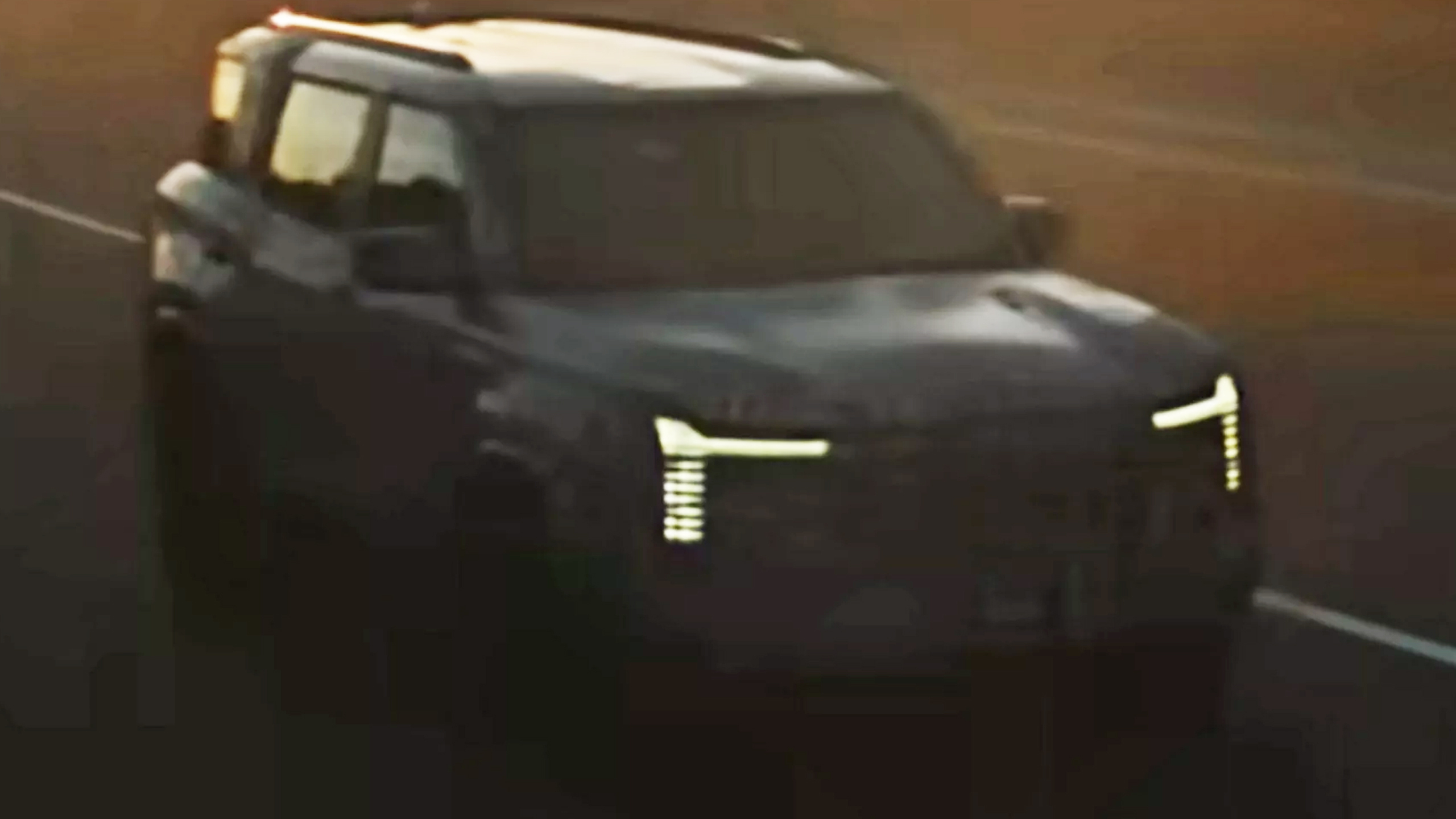
There was speculation the new Pajero might share a platform with the Nissan Patrol, but a recent report suggests Mitsubishi is developing it independently
After years of silence, Mitsubishi looks set to bring back a nameplate that once defined its off-road legacy. Speaking at this month’s Tokyo Auto Salon, company president Takao Kato made a brief but telling announcement, confirming that “we will launch a new full-fledged off-road SUV in 2026.”
Combined with a recent teaser that closely mirrors what we’ve seen in earlier spy shots, it’s little surprise that many immediately began speculating about a Pajero comeback.
Read: Mitsubishi Just Teased Something New, And It Looks Like A Familiar SUV
For fans of capable, go-anywhere SUVs, the timing could hardly be better. With the Toyota Land Cruiser dominating this space now, a fresh rival from Mitsubishi could stir up the segment just enough to get interesting again.
Production of the full-fat Pajero ended in 2021, capping a 40-year run across four distinct generations. A recent clip released by Ralliart showcased a Pajero-sized SUV for the modern age, complete with a boxy design that’s bound to get some enthusiasts very, very excited.
Partnership or Solo Project?
Not long ago, there was talk that the new Pajero might share key components with the latest-generation Nissan Patrol. Given Mitsubishi’s alliance with Nissan and Renault, the idea made sense. But according to a recent report from BestCar, which cites sources inside the company, Mitsubishi decided to develop and build the new Pajero entirely on its own.
Also: If This Is The Next Pajero, Mitsubishi May Finally Be On To Something
Underneath, the SUV will reportedly ride on the same platform as the new Mitsubishi Triton pickup. Power is expected to come from the Triton’s 2.4-liter twin-turbocharged four-cylinder diesel, producing 201 hp and 347 lb-ft (470 Nm) of torque.
Those figures match up nicely to the current Toyota Land Cruiser Prado, which, in markets outside of the US, gets Toyota’s old but trusty 2.8-liter turbo-diesel four, rated at 201 hp and 368 lb-ft (500 Nm).
Electrification on the Table
It’s likely that when the new Prado hits the market, Mitsubishi will also set it in electrified guise. Using the same powertrain as the popular Outlander PHEV would be an obvious choice.
This system combines a 2.4-liter four-cylinder petrol engine with two electric motors and a lithium-ion battery. Together, they deliver a total of 248 hp (185 kW) and 332 lb-ft (450 Nm) of peak torque.
While that setup works well in the Outlander, scaling it up to match the size and weight of a new Pajero could be another matter. Mitsubishi may need to dial up the output, or consider a different configuration, if it wants the hybrid to feel properly matched to the bigger SUV’s demands.
What Will It Cost?
Pricing is still unclear at this early stage. What seems likely is that the Pajero will command a premium over the Triton in base trim, while high-spec variants will almost certainly cost way more than the Outlander. Japanese media outlets suggest the range will fall between 5.5 million yen (around $34,900) and 7.5 million yen (roughly $47,500).
Still, it’s important to remember that domestic pricing in Japan tends to come in well below what vehicles fetch in other Western markets. For example, the Land Cruiser 250 starts from 5.2 million yen ($32,900) in Japan, yet its U.S. counterpart opens at $57,600.
Some of that gap is due to powertrain differences, as in this case, Japan gets the diesel, while North America gets the hybrid, but it certainly doesn’t account for the entire jump.
Google News
MSN Start
Brad Anderson’s lifelong affair and fascination with cars started young. Before even graduating high school,… Read full bio
Related Article