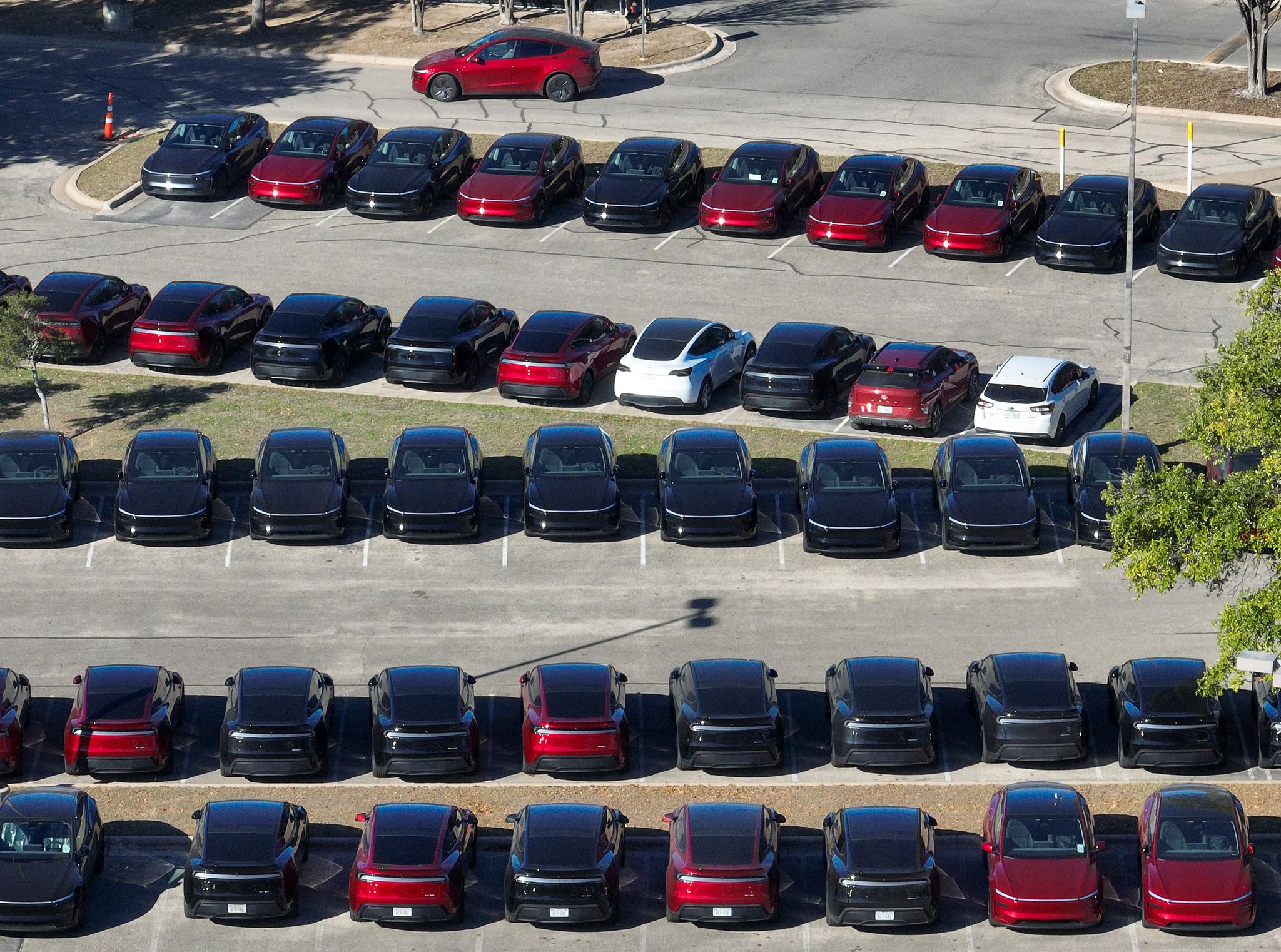
A new survey suggests Tesla Inc. CEO Elon Musk’s electric vehicle dreams may not be coming true.
A Deloitte survey found that consumers weighing options for their next auto purchase don’t have electric vehicles top of mind. And car shoppers in the U.S. are less enthused than those in some other countries about vehicles with AI and other software — a feature Musk has said is key to the Austin automaker’s future.
Advertisement
Article continues below this ad
The survey conducted from October through November asked more than 28,500 consumers in 27 countries about their opinions surrounding electric vehicles, brand perceptions and adoption of software-driven vehicles.
It found that just 7% of respondents in the U.S. listed a battery electric vehicle as the choice for their next vehicle. And just 41% saw perceived usefulness in software-driven vehicles. Globally, it found enthusiasm for software-defined vehicles is notably lower in EV-mature markets such as the U.S., United Kingdom, Japan, and Germany, a finding Deloitte says highlights “a clear divide in comfort with software-centric vehicle concepts.”
More than a quarter said a hybrid electric or a plug-in hybrid electric would be their preference, while 61% listed an internal combustion engine as their top pick. A small percentage said they didn’t have a preference or wished for a different option.
Ultimately, getting a good deal was the most important aspect. That was echoed in a part of the survey asking consumers for the most important factors driving brand choice. Quality, performance and price led the way.
Advertisement
Article continues below this ad
And a domestic brand is not a high priority for U.S. consumers, either despite automakers such as Tesla touting American-made cars. Nearly half, or 46%, of survey respondents said it “doesn’t matter” if the manufacturer is domestic or foreign while 18% said they actually preferred a foreign manufacturer.
Some of the top worries surrounding EVs include limited driving range, time required to charge and the vehicles’ price premium. Others are concerned about a lack of public EV infrastructure and cold weather performance.
The low enthusiasm for EVs arrives after a $7,500 U.S. tax credit — a major incentive for buying or leasing a new EV — expired in the fall as a result of President Donald Trump’s “One Big Beautiful Bill.” Ahead of its expiration, automakers such as Tesla tried to offer sweeteners to secure more sales, promoting offers such as 3.49% APR financing on a Model Y for up to 60-month financing terms, down from 5.54%.
Advertisement
Article continues below this ad
But now, some manufacturers are looking to attract consumers with an affordable EV. Ford announced plans last week to produce a $30,000 EV in 2028, complete with eyes-off driving technology. Ryan Robinson, an automotive research leader with Deloitte said such a price point is important for an “increasingly cost conscious consumer base.”
Currently, Tesla offers its Model 3 at a starting price of $36,990 and its Model Y at nearly $40,000.
But potential buyers could be swayed by electric vehicles that receive regular enhancements. More than half of respondents said they’d be willing to pay more than list price for software updates downloaded directly to the vehicle that eliminate the need for shop visits. More than 40% of U.S. respondents said a software-defined vehicle would be useful.
Musk has tried to appeal to such buyers, marketing the company as an AI or robotics firm rather than an automaker. And the newest car expected to join its lineup could appeal to those searching for both a bargain and software features. Musk has previously said its “built for autonomy” Cybercab would cost $30,000 or less. Tesla’s self-imposed deadline to start production on the vehicle is April.
Advertisement
Article continues below this ad
Owners of other Tesla vehicles are regularly treated to software updates, including improvements to Tesla’s Full Self-Driving system. Some of the latest advancements include adding to the vehicle’s ability to make navigation route changes during construction and new parking options, Tesla’s head of AI Ashok Elluswamy recently noted. More “reasoning” abilities are expected to ship in the first quarter, Elluswamy said on X.
Still, some consumers are inching closer to full battery electric vehicles through hybrids. The recent popularity of hybrids has boosted vehicles such as Toyota Motor Corp.’s San Antonio-built Tundra hybrid, which had a record sales month in October. Toyota sold 2,870 of the vehicles, up more than 182% from the year before.
The interest in hybrids is a salve for manufacturers that have made investments in their EV strategy in recent years. Robinson said manufacturers can still leverage some of their battery technologies and other investments, allowing hybrids to still be a cost effective play.
Advertisement
Article continues below this ad
“What they’re trying to do is maintain kind of the best of both worlds, right?” he said.
Some consumers might perceive an EV as a smart financial choice, though. Robinson noted that those who would be motivated to get an EV in the future mentioned lower fuel costs as attractive.
“That’s a pocketbook issue, and that’s something that the U.S. consumer is very much laser focused on,” Robinson said. Other reasons for desiring an EV include concern for the environment, a better driving experience with lower road noise and other performance concerns.
Advertisement
Article continues below this ad
“But you can’t really get away from this affordability thing is the number one issue that people are concerned with,” Robinson said.
Andrea Guzman formerly covered Texas brands at Chron.com. Her work has appeared in the Texas Observer, Mother Jones, and Fortune. As an El Pasoan, she loves a nice mountain view and hiking. Her go-to order at Whataburger is a Honey BBQ Chicken Strip Sandwich.
About
Contact
Services
Account
Related Article