
Inflation and corporate greed only account for part of the massive price increase in today’s vehicles—we’re partly to blame, too
You can save this article by registering for free here. Or sign-in if you have an account.
Bah! Humbug!
The day after Christmas may initially seem like an odd day to pen an article on the high cost of automobiles. But it is the day on which so many of us, suffering from a Santa-Claus hangover, most reflect on our wallet-emptying ways. And nothing — other than housing — raises consumer ire better than the high costs of a new car. Indeed, of late, one of the most popular sorts of article — and by “popular,” I mean “engagement-generating,” as my editor says — on any automotive-related website is “Why do cars cost so damn much?”
Except that the majority of these articles don’t actually answer the “why” part of that question. Oh, they often go into great detail regarding how much a car costs compared to the “good ol’ days,” and they almost always compare said price increase to the much lower rise in average wages, or ruminate on the fact the price of a new car has risen more quickly than inflation. But that gap is never really explained. There’ll be passing mention of new technology, but most of the blame is laid at the foot of big, bad automakers, and then, our daily dose of lamenting corporate greed satiated, they leave it at that.
Get your instant cash offer in under 2 minutes.
Which is why, today of all days, I’m playing Ebenezer Scrooge. First, some fast facts. According to AutoTrader, the average price of car in Canada today is about $65,000; five years ago, that number would have been about $40,000. That’s a far greater increase – again as all those “why?” articles point out – than the roughly 20% increase in general inflation over the same time period. Indeed, new-car prices spiked more in 2020 — caused by supply disruptions at the start of the Covid-19 pandemic — than any years since the Second World War, presumably when our parents started shopping again the cessation of hostilities.
3.63
out of 5
MSRP $52,190 to $110,125
3.90
out of 5
MSRP $33,499 to $48,349
3.80
out of 5
MSRP $52,100 to $70,800
MSRP $71,300 to $89,250
MSRP $42,870 to $79,120
In America, the numbers are much the same. According to Kelley Blue Book, the average price of a new car there topped USD$50,000 for the first time just this September. In 2000, that average price was about USD$20,000, a figure that, according to U.S. Bureau of Economic Analysis, would come out to USD$38,000, after converting year-2000 greenbacks into today’s dollars. The calculation left Jalopnik pundit Paul Stadden to aptly ask “Where’s the extra 12 grand going?”
It’s a good question. Electric vehicles get part of the blame — and deservedly so — for the hefty increases in new-car prices. EV advocates are extremely happy to rattle off statistics pointing to the rapid decrease in the cost of lithium-ion batteries — from USD$1,500 per kilowatt-hour just 15 years ago to roughly USD$110/kWh today — but they’re nowhere to be found when anyone points out that electric vehicles are still 10% to 20% more expensive than their spec-for-spec ICE equivalents.
But that’s it for low-hanging fruit in a quest to understand why our cars cost, well, so damn much. So let’s – even though its still Christmas, at least in terms of festive statutory holidays – take a deeper diver into the problem.
Environmental concerns and the demand for greater safety have dramatically increased the price of new cars. Fifty years ago, cars had carburetors. Oh, a few electronic controls, but the basics hadn’t changed in eons. Their fuel systems were mechanical, their feedback loops non-existent, and the average engine bay no more complicated than it might have been in the ‘30s or ‘40s. Indeed, for those of us who only occasionally work on classic cars, the surprise on opening their hoods is always how gloriously empty their engine bays are.
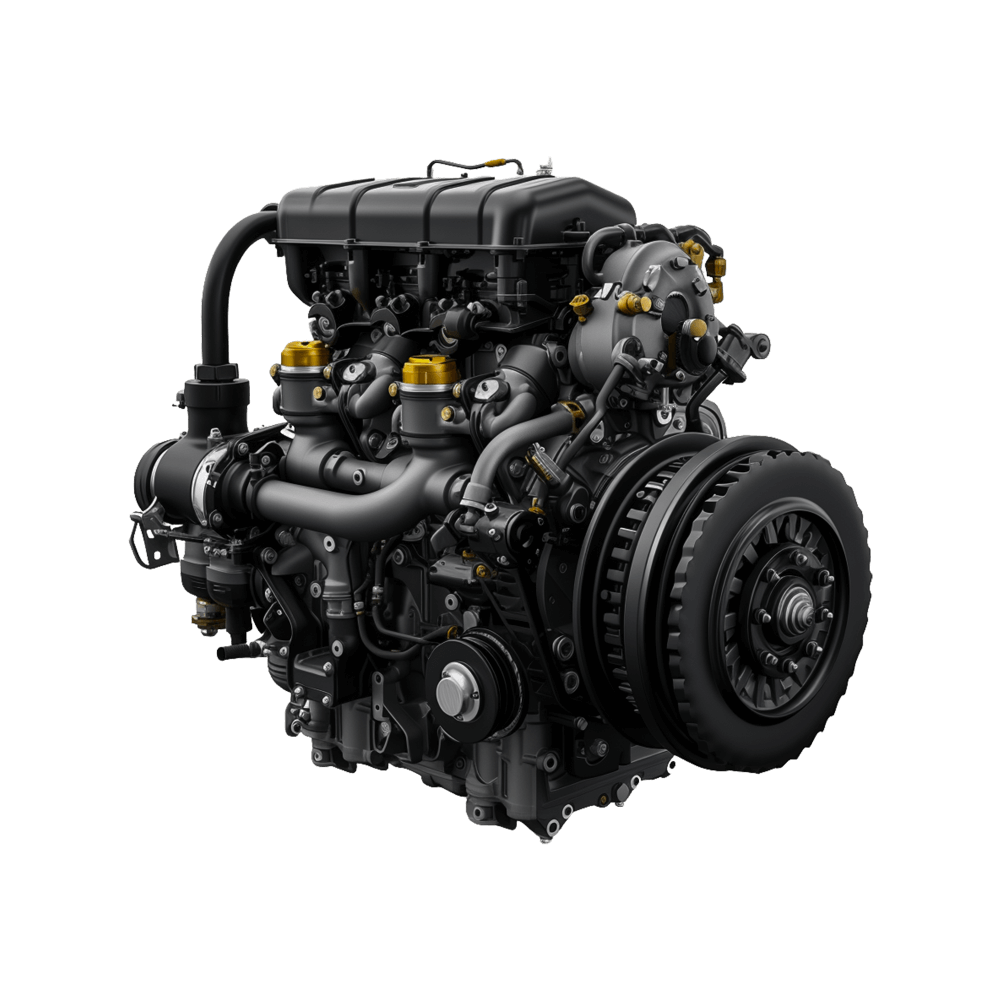
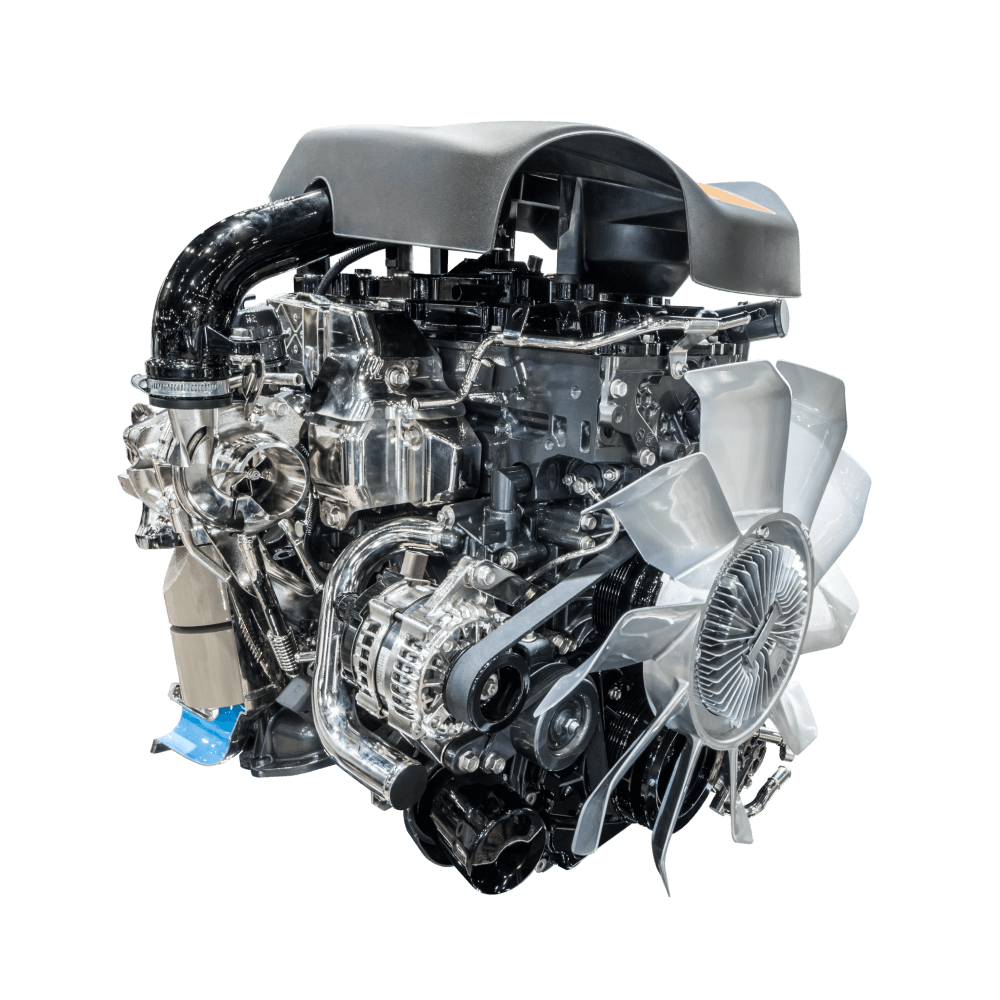
Fast-forward to 2025, and the modern internal-combustion engine has an electronic fuel-injection system (sometimes two separate systems); very often a turbocharger (again, sometimes two); and many, many computers. Oh, so many computers. Factor in major safety systems like anti-lock brakes, traction control, and stability control, as well as the engine’s computers and all the chips controlling everything from infotainment systems to windshield washers, and a modern car might have 100 computers hidden underneath that slick skin. Fifty years ago, a then-brand-new Chevy had none.
Indeed, lost in all the accusations of rapacious profiteering, it’s worth remembering that inflation is only responsible for the price increase in parts common to both old and new products. Adding 100 of something, be it significant or trivial, is an incremental cost. According to one European study, just the cost of meeting 2025 environmental standards could be as high as 3,700 euros (CAD$6,000). Reducing tailpipe emissions may be essential, but let’s not pretend it comes cheap. Indeed, electronics now make up 40% of the cost of a new car compared, with just 5% in 1970, all those dollars, again, incremental.
My Driving.ca cohort Jil McIntosh owns a full-sized 1995 Ram 1500 Regular Cab SLT. My Lord, is it tiny for what was then called a “full-sized pickup.” Today, it looks about the size of a Ford Ranger. Actually, it’s smaller than one, some 40 millimetres shorter. Similar comparisons abound throughout the industry. A modern Toyota Corolla is longer than a 1990 Camry; a 2025 BMW 3 Series sedan is almost exactly the same size as an ’88 5 Series; and a current-generation Subaru Outback is at least half-a-foot longer than the first-gen 1994 model. A modern full-size pickup — even one from normally conservative and fuel-economy-conscious Toyota — is positively gargantuan. Simply put, we’re buying bigger cars.
And more metal means more money, especially, if in a quest to reduce the avoirdupois such enlargement engenders, much of that metal is costlier higher-strength steel, magnesium, and aluminum. Once the purview of costly exotics, such light-weighting materials are now commonplace, Ford’s F-150, for instance, using a body completely fabricated from aluminum. Raw aluminum is about 60% more expensive than it was just 10 years ago, and, considering how energy-intensive production is, it isn’t going to get cheaper.
Possibly the greatest irony in our plaints over the high cost of new automobiles is how assiduously we now avoid cheap cars. Try, for instance, buying a new subcompact these days. The last one, Mitsubishi’s so-fugly-it-was-cute Mirage, went the way of the dodo bird in 2024.
Indeed, the list of small cars deceased in the last few years is long: Honda’s Fit, Nissan’s Micra, Toyota’s Yaris, the Ford Fiesta, Chevrolet’s Spark, and the Hyundai Accent just some of the small cars no longer available to bargain-shopping Canadians.
And, as much as some conspiracy theorists might like to proclaim this is yet another example of automaker avarice, the fact remains we Canadians have chosen to eschew smaller, lower-priced cars. Nissan Canada, for instance, spent million promoting its Micra through its Micra Cup race series. Honda Canada sold almost 1,000 Fits a month in 2014; five years later sales had dropped 70%.
We’ve also decided we prefer sport-utility vehicles over traditional sedans, and, whether it be because SUVs do actually cost more to build or automakers are just using demand to increase profit, that decision is costing us more. Despite their multiple advantages besides low initial MSRPs — better handling, lower fuel economy, and greater safety — the market share for sedans has dropped by almost 75% since 1975.
Equally counter-productive is our determination to use full-sized pickups as commuter vehicles. Indeed, the incredibly rapid growth in truck sales may be the largest contributor to increased average price. Not only are they massive (again, more metal) and festooned with sophisticated electronics (various trailer-towing monitors and self-driving functions) but they’ve also taken on more of a luxury bent. We’re so addicted to premium pickups that, depending on what price you choose to demarcate a “luxury” automobile, General Motors and Ford may now be considered the dominant players in premium passenger cars.
Nor are our friends to the south the only ones driven to excess. Ford’s F-150 enjoys a larger share of annual passenger car sales in Canada than it does in the truck-obsessed United States. Scarier still is that the ratio of Maverick to F-150 sales is far higher in the U.S. than supposedly penny-pinching Canada. Some of that may be some remaining production constraints for Ford’s eminently-capable small truck, but, as of late, the remaining shortages seem to be restricted to Lariat models—the most expensive Maverick hybrid that Ford sells.
Author’s Note: President Trump’s recent plan to roll back fuel-economy standards from 50.4 US miles per gallon to 34.5 US mpg by 2031 would save the average American consumer about USD$930. According to Reuters, higher gas bills will eat most of those savings, with Jason Schwartz, legal director at New York University’s Institute for Policy Integrity, saying “the Department of Transportation is now estimating larger upfront savings on technology costs, but they are also estimating even larger losses in fuel savings.” As it turns out, the long-held premise of “sticky prices” — that it’s a lot easier to hike prices than to cut them — is especially applicable to automobiles.
Sign up for our newsletter Blind-Spot Monitor and follow our social channels on X, Tiktok and LinkedIn to stay up to date on the latest automotive news, reviews, car culture, and vehicle shopping advice.
No impact on your credit score
David Booth is Driving’s senior writer as well as the producer of Driving.ca’s Driving into the Future panels and Motor Mouth podcasts. Having written about everything from the exact benefits of Diamond Like Coating (DLC) on motorcycle camshafts to why Range Rovers are the best vehicles for those suffering from opioid-induced constipation, Booth leaves no stone unturned in his quest for automotive veritas. Besides his long tenure with Driving, he was the editor in chief of Autovision magazine for 25 years and his stories have been published in motorcycle magazines around the world including the United States, England, Germany and Australia.
Graduating from Queen Elizabeth High School in 1973, Booth moved from his Northern Quebec hometown of Sept-Iles — also home to Montreal Canadiens great, Guy Carbonneau — to Ottawa to study Mechanical Engineering at Carleton University. There, he wrote a thesis on the then-burgeoning technology of anti-lock brakes for motorcycles and spent time researching the also then-burgeoning use of water tunnels for aerodynamic testing.
After three years writing for Cycle Canada magazine and another three working for the then oldest magazine in Canada, Canadian Automotive Trade, Booth, along with current Driving writer Brian Harper and then Toronto Star contributor Alex Law, created an automotive editorial services group that supplied road tests, news, and service bulletins to what was then called Southam newspapers.
When Southam became Postmedia with its purchase by Conrad Black and the subsequent introduction of the National Post, Booth was asked to start up the then Driver’s Edge section, which became Driving.ca when Postmedia moved into the digital age. In the past 41 years, Booth has tested well over 500 motorcycles, 1,500 passenger cars, and nearly every significant supercar of the last 30 years. His passion — and proudest achievement — is Motor Mouth, his weekly column that, after some 30 years, remains as incisive and opinionated as ever.
Booth remains an avid sports enthusiast — read: fitness freak — whose favorite activities include punching boxing bags until his hands bleed and running ski hills with as little respect for the medial meniscus as 65-year-old knees can bear. His true passion, however, remains motorcycles. If he’s not in his garage tinkering with his prized 1983 CB1100RC — or resurrecting another one — he’s riding Italy’s famed Stelvio Pass with his beloved — and much-modified — Suzuki V-Strom 1000.
Booth has been known to accept the occasional mojito from strangers, and the apples of his eye are a certain fellow Driving contributor and his son, Matthew, who is Global Vice-President of something — though he’s never quite sure what. He welcomes feedback, criticism and suggestions at David@davebooth.ca.
Postmedia is committed to maintaining a lively but civil forum for discussion. Please keep comments relevant and respectful. Comments may take up to an hour to appear on the site. You will receive an email if there is a reply to your comment, an update to a thread you follow or if a user you follow comments. Visit our Community Guidelines for more information.
Yes, we’ve curated a list of stocking-stuffer gift ideas for your car-enthusiast friends and family members
If you’re planning to hit the slopes this winter, the Thule SnowPack M is a good choice, but we run down a few other great options
In need of an emergency holiday present for the two-wheel enthusiast in your life? Amazon will ship you this gear in no time
If you want a tool to fix both flat tires and dead batteries, consider these Wolfbox MegaVolt16 and MotoMaster MB22C two-in-one units
Looking to make car ownership more comfortable, safe, and enjoyable? Here are our top under-$100 accessories for your car
365 Bloor Street East, Toronto, Ontario, M4W 3L4
© 2025 Driving, a division of Postmedia Network Inc. All rights reserved. Unauthorized distribution, transmission or republication strictly prohibited.
This website uses cookies to personalize your content (including ads), and allows us to analyze our traffic. Read more about cookies here. By continuing to use our site, you agree to our Terms of Use and Privacy Policy.
Edit your picks to remove vehicles if you want to add different ones.
You can only add up to 5 vehicles to your picks.
You can manage your saved articles in your account and clicking the X located at the bottom right of the article.
You can manage your saved articles in your account and clicking the X located at the bottom right of the article.