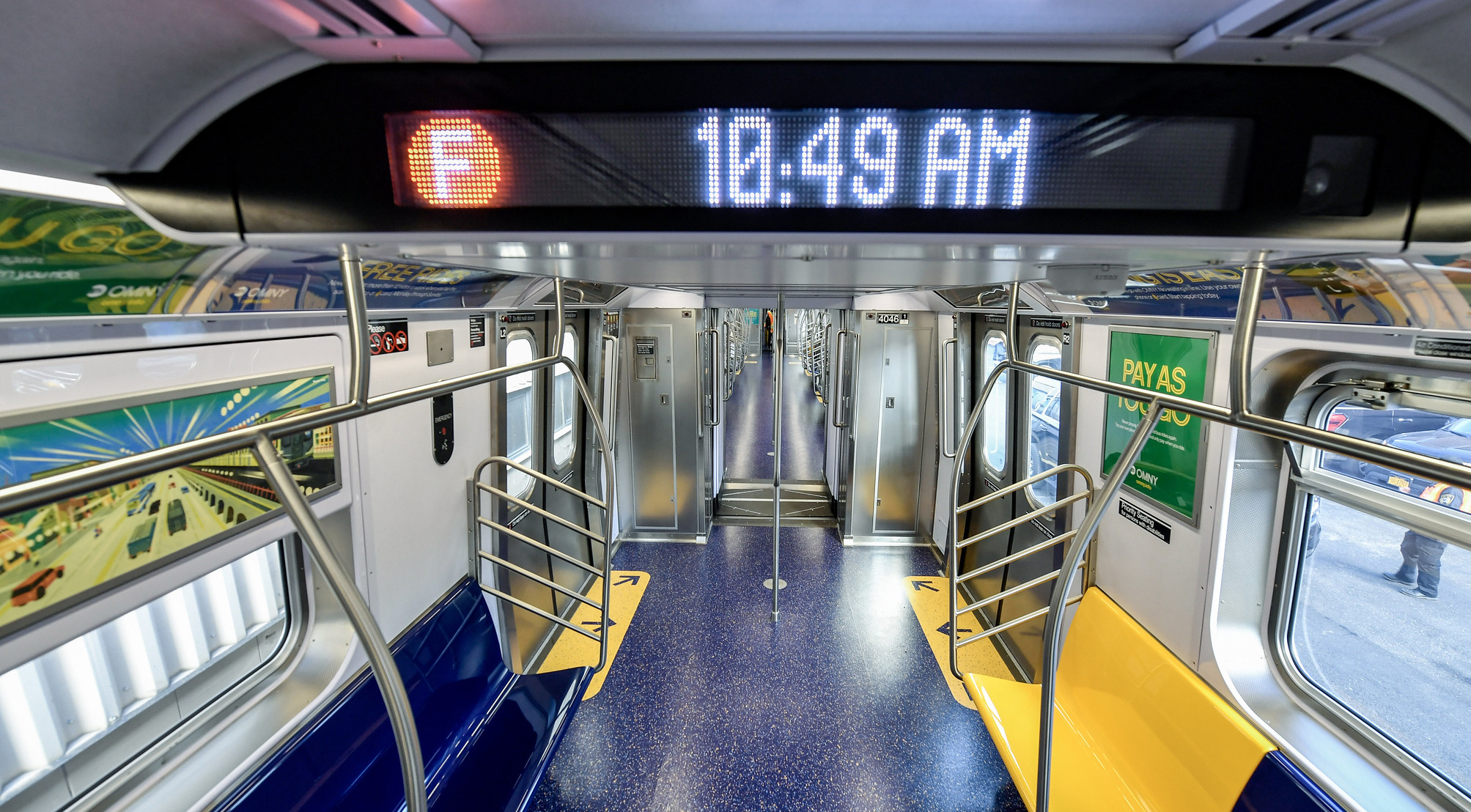
The see-through cars have been standard across the globe for a generation, but to the MTA, it's still untested technology.
12:03 AM EST on December 9, 2025
See the world on an open gangway train.
Streetsblog provides high-quality journalism and analysis for free — which is something to be celebrated in an era of paywalls. Once a year, we ask for your tax-deductible donations to support our reporters and editors as they advance the movement to end car dependency in our communities.
If you already support our work, thank you! If not, can we ask for your help? This year's fundraiser includes a special gift for our biggest supporters. Don't miss out.
Together, we can create a more livable, walkable, bikeable, equitable and enjoyable city for all. Happy holidays from the Streetsblog team!
This open-and-shut case is closed.
The MTA's latest order for hundreds of new subway cars shows that the agency is still shying away from wholly embracing the open gangway cars that have been testing in live service for almost two years on the C and G trains.
In October, the MTA Board approved the purchase of 378 R268 subway cars, which will be delivered between 2028 and 2030. The new cars will be a welcome addition to the MTA's 6,700-odd railcar fleet, but they won't be adding to the handful of open gangway cars that the agency has been testing, even though those are the standard design for transit systems around the world.
"We're as confused as anyone as to the MTA's reticence to buy open-gangway cars," said Blair Lorenzo, the executive director of the Effective Transit Alliance. "Walk-through trains have long since become the standard around the world: they're safer, they're more comfortable for riders, and they increase train capacity by around 10 percent. They are an obvious win."
Creating more train capacity is important because subway ridership has been rising since the pandemic, causing crowded trains even outside of rush hour. There were more than 4.6 million subway rides on back-to-back days last week, and nine of the 10 highest post-pandemic ridership days on the subway have happened since September this year.
I took two trains at 3:30-4 on Wednesday that were so crowded that people got left on the platform. The MTA absolutely should not be placing any more orders for new trains that are not open gangway, the trains are way too crowded for them to drag their feet like this.
The R268 order is also going to run on a section of the subway that has miles of outdoor track, which is an unfortunate invitation for subway surfers. As Streetsblog's Nolan Hicks reported (albeit in Curbed), open gangway cars are an easy way to thwart subway surfing because the interconnected cars don't allow people to get outside and onto the roof. At the moment, the MTA has had to respond to the issue with PSAs and attempts at retrofitting existing subway cars.
Hicks's column noted that there has been a current of internal opposition to open gangway cars inside the MTA's bureaucracy itself. That grumbling may still be happening in some corners of the agency, but nothing has leaked out since the trains have expanded from use on the C line to the G line.
People LOVE the open gangway! pic.twitter.com/qDtQjh2nDX
MTA sources insisted that the agency is taking the idea seriously, despite not ordering any more open-gangway trains beyond the 80 or so that will be in service by the time the full order of R211 trains is fulfilled in 2028. Agency officials are doing rider surveys and judging the performance of the open gangway design so that maybe by the time the MTA is ordering 1,000-plus R262 train cars, agency officials will have a better idea of how deep in the open gangway business it will get.
Still, transit watchdogs are wondering what the point of waiting is, since open gangway trains are how the rest of the world does things.
"Open gangway cars have become the standard for transit systems all over the world. The MTA is paying extra to buy bespoke trains that meet out of date specifications rather than ordering off the shelf models from worldwide manufacturers. These trains will be in service for at least 30 years. There is no excuse for the MTA to live in the past and order trains that know will be out of date before they arrive. Every car should be open gangway at this point," said Lorenzo.
On the plus side, the new R268s — closed or open gangway — are at least new. They'll replace cars on the B, D, N, Q, W and Rockaway shuttle that are so old that some have interior wallpaper that features the seal of the city of New York from before the city's founding date was changed from 1664 to 1625 in the late 1970s.
Dave Colon is a reporter from Long Beach, a barrier island off of the coast of Long Island that you can bike to from the city. It’s a real nice ride. He’s previously been the editor of Brokelyn, a reporter at Gothamist, a freelance reporter and delivered freshly baked bread by bike.
Sign up for our free newsletter
Daylighting is a moral imperative that protects the most vulnerable New Yorkers: children.
Julie Menin has declared victory in the City Council Speaker race, but will she be a friend or foe to the livable streets movement?
A Brooklyn driver drove onto a busy sidewalk in central Williamsburg and maimed a 33-year-old pedestrian. Why can't our officials prevent this kind of predictable incident?
Astoria was ground zero in the fight for safe streets yesterday, with dueling rallies over the 31st Street bike lane. Plus other news.
The last-minute move shatters years of grass roots advocacy.
The former head of the FDNY slammed a Queens judge for pitting the Fire Department against the safe streets movement in a ruling that erased a bike lane.
Covering the fight for sustainable cities
Sign up for our free newsletter
© Copyright 2025
Made in partnership with Lede
Related Article