Let Smart Cities Dive’s free newsletter keep you informed, straight from your inbox.
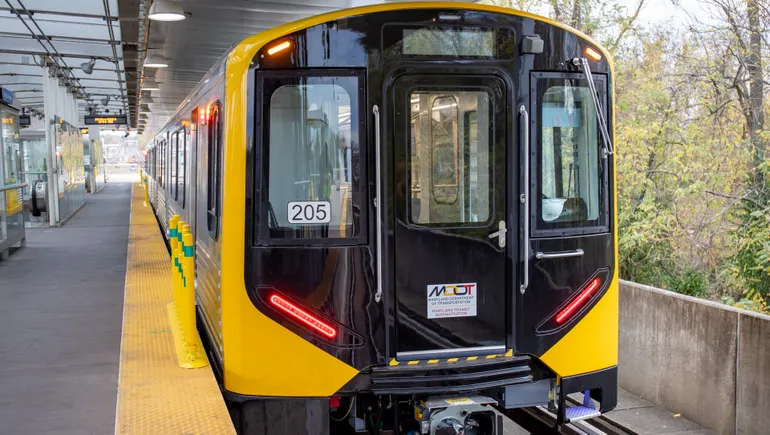
Assembled at a Hitachi factory in Maryland, the rail cars represent a “generational investment,” said a Maryland transportation official.
Baltimore launched the first portion of its subway line more than 40 years ago; it now runs 15.5 miles between downtown Baltimore and Owings Mills, Maryland. Monthly ridership ranged from 350,000 to over 500,000 in the first half of 2025, the latest data available. In addition to the subway system, the Maryland Transit Administration operates local and commuter buses, light rail, commuter rail and a paratransit system.
The new rail cars and control system are a “generational investment in creating a modern, reliable and safe transportation network that residents and employers can rely upon,” Maryland Department of Transportation Acting Secretary Kathryn Thomson said in a statement.
Hitachi is assembling and completing the vehicles at its $100 million factory in Hagerstown, Maryland. The facility can build up to 20 rail cars per month and will employ 460 people onsite at full capacity, the company said in a news release.
“These new trains aren’t just about modernizing equipment — they represent a leap forward in service reliability, efficiency, and passenger experience,” Giampaolo Nuonno, Hitachi general manager, vehicles, service delivery solutions, North America, said in a statement.
The $400 million investment in new rail vehicles, funded by federal grants, aims to help improve transportation in the Baltimore area. A Central Maryland Transportation Alliance 2026 report states that “public transportation is too often unreliable and does not efficiently connect to employment centers.”
Get the free daily newsletter read by industry experts
Maintaining resident trust outweighs federal pressure to participate in immigration enforcement, some city officials say.
Under pressure from the White House, the FAA is streamlining approvals for law enforcement drone programs, enabling rapid deployment in cities nationwide.
Subscribe to Smart Cities Dive for top news, trends & analysis
Get the free daily newsletter read by industry experts
Want to share a company announcement with your peers?
Share your announcement ➔
Maintaining resident trust outweighs federal pressure to participate in immigration enforcement, some city officials say.
Under pressure from the White House, the FAA is streamlining approvals for law enforcement drone programs, enabling rapid deployment in cities nationwide.
The free newsletter covering the top industry headlines