Get the best experience and stay connected to your community with our Spectrum News app. Learn More
Continue in Browser
Get hyperlocal forecasts, radar and weather alerts.
Please enter a valid zipcode.
Save
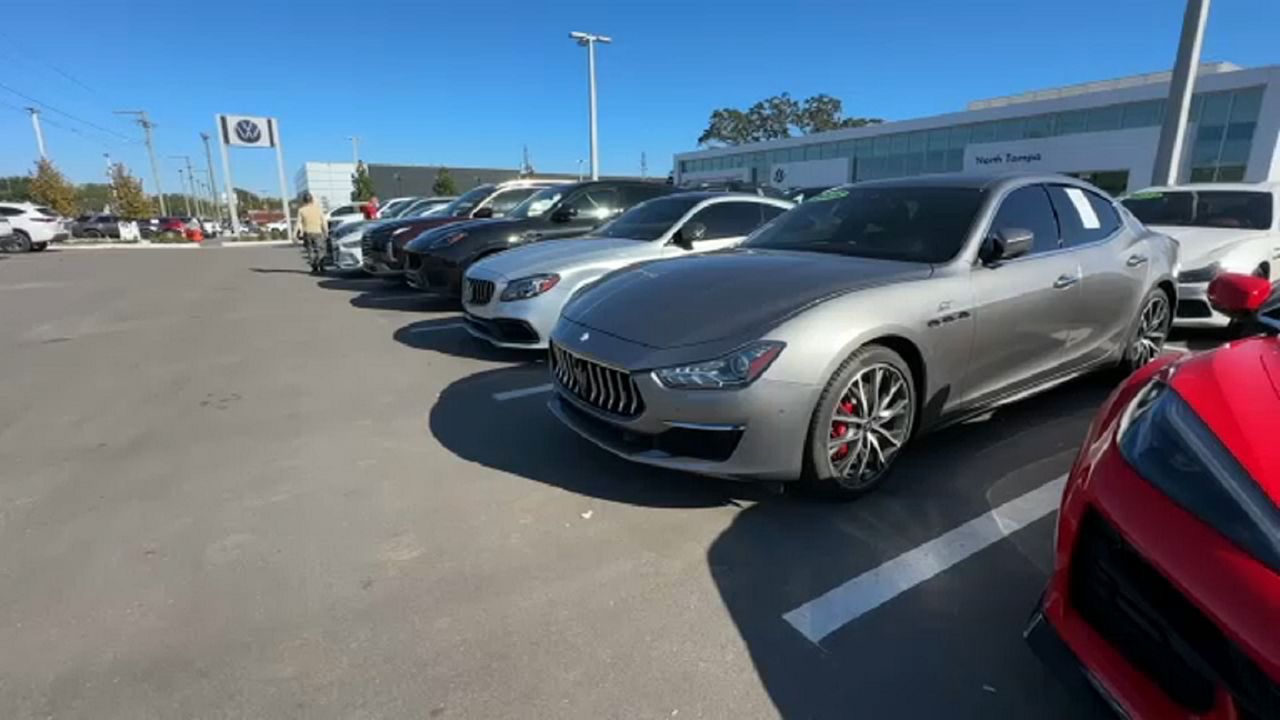
TAMPA, Fla. — New car prices are proving hard to stomach for many Americans, driven by inflation, lingering supply chain issues, and increasingly sophisticated safety technology built into today’s vehicles.
Modern cars now resemble smartphones on wheels, packed with advanced systems designed to prevent crashes and save lives.
But those features come at a cost – one that’s now fueling a political debate over affordability.
“You know, in this day and age, man, these cars are getting so expensive, and it’s breaking people’s budgets,” said Martindale McLymont, an auto broker who works with busy professionals looking to avoid dealership negotiations.
McLymont said prices and monthly payments remain high across the market. He points to advanced safety features as one factor pushing costs upward, noting that technologies like pre-collision detection, lane departure warnings, and steering assist are now standard on many models.
“When you add safety features, you’ve got to pay for it,” McLymont said. “Try explaining to a mother with children why a car doesn’t have those features.”
Beginning in 2029, automatic emergency braking will be required in all new vehicles. In November, 10 Senate Democrats sent a letter to the National Highway Traffic Safety Administration urging full implementation of safety provisions outlined in the 2021 bipartisan infrastructure law.
Republicans, however, argue that mandates for advanced safety technology are contributing to higher vehicle prices. Senator Ted Cruz has scheduled a January 14 hearing focused on auto affordability.
“I definitely think it should be an option,” said Billy York, a longtime defensive driving instructor. “I don’t think you should force it on people.”
York supports safety advancements but warns drivers not to rely too heavily on technology. “Technology can fail,” he said. “At some point, a human made it — and humans make mistakes. I’m not a big fan of self-driving vehicles either. I don’t think the technology is quite there yet.”
As more vehicles come equipped with built-in safety systems, McLymont said making some features optional rather than mandatory could help consumers already struggling to afford new cars.
For now, the debate continues — balancing safety, affordability, and how much technology drivers should be required to buy.
Related Article