Broadband TV News
Independent. Since 2003
By
Credit: Renault
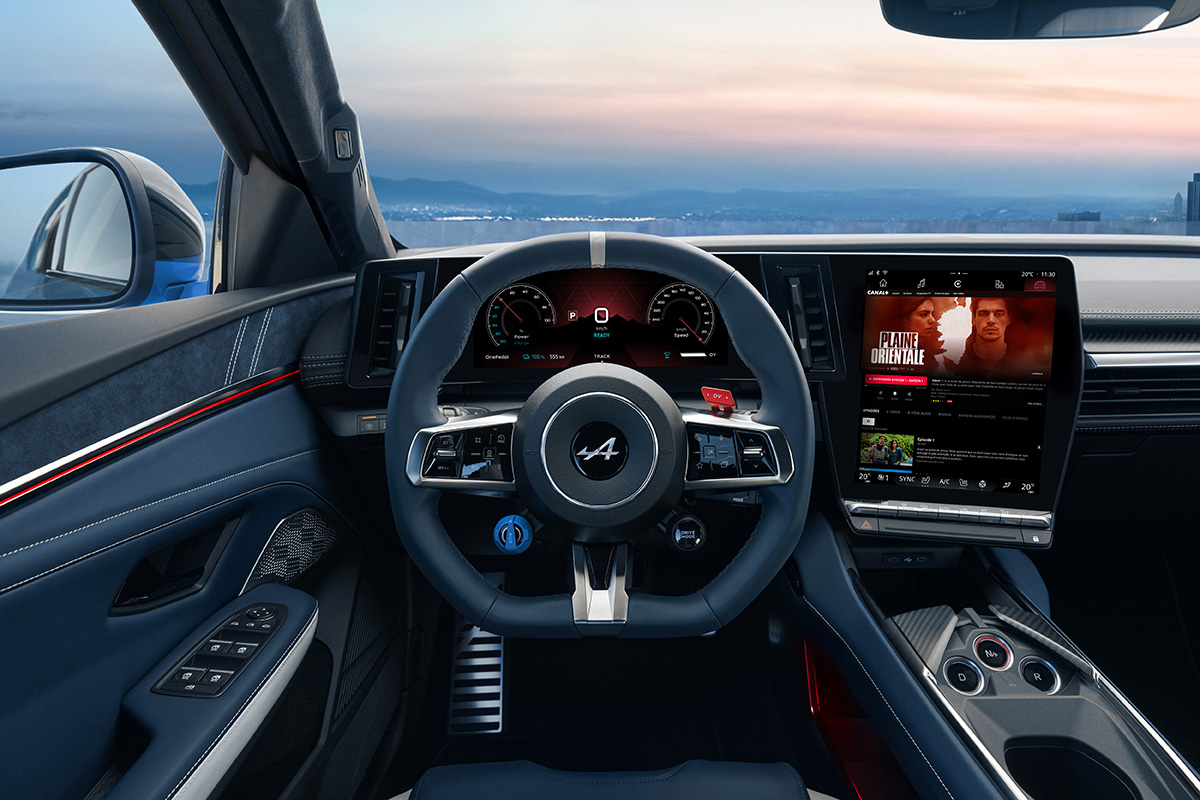
The global in-car entertainment market is heading towards a value of more than $42 billion by the end of the decade, yet the user experience inside most vehicles is fundamentally broken.
That is the central conclusion of a new Signal & Sense report by Global Media Consult, which argues that both automakers and media companies are building the future of the dashboard on a series of deeply flawed assumptions.
Titled Your Car’s Screen Is Broken: 7 Misconceptions about In-Car Entertainment & how to solve them, the report positions itself less as a neutral market overview and more as a manifesto. Author Christian Knaebel, managing director of Global Media Consult, contends that the industry’s prevailing wisdom – particularly the belief that drivers inherently prefer Apple CarPlay or Android Auto – mistakes frustration for genuine preference.
According to the research cited, 94% of consumers would consider abandoning phone-projection systems if a high-quality, integrated native experience were available. The implication is stark: automakers have not lost the battle for the dashboard, they have barely fought it. Instead, poor execution has driven users towards their smartphones, effectively handing control of the in-car relationship to Apple and Google.
The report identifies seven “foundational misconceptions” that are shaping today’s infotainment systems. Among them is the idea that more apps and features automatically create a better experience. In reality, the study argues, feature creep increases cognitive load in a safety-critical environment. User complaints focus not on missing niche apps, but on basic usability problems such as complex menus and the difficulty of switching between radio, podcasts and streaming audio.
Another widely held belief – that ever larger screens solve usability issues – is also challenged. While oversized displays dominate auto-show presentations, consumer demand is far more pragmatic, prioritising readability, responsiveness and clarity over sheer size. Large screens, the report warns, often exacerbate distraction, especially when physical controls are removed in favour of deep, touch-driven menus.
A recurring theme is the industry’s tendency to mirror smartphone interfaces in the car. Knaebel argues that this approach fundamentally misunderstands context. Smartphones are designed to capture attention; automotive interfaces should do the opposite, enabling glanceable interactions that keep the driver focused on the road. The growing complexity of in-car systems, the report suggests, is directly linked to rising concerns about driver distraction.
For media companies, the critique goes further. App-centric discovery models, familiar from smart TVs, are described as a dead end. Being present in an in-car app store does not guarantee visibility or usage, and the report draws an explicit parallel with the evolution of smart TV platforms, where cluttered home screens and aggressive monetisation led many users to bypass native interfaces altogether.
The report’s proposed solution is a unified, content-first “Launcher” – a single orchestration layer that sits above native systems, CarPlay and Android Auto. Rather than forcing drivers to think in terms of apps, such a Launcher would surface content directly, using context and AI-driven personalisation to anticipate needs. In this model, a request such as “play something relaxing” would deliver the right content regardless of which service provides it.
Crucially, the report argues that this architecture is also the prerequisite for meaningful use of artificial intelligence in the car. True personalisation, it claims, requires unified data and unified control across navigation, media, vehicle systems and user context – something impossible in today’s fragmented environment.
The findings culminate in an open letter from the media industry to automotive OEMs, criticising the app-store approach as a “dead end” that relegates content providers to a “lukewarm buffet” rather than treating them as partners. The message is clear: without a rethink, automakers risk repeating the smart TV industry’s mistakes, but in a far more personal and safety-critical space.
Ultimately, Your Car’s Screen Is Broken frames the dashboard as one of the most important strategic battlegrounds in technology, media and mobility. The choice, it concludes, is between continued fragmentation and a renaissance of the in-car experience built around simplicity, intelligence and user-centric design.
The full report can be downloaded free of charge here.
Filed Under: 2nd Story, Platforms Edited:
Jörn reports on the latest developments in Germany, Austria and Switzerland. Since 1992, he has been working as a freelance journalist, specialised in digital media, broadcast technology, convergence and new markets. He also takes up University lectureships, writes articles in specialist publications, and produces radio reports. Jörn is also a moderator of panel discussions at industry events such as ANGA COM, Medientage München and IFA Berlin.
Virgin Media O2 has struck a multi-year deal with Starlink’s Direct to Cell network to launch “O2 Satellite”, a handset-to-satellite service that will extend coverage into rural and coastal not-spots from early 2026. … [Download the White Paper …]
Copyright © 2025 Broadband TV News LLP · Log in
Related Article