Our team tests, rates, and reviews more than 1,500 products each year to help you make better buying decisions and get more from technology.
Waymo had a massive outage in San Francisco earlier this month after a power outage took out traffic lights, stranding the robotaxis in the middle of intersections. Traffic lanes and crosswalks were blocked by frozen autonomous vehicles, some multiple cars deep.
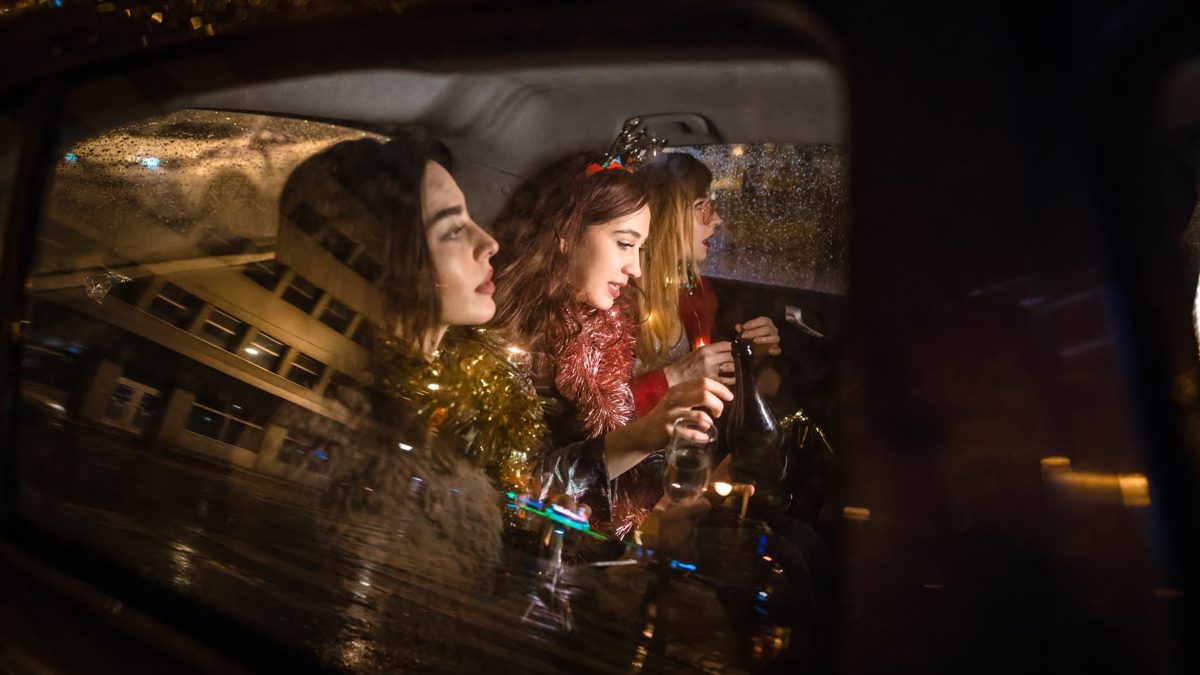
It was what people in tech call an edge case; something that happens rarely. However, one problem shouldn’t paralyze the transportation and emergency services infrastructure of a city with 800,000 people. New Year’s Eve will be the next big test of Waymo’s resilience. As bars empty out and parties end, revelers will be looking for a way home. Waymo is a likely choice for many inebriated partygoers, especially women who prefer the relative safety of not being paired with a random man tasked with driving them to their doorsteps.
The San Francisco Bay Area is Waymo’s biggest market, with 1,000 vehicles covering 260 square miles, up from about 500 vehicles on NYE 2024. I recently priced a trip at night. Uber was $16.92. Lyft priced at $18.33 after a 20% promo discount. Waymo was $50.16, which is nearly $20 a mile. That is not typical, but expect to see high fares on New Year’s Eve, when demand should be greater than a random Saturday night.
“We have limits on our dynamic pricing, and at times of extremely high demand, we may display ‘no cars available,'” a Waymo spokesman told me.
In my case, I didn’t have to think twice about whether to take the human driver; the added safety advantage of a driverless car wasn’t worth it. If I were a women traveling alone at night, however, I would think about that trade-off.
“We have consistently seen that a lot of female riders prefer Waymo,” said Harry Campbell, founder of The Driverless Digest. “Not having a driver in the car removes a lot of the risk around passenger-to-driver interactions, especially late at night.”
Waymo has one constraint that Lyft and Uber do not: A fixed number of vehicles. The company cannot suddenly conjure up new cars. Waymo’s primary option is to raise prices or to not take rides. It can also pre-position vehicles in areas where high demand is expected.
Because Uber and Lyft use a flexible pool of drivers, the higher prices will incentivize more drivers on to the platform. As this happens, the market clearing price goes down.
The net effect of a significant price difference is that men will choose the cheaper option and women are more likely to pay the premium for a driverless car. This becomes what’s called a “pink tax.” Waymo isn’t explicitly charging female riders more; some women will just end up paying more because of market dynamics.
Uber and Lyft have added measures to help offset the safety gap. Female passengers can indicate that they prefer a female driver and vice versa. Lyft’s Women+ Connect feature also matches nonbinary drivers and riders.
“In San Francisco specifically, we’ve seen strong adoption since the feature launched there in our initial pilot phase,” said Lyft spokesperson Jill Gonzalez. “The opt-in feature has resonated with drivers and riders seeking more comfortable ride experiences.”
Uber estimates that about 20% of drivers are female, but that can vary by city. As with Waymo, a smaller pool can lead to higher prices.
“While we aim to keep Women Driver trips priced in line with similar Uber trips, pricing is always influenced by a number of factors—including time, distance, driver availability, and local demand,” a spokesperson said. “In some cases, if a woman driver is farther from the pickup location than a male driver, or if demand is higher than usual, the trip price may differ.”
Some female drivers also prefer female passengers. “We also hear from a lot of female drivers that these options matter,” Campbell said. “Picking up intoxicated strangers late at night, often in unfamiliar or sketchy areas, can be stressful and sometimes scary.”
Waymo did have a notable incident where people blocked their car trying to get a woman’s phone number. Even so, the woman was able to call support from a locked glass box.
Frankly, you’d have to be really stupid to do something in front of a rolling surveillance machine. There would be video evidence of what happened from numerous camera angles and LiDAR plots of your body. From a safety standpoint, Waymo’s advantage isn’t just cameras—it’s persistent, multi-angle capture of movement. Even with masks, gait and height are identifiable signals, gold for investigators. (This might also dissuade you from having sex in a Waymo.)
As a product leader, I’d do five key things if I were running Waymo:
The most likely scenario isn’t Waymo’s vehicles getting into accidents. It’s that poorly designed pricing and planning algorithms anger riders. Ride-share users got their first taste of dynamic pricing from Uber on New Year’s Eve 2011, when prices skyrocketed for short journeys. Complaints were plentiful, prompting an apology from Uber’s engineering team.
If you have to explain supply-and-demand or market clearing prices, you’ve already lost. Sometimes it’s better to leave money on the table in the short term to preserve long-term reputation. Waymo has the advantage of learning from Uber’s experience. On the other hand, TikTok wasn’t around in 2011 for people to share their experiences.
If you’re getting a ride on New Year’s Eve, here are some things to keep in mind.
Read Our Editorial Mission Statement and Testing Methodologies.
Rakesh is a San Francisco-based entrepreneur and analyst exploring how technology reshapes society. He focuses on the human side of technology, especially AI and autonomous vehicles. Once, he nearly interviewed Richard Branson in a Vegas wedding chapel before being redirected to Branson’s penthouse suite. Read more on his blog.
Rakesh is a San Francisco-based entrepreneur and analyst exploring how technology reshapes society. He focuses on the human side of technology, especially AI and autonomous vehicles. Once, he nearly interviewed Richard Branson in a Vegas wedding chapel before being redirected to Branson’s penthouse suite. Read more on his blog.
Read full bio
PCMag.com is a leading authority on technology, delivering lab-based, independent reviews of the latest products and services. Our expert industry analysis and practical solutions help you make better buying decisions and get more from technology.
For over 40 years, PCMag has been a trusted authority on technology, delivering independent, labs-based reviews of the latest products and services. With expert analysis and practical solutions across consumer electronics, software, security, and more, PCMag helps consumers make informed buying decisions and get the most from their tech. From in-depth reviews to the latest news and how-to guides, PCMag is the go-to source for staying ahead in the digital world.