Canadian Prime Minister Mark Carney announces a new national automotive strategy. As part of this, he eliminates the electric vehicle sales quotas introduced by his predecessor and instead introduces stricter emission standards for manufacturers and purchase incentives for consumers.
The Canadian government is scrapping its requirement that 60 per cent of all new cars must be electric by the end of the decade, and 100 per cent by 2035. The gradually increasing sales quotas for manufacturers and importers were introduced in 2023 under former Prime Minister Justin Trudeau, with an initial milestone of 20 per cent electric vehicle share by 2026. For clarity: although the regulation referred to ‘Zero Emission Vehicles (ZEV),’ it also included plug-in hybrids with a specific electric range alongside battery-electric cars.
Mark Carney, leader of Canada’s Liberal Party and Prime Minister since spring 2025, is now overturning this regulation and introducing a package of measures to accelerate the transition to alternative powertrains while stabilising Canada’s automotive industry amid trade pressures from its neighbour, the USA. To achieve this, Carney is introducing stricter greenhouse gas (GHG) emissions standards for vehicle models from 2027 to 2032, no longer mandating automakers to produce electric vehicles but instead allowing them to decide how to meet the targets using their chosen powertrain mix. The production of zero-emission vehicles will still be incentivised by the emissions standards, as the targets cannot be met without them.
As a further measure, Carney is announced a tradable [emissions] credits system to attract foreign automakers to Canada. He expects this system to result in 75 per cent of new cars sold in Canada being electric by 2035. This is explicitly a target, not a binding sales quota. The Prime Minister considers it realistic that Canada will achieve a 90 per cent EV share by 2040.
To support the transition, a new five-year purchase incentive programme worth 2.3 billion Canadian dollars (approximately 1.43 billion euros) will provide incentives for individuals and businesses to purchase or lease electric vehicles. Carney is offering up to 5,000 CAD for the purchase or lease of battery-electric vehicles and up to 2,500 CAD for plug-in hybrids. This converts to roughly 3,100 and 1,550 euros, respectively.
To qualify for the programme, imported vehicles must cost under 50,000 CAD (based on the ‘final transaction value’) and be manufactured in countries with which Canada has free trade agreements. Vehicles from China are thus excluded. Domestically produced EVs are not subject to this price cap. Additionally, it has been confirmed that the current incentive rates will only apply for this year and will subsequently be phased out, with the programme ‘expected to end after 2030.’
Canada previously offered an EV purchase incentive of up to 5,000 CAD, which expired about a year ago due to high demand. At the time, the budget was exhausted, triggering a last-minute rush for EVs, as reported.
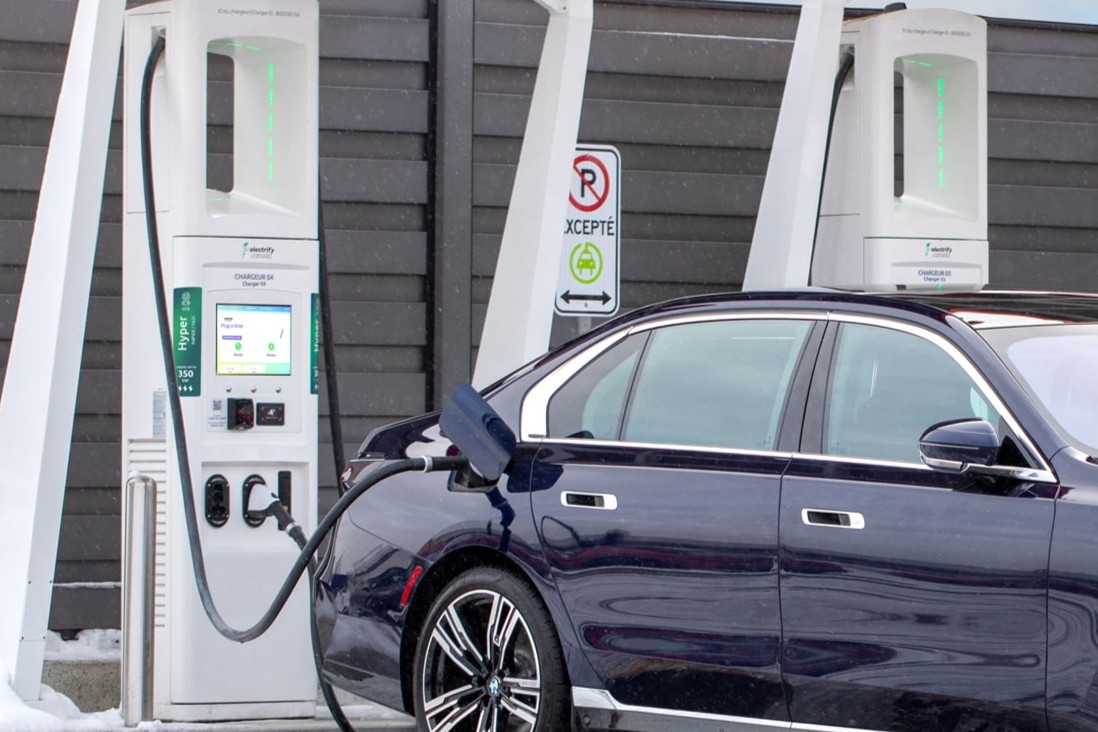
Turning to the current government’s automotive strategy: Carney also announced a 1.5 billion dollar fund (approximately 930 million euros) for the expansion of the charging network. The focus will be on new partnerships, though details have not yet been provided. Additionally, a new ‘electricity strategy’ is expected in the coming weeks ‘to double Canada’s grid capacity and make electricity more reliable and affordable.’
To prevent Canadian automakers from relocating to the USA, Ottawa is also planning to further exempt domestic automakers from US tariffs. Should the US insist on auto tariffs during the review of the so-called CUSMA agreement, the government will explore how to reward companies loyal to Canada. “We will explore strengthening Canada’s automotive remission framework through a tradeable credit system that would reward companies that produce and invest in Canada,” Carney stated.
What else? An additional 3 billion CAD (approximately 1.86 billion euros) from the Strategic Response Fund (SRF) and up to 100 million dollars (approximately 62 million euros) from the Regional Tariff Response Initiative (RTRI) will, according to Carney, support the automotive industry in diversifying into markets outside the US and fostering growth.
This political strategy shift in Canada comes at a time of declining EV registrations. “Monthly sales data published by Statistics Canada shows a clear drop in sales of new EVs at the beginning of 2025,” reported news channel CBC. “This drop coincided with the government’s decision to pause its widely used EV rebate program.” In addition to the lack of state incentives, economic uncertainty and waning interest in the Tesla brand are also believed to play a role.
Incidentally, Carney has already reversed several environmental policies from the Trudeau era—the quotas are just the latest example. For instance, Carney reduced the carbon tax for consumers at the beginning of his term and abandoned Trudeau’s promise to plant two billion trees.
While Carney faces significant criticism from the opposition for his new automotive strategy, there are also supporters. Doug Ford, Premier of Ontario, where the majority of Canada’s automotive industry is concentrated, welcomes the policy without EV sales quotas. The quotas would have ‘made our auto sector less competitive,’ Ford said.
cbc.ca, pm.gc.ca
Your email address will not be published.
electrive has been reporting on the development of electric mobility with journalistic depth and industry expertise since 2011 and has been available in English since 2013. As the industry’s leading voice on e-mobility, electrive provides high-quality coverage and in-depth reporting on the rapid evolution of e-mobility, including news, background features, interviews, videos and industry communications.
© 2026 electrive.com
Related Article