Automotive
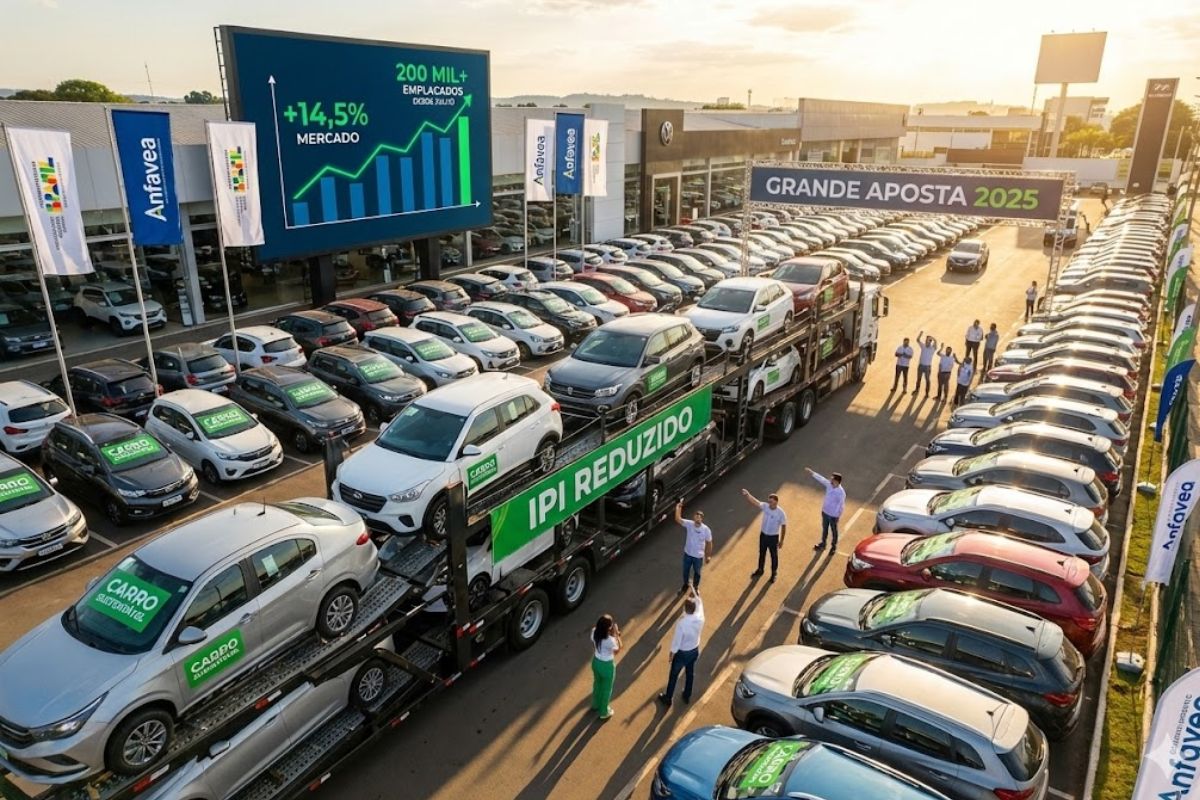
Since July 11, 2025, when it came into effect, the sustainable car program has offered IPI (Tax on Industrialized Products) reductions for new popular vehicles and, just a few months later, has already changed the mood of the Brazilian automotive sector. According to the G1 portal.Anfavea reported that the initiative helped boost car sales by 14,5%, with more than 200 cars registered in the second half of the year.
According to the National Association of Automotive Vehicle Manufacturers, the federal government’s program is becoming one of the main strategies to sustain demand in 2025. The high concentration of Retail results indicate that the sustainable car is arriving. directly to the end consumer, reinforcing the strategy of using the lower IPI (tax on industrialized products) as leverage to move inventory of popular models.
The sustainable car was designed to reduce the Industrialized Products Tax applied to new, popular vehicles eligible for the program. In practice, the benefit focuses on models approved by Anfavea, which can then be sold with lower IPI (tax on industrialized products) and, consequently, a more competitive final price at dealerships.
Starting at R$ 85,5, with 99,3 hp, six-axis IMU, 19” wheels and electronic suspension, this 1.084 cc big trail bike dominates heavy off-road terrain and has become an “expedition machine”; Honda Africa Twin 2026
Naturally aspirated engines that will never let you down: the 5 most reliable engines in Brazil that outperform turbocharged engines and still deliver unbeatable fuel economy.
Audi surprises the automotive market by resurrecting a V6 engine with a range of up to 18 km/l and hybrid technology.
With a 650cc engine producing up to 69 hp, strong low-end torque, and true touring comfort, priced between R$22 and R$35: the used Suzuki V-Strom 650 that has become a benchmark for value in big trail bikes.
According to the organization, the program has been in effect since July 11, 2025, focusing on vehicles that meet the defined criteria and are eligible for inclusion in the list of approved vehicles.
The logic is simple and straightforward for consumers looking for a cheaper new car: by reducing taxes at the manufacturing level, sustainable cars open up opportunities for retail discounts and more aggressive negotiation terms.
Models such as the Volkswagen Polo, Fiat Mobi, and Renault Kwid appear among the vehicles advertised with discounts linked to the Green IPI program, reinforcing the focus on compact and entry-level cars.
The inclusion of these popular models within the scope of the sustainable car program helps to broaden its reach among consumers seeking their first vehicle or a trade-in for a more affordable new car.
The figures released by Anfavea show that sustainable cars have already caused a significant jump in sales indicators. Since the program came into effect, 201,4 approved vehicles have been registered, compared to 176 in the same period of the previous year.
This difference represents a significant boost in the volume of vehicle registrations in the second half of 2025, driven directly by the models covered by the benefit.
More than just surpassing the 200 vehicle mark, the data clearly compares market performance with and without the program’s effect, reinforcing the role of sustainable cars as an additional demand factor.
For the industry, the 14,5% growth in car sales within this timeframe helps offset fluctuations in other segments and provides predictability for production.
By focusing the sales boost on new, popular vehicles, the program creates a kind of strengthened entry-level segment within the Brazilian automotive sector.
Anfavea’s assessment of sustainable cars is positive, but realistic. The organization’s president, Igor Calvet, states that the program continues to grow, especially in the retail sector, and classified the initiative as a success for the market.
At the same time, he highlighted that this type of measure usually has a steeper initial curve, followed by a phase of stability, a plateau considered natural.
In practice, this means that the surge in vehicle registrations seen in the first few months after July 11th tends to settle down, maintaining a higher level of sales, but without indefinitely repeating the same intensity of growth.
The organization’s message is that the sustainable car has already fulfilled, in just a few months, the role of unlocking previously pent-up purchasing decisions, especially among retail consumers.
Even with the prospect of stabilization, Anfavea continues to treat the program as a central piece for navigating the 2025 cycle with greater security.
By highlighting sustainable cars as a major focus for the sector, the organization signals that the impact of the reduced IPI (tax on industrialized products) has already entered the radar of automakers, dealerships, and consumers.
At the forefront of retail stores, the impact of sustainable cars is evident in shop windows and campaigns focused on popular models.
Volkswagen Polo, Fiat Mobi, and Renault Kwid are among the cars announced with the IPI Verde discount, becoming symbols of this phase of incentives for more affordable new cars.
With the tax benefit, these vehicles gain extra visibility in car shows and advertisements, helping to explain part of the increase in sales. The program focuses its efforts on lower-priced cars, which directly appeals to an audience sensitive to any reduction in installments or down payments on financing.
For the consumer, the message is that sustainable cars today translate into concrete opportunities to pay less for a brand new car within a specific list of approved models.
The combination of reduced IPI (tax on industrialized products), a 14,5% increase in sales, and over 200 units registered creates a new competitive benchmark for the entry-level segment in Brazil.
*This report is being updated.
And you, do you intend to take advantage of the sustainable car program to buy a brand new car in 2025, or would you prefer to wait for the next moves in the Brazilian automotive market?
I talk about construction, mining, Brazilian mines, oil and major railway and civil engineering projects. I write daily about interesting facts about the Brazilian market.
© 2025 Click Oil and Gas – All rights reserved